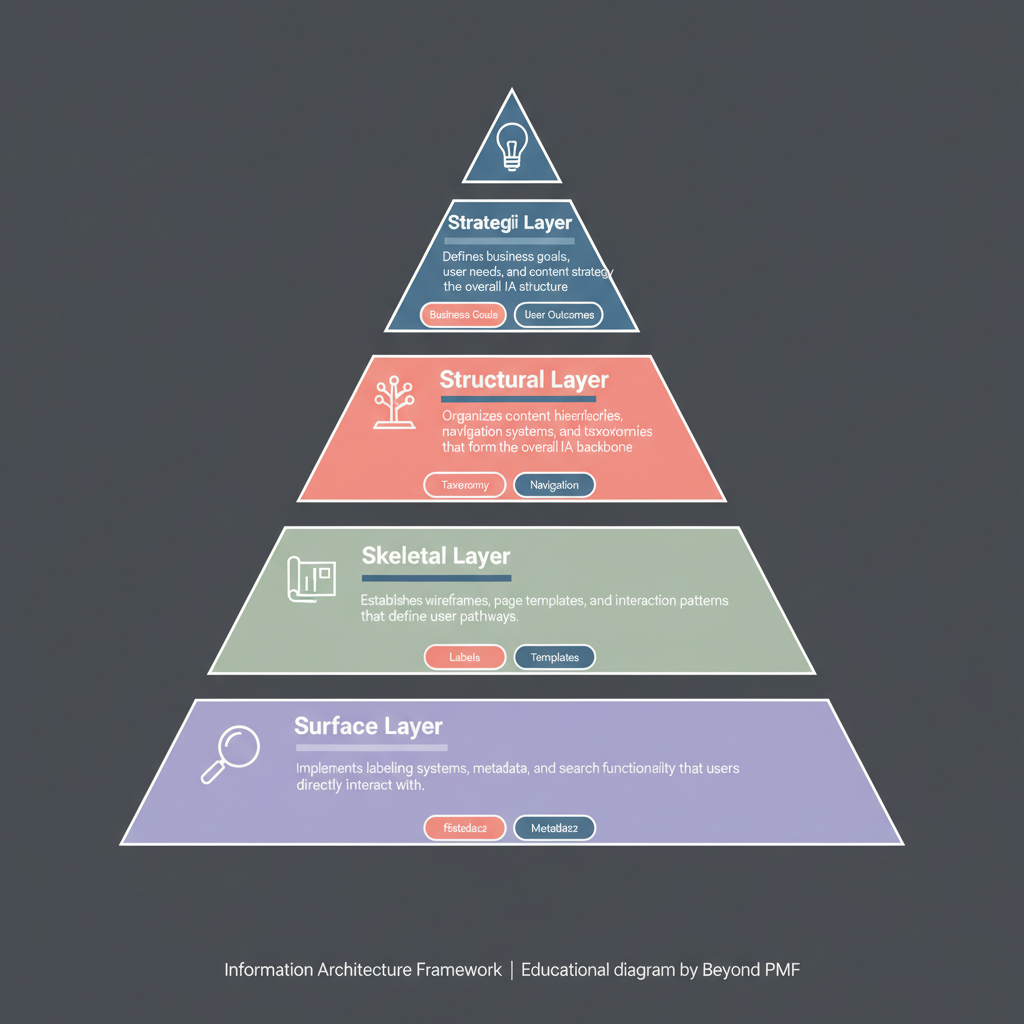
The Information Architecture Framework helps in organizing and structuring information in a way that makes it easily accessible and understandable to users. It is primarily used in the design of websites and digital products to enhance user experience by ensuring that users can navigate and find the information they need without confusion. The framework supports usability, findability, and comprehensibility, which are crucial for successful digital interactions.
Define the user needs and business goals. | Conduct content inventory and audit. | Create a categorization scheme and labeling system. | Develop navigation and search systems. | Create wireframes and prototypes. | Test the architecture with real users and iterate based on feedback.
Involve stakeholders early in the process | Regularly update and review the architecture | Use clear and consistent labeling
Improves user experience and satisfaction | Enhances findability and accessibility of information | Supports scalability and manageability of digital products
Can be time-consuming to implement correctly | Requires continuous updates and maintenance | May require specialized skills and tools
Designing a new website or application | Overhauling existing digital platforms
Small-scale projects with limited content | When rapid deployment is more critical than structured information