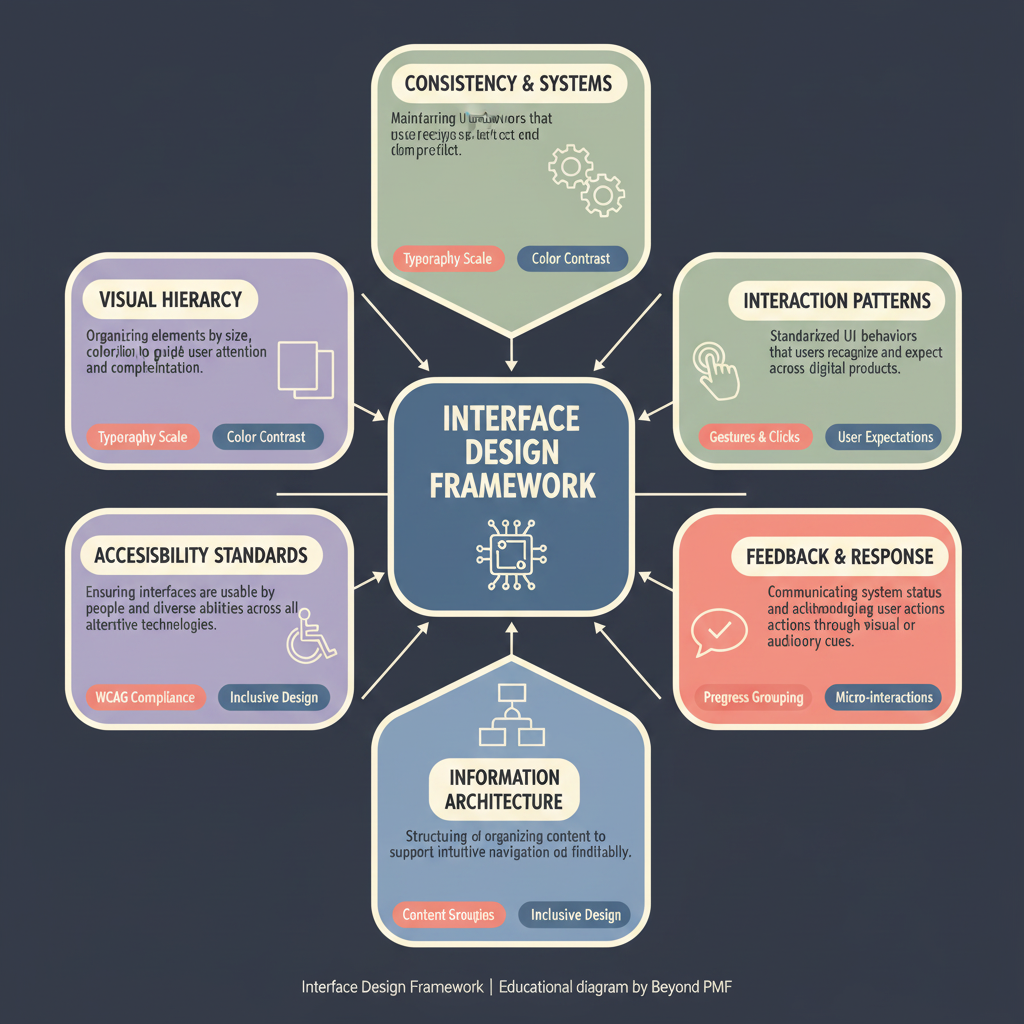
The Interface Design Framework provides a structured method for designing and evaluating user interfaces. It emphasizes usability, aesthetics, and functionality, ensuring that interfaces meet the needs of users efficiently and effectively. The framework guides designers through a series of steps that help in conceptualizing, designing, prototyping, and testing interfaces, making it an essential tool in the development of digital products.
Define user needs and goals: Gather information about the target users and their requirements. | Create user personas and scenarios: Develop detailed profiles and scenarios to represent the typical users. | Design the interface: Sketch and prototype the interface based on the user requirements and scenarios. | Usability testing: Conduct tests with real users to gather feedback and identify areas for improvement. | Iterate and refine: Make necessary adjustments based on user feedback and test results.
Involve users early and throughout the design process | Keep the interface simple and intuitive | Regularly update the design based on user feedback and technological advancements
Enhances user satisfaction by focusing on usability | Improves the efficiency and effectiveness of the interface | Reduces development time by identifying issues early in the design process
Can be time-consuming due to multiple iterations | May require substantial resources for user research and testing | Risk of over-designing to meet all user personas
Developing new user interfaces for digital products | Redesigning existing interfaces to improve usability
Projects with very limited timeframes | When the user requirements are extremely well-known and static