
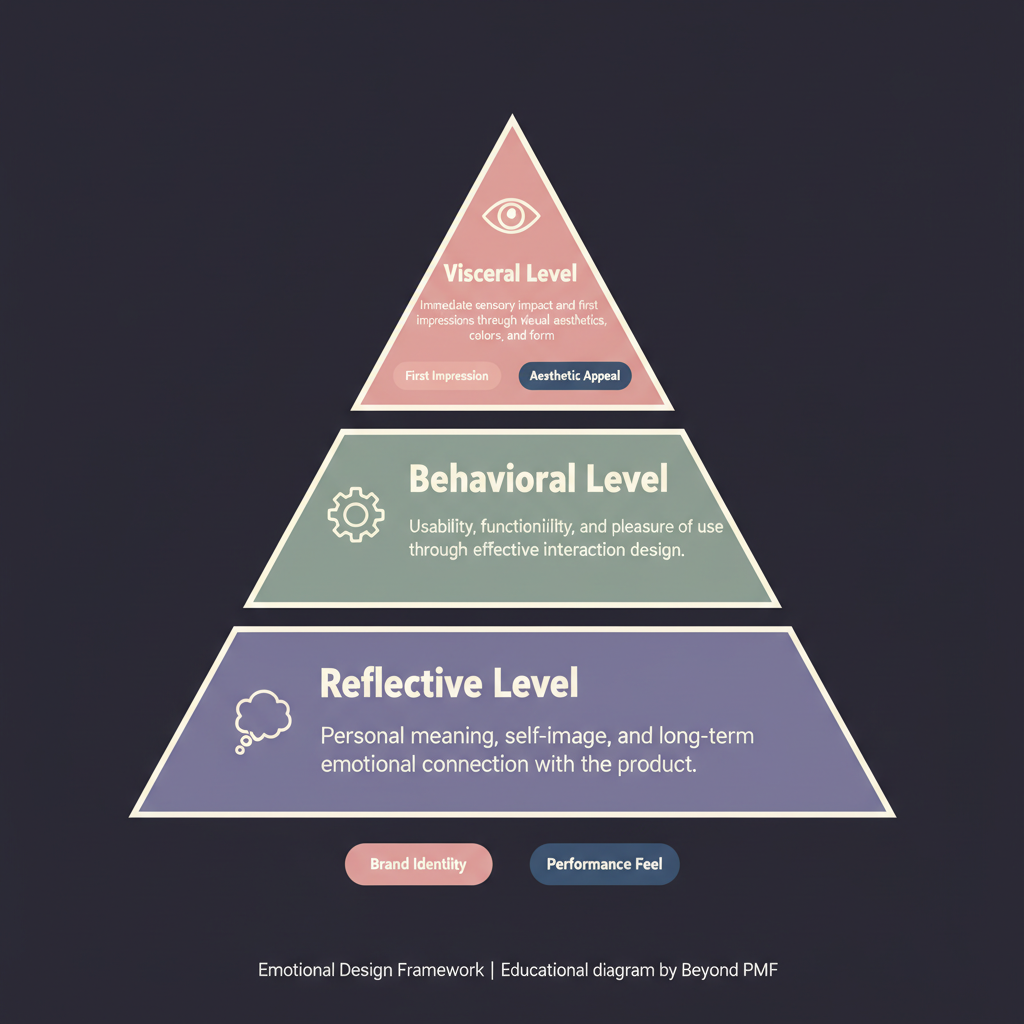
The Emotional Design Framework focuses on the psychological aspect of design, aiming to evoke certain feelings in users to foster a deeper connection with the product. It integrates elements of psychology and design principles to craft experiences that are not only functional but also emotionally resonant. This approach is particularly beneficial in increasing user retention, satisfaction, and overall interaction with the product.
Identify the target emotions: Define the specific emotions you want to evoke in your users. | Understand your audience: Research and gather insights about your users' preferences, needs, and emotional triggers. | Design for emotional impact: Apply design principles that align with the desired emotional response, such as color theory, typography, and imagery. | Iterate based on feedback: Use user feedback to refine emotional triggers and improve the design. | Measure emotional engagement: Employ tools and metrics to assess the emotional impact and effectiveness of the design.
Consistently gather and analyze user feedback | Use A/B testing to refine emotional components | Stay updated with psychological research in design
Enhances user engagement | Increases product loyalty | Improves user satisfaction
Can be subjective and hard to measure | Requires deep user research and continuous testing | May not be suitable for all types of products
In consumer products aiming to build brand loyalty | In user interfaces to improve usability and satisfaction
In highly technical or data-driven applications where functionality is prioritized over emotional impact | When rapid prototyping and quick launches are required, as emotional design can be time-consuming