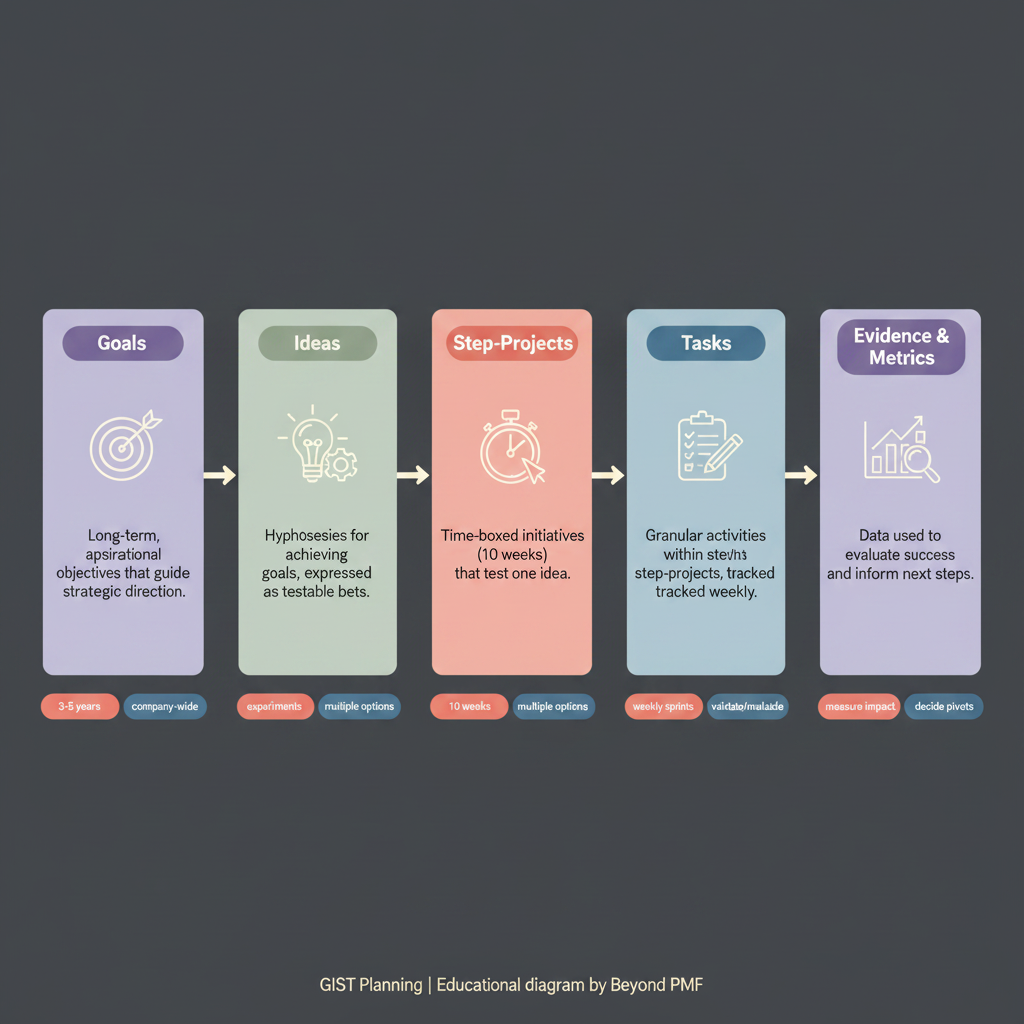
GIST (Goals, Ideas, Step-projects, Tasks) Planning is a framework designed to replace traditional roadmaps with a more flexible, iterative approach to strategic planning. It emphasizes continuous learning and adaptation, allowing teams to adjust their strategies based on real-world feedback and results. The framework helps organizations prioritize their efforts on high-impact projects and quickly pivot as needed, making it ideal for dynamic and uncertain environments.
Define broad Goals that align with the organization's vision. | Generate Ideas that could achieve these goals. | Break ideas into Step-projects, smaller, manageable projects with measurable outcomes. | Outline specific Tasks required to complete each step-project.
Regularly review and adjust goals based on feedback | Prioritize projects based on impact and feasibility | Encourage team collaboration and open communication
Increases adaptability to change | Enhances focus on measurable outcomes | Promotes continuous learning and feedback
Can be less predictable than traditional planning | Requires frequent reassessment and adjustments | May be challenging for teams used to rigid structures
In fast-changing industries | When launching new products
In highly regulated industries requiring detailed long-term planning | When stability and predictability are more valuable than flexibility