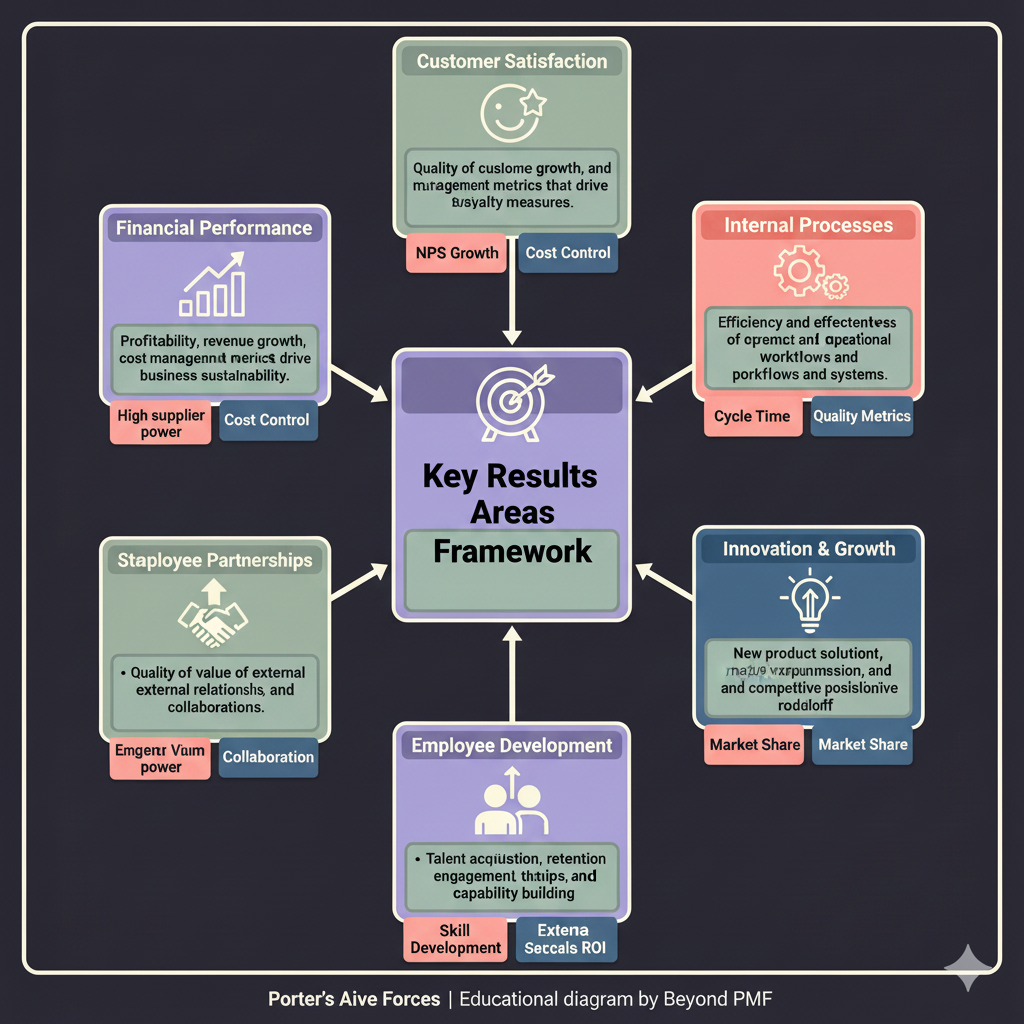
The Key Results Areas (KRAs) Framework is a management tool used to define and measure the areas where an employee is expected to deliver specific outcomes. By focusing on KRAs, organizations can align employee performance with their strategic goals, ensuring that efforts are directed towards the most impactful areas. This framework helps in setting clear performance expectations, improving accountability, and enhancing overall organizational efficiency.
Identify the strategic objectives of the organization. | Define key result areas that align with these objectives. | Set measurable goals or targets for each KRA. | Communicate expectations and responsibilities to the involved personnel. | Monitor progress and provide feedback regularly. | Evaluate performance based on the achievement of the defined KRAs.
Regularly review and update KRAs to reflect changing priorities | Ensure KRAs are realistic and achievable | Provide adequate resources and support to achieve the KRAs
Enhances alignment between individual and organizational goals | Improves clarity and focus by defining key priorities | Facilitates performance measurement and management
Can be overly rigid, limiting flexibility in dynamic environments | May lead to a narrow focus, ignoring other important tasks | Requires regular updates to stay relevant with changing organizational goals
During strategic planning to align employee goals with organizational objectives | In performance management to set clear expectations and assess outcomes
In highly dynamic industries where flexibility is crucial | When a broader, more holistic assessment of performance is required