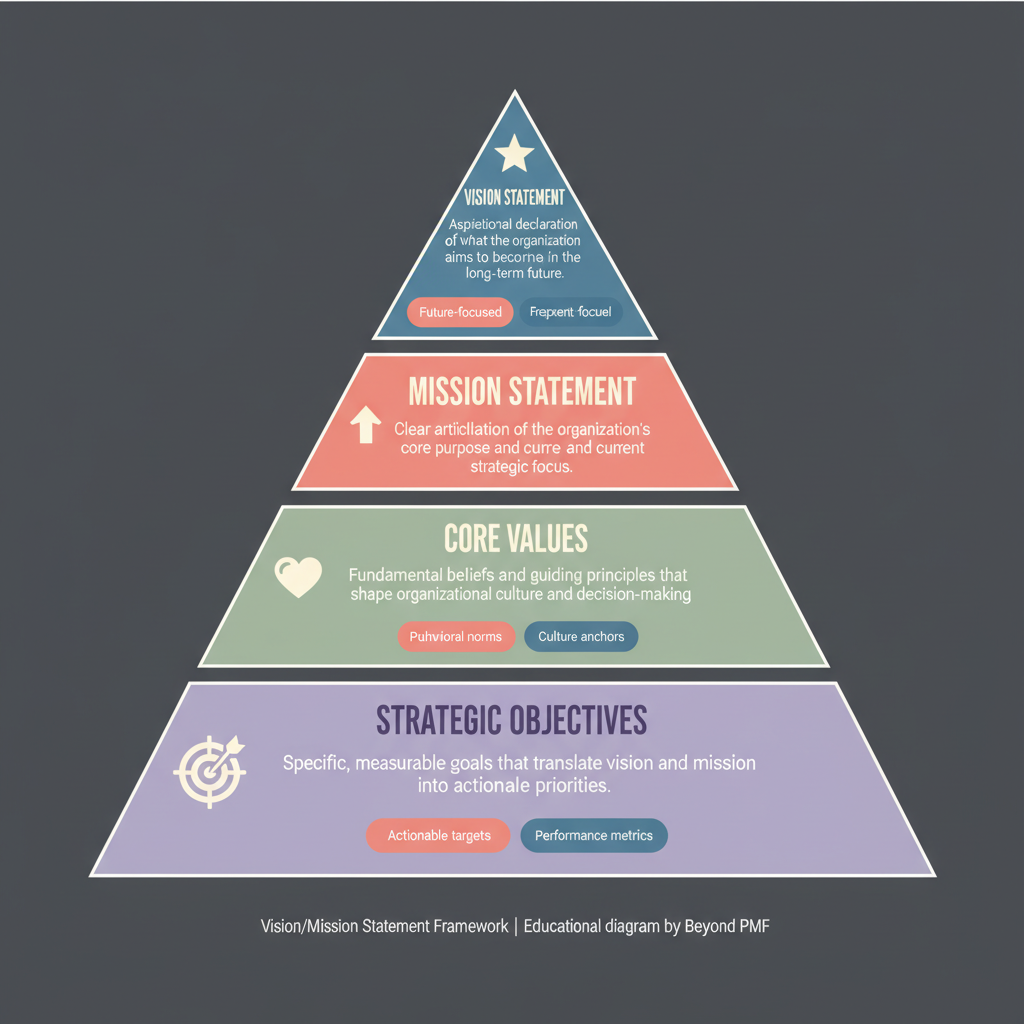
Vision/Mission Statement Framework

https://ik.imagekit.io/beyondpmf/frameworks/vision-mission-statement-framework.png
The Vision/Mission Statement Framework primarily addresses strategic friction by providing a structured approach to defining an organization's purpose, long-term goals, and overall direction. This helps clarify the organization's strategic intent and ensures alignment across all levels.

The Vision/Mission Statement Framework is a strategic tool used by organizations to articulate their long-term goals (vision) and their core purpose (mission). This framework helps align the organization's objectives with its actions, ensuring that all members understand the overarching goals and their role in achieving them. It is crucial for motivating employees, guiding decision-making, and communicating the organization's purpose to stakeholders.

Steps / Detailed Description

Identify core values and beliefs that define the organization's culture and ethics. | Engage stakeholders through interviews or workshops to gather diverse perspectives. | Draft the vision statement to encapsulate the long-term aspirations of the organization. | Formulate the mission statement to outline the organization's primary objectives and approach. | Review and refine the statements with feedback from various organizational levels. | Finalize and communicate the vision and mission statements internally and externally.

Best Practices

Ensure inclusivity in the development process to capture a wide range of insights. | Keep the statements clear, concise, and memorable. | Regularly revisit and revise the statements to reflect organizational growth and changes.

Pros

Provides clear direction and purpose, aligning all organizational activities. | Enhances strategic decision-making and resource allocation. | Improves internal and external communication about organizational goals.

Cons

Can be overly vague or generic if not well-crafted, reducing its effectiveness. | Requires regular updates to remain relevant, which can be resource-intensive. | May lead to misalignment if not embraced or understood across the organization.

When to Use

During the initial stages of strategic planning. | When redefining or rebranding the organization.

When Not to Use

In situations requiring immediate, tactical or operational decisions. | When the organization already has well-defined and effective statements.

Related Frameworks

Lifecycle

Scope

Scope not defined

Maturity Level

Maturity level not specified

Time to Implement

2–4 Weeks
3–6 Months
1–2 Weeks
3–6 Months
1–2 Months
3–6 Months
1–2 Weeks
Less Than 1 Day
1–2 Weeks
Longer Than 6 Months
1–2 Weeks
Longer Than 6 Months
1–2 Weeks
3–6 Months
1–2 Weeks
1–2 Weeks
1–2 Weeks
1–2 Weeks
1–2 Days
1–2 Weeks
1–2 Weeks
1–2 Weeks
1–2 Weeks
1–2 Weeks
1–2 Weeks
3–6 Months
1–2 Weeks
1–2 Weeks
1–2 Weeks
3–6 Months
1–2 Weeks
1–2 Weeks
2–4 Weeks
1–2 Weeks
1–2 Days
1–2 Weeks
Longer Than 6 Months
3–6 Months
Longer Than 6 Months
1–2 Weeks
Longer Than 6 Months
3–6 Months
Less Than 1 Day
3–6 Months
1–2 Months
3–6 Months
Longer Than 6 Months
3–6 Months
Less Than 1 Day
1–2 Weeks
3–6 Months
3–6 Months
1–2 Weeks
3–6 Months
1–2 Weeks
1–2 Weeks
1–2 Days
1–2 Weeks
1–2 Months
Longer Than 6 Months
1–2 Weeks
Longer Than 6 Months
1–2 Weeks
3–6 Months
1–2 Weeks
Less Than 1 Day
1–2 Weeks
3–6 Months
1–2 Weeks
3–6 Months
1–2 Weeks
1–2 Weeks
Longer Than 6 Months
Less Than 1 Day
3–6 Months
Longer Than 6 Months
1–2 Months
1–2 Weeks
Longer Than 6 Months
1–2 Weeks
3–6 Months
1–2 Weeks
1–2 Weeks
3–6 Months
Less Than 1 Day
1–2 Weeks
1–2 Weeks
3–6 Months
3–6 Months
Less Than 1 Day
1–2 Weeks
Longer Than 6 Months
1–2 Months
1–2 Weeks
1–2 Weeks
1–2 Weeks
Longer Than 6 Months

Copyright Information

Autor:
Public Domain
N/A
Publication:
Generic Business Tool