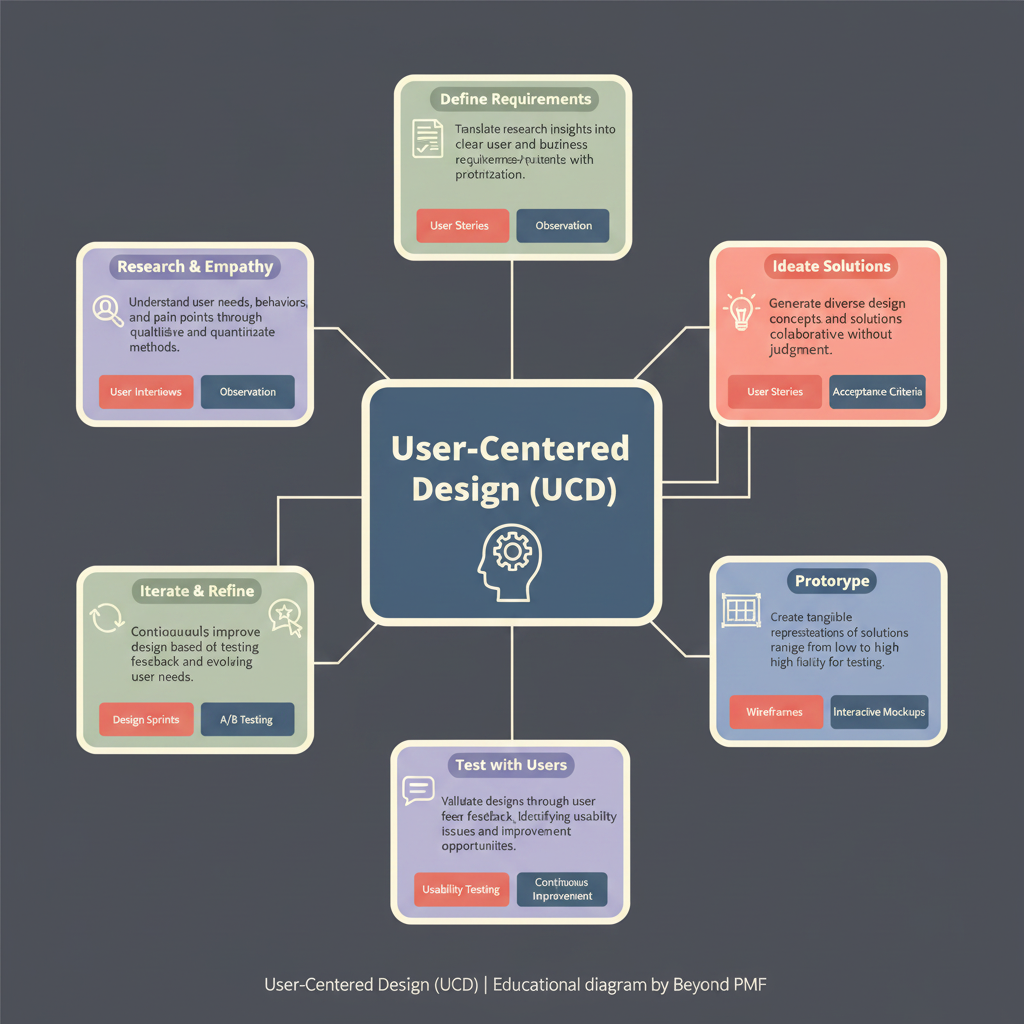
User-Centered Design (UCD) is a framework that emphasizes the importance of designing products and services with the end user's experience as the primary focus. It involves a multi-stage process that integrates user feedback and usability testing throughout the development cycle to ensure the final product meets user needs effectively. This approach helps in creating more usable, accessible, and successful products, leading to higher user satisfaction and better overall performance.
Identify the context of use: Determine who the users are, what they will use the product for, and under what conditions they will use it. | Specify user requirements: Establish detailed user requirements based on the context of use. | Create design solutions: Develop design solutions that meet the user requirements. | Evaluate designs: Test design solutions against user requirements with real users, gather feedback, and refine.
Involve users early and throughout the design process | Use iterative design and testing cycles | Maintain clear and continuous communication among all stakeholders
Increases user satisfaction and engagement | Improves product usability and accessibility | Reduces costs related to redesign and maintenance
Can be time-consuming and resource-intensive | May lead to scope creep due to changing user requirements | Requires skilled professionals to conduct user research and tests
Developing new products or services | Redesigning existing products or interfaces
Projects with extremely tight deadlines | When user needs and behaviors are already well understood