SWOT Analysis

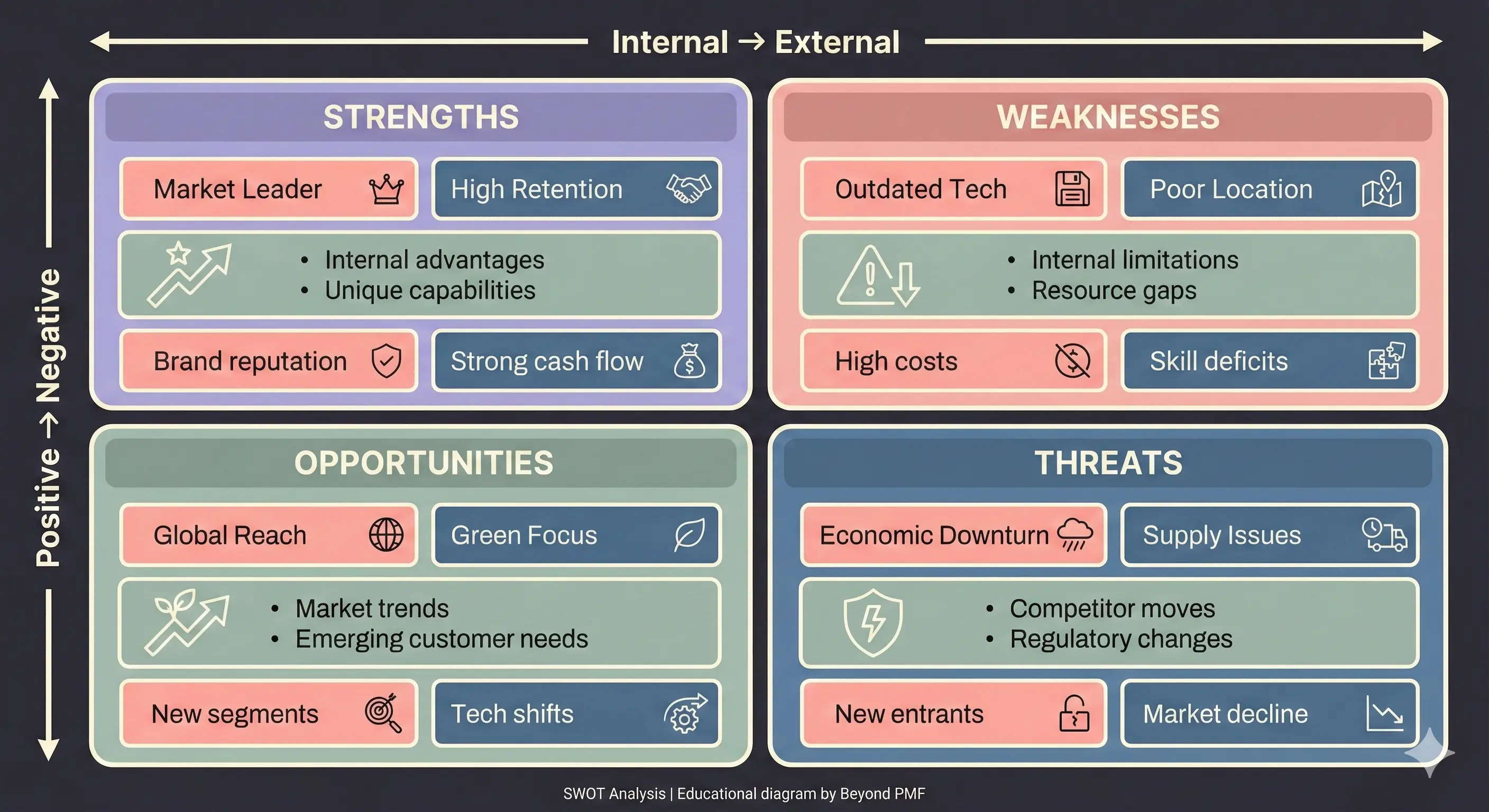
Diagram of the SWOT Analysis framework showing four quadrants: Strengths, Weaknesses, Opportunities, and Threats. Each quadrant contains examples such as market leadership, outdated technology, global reach, and economic downturn. Axes indicate internal versus external factors and positive versus negative impact.
SWOT analysis primarily addresses strategic friction by helping organizations assess their internal strengths and weaknesses and external opportunities and threats. This assessment informs the development of a strategic plan, business model, and overall direction.

SWOT Analysis is a framework that helps organizations assess their position within the marketplace or against a specific objective. By evaluating internal strengths and weaknesses alongside external opportunities and threats, businesses can formulate strategies that capitalize on their advantages while mitigating risks. This analysis is crucial for strategic planning and decision-making, offering a clear, organized overview of a company's competitive landscape.

Steps / Detailed Description

Identify and list the internal strengths of the organization. | Assess and note the internal weaknesses within the organization. | Explore and record potential external opportunities. | Analyze and list external threats that could impact the organization. | Use the findings to develop strategic plans that leverage strengths, address weaknesses, capitalize on opportunities, and mitigate threats.

Best Practices

Be as specific as possible when identifying strengths, weaknesses, opportunities, and threats. | Incorporate data and analytics to support the SWOT findings. | Regularly update the SWOT analysis to reflect changes in the business environment.

Pros

Provides a clear framework for analyzing company dynamics and market conditions. | Facilitates strategic thinking and decision-making. | Helps identify new opportunities and areas for improvement.

Cons

Can be overly simplistic, ignoring complex interdependencies. | May lead to subjective analyses if not informed by data. | Often fails to prioritize identified issues, leading to scattered strategic actions.

When to Use

When entering a new market or launching a new product. | During annual strategic planning sessions.

When Not to Use

When detailed, quantitative analysis is required. | In rapidly changing industries where data becomes quickly outdated.

Related Frameworks

Categories

Lifecycle

Scope

Scope not defined

Maturity Level

Maturity level not specified

Time to Implement

2–4 Weeks
3–6 Months
1–2 Weeks
3–6 Months
1–2 Months
3–6 Months
1–2 Weeks
Less Than 1 Day
1–2 Weeks
Longer Than 6 Months
1–2 Weeks
Longer Than 6 Months
1–2 Weeks
3–6 Months
1–2 Weeks
1–2 Weeks
1–2 Weeks
1–2 Weeks
1–2 Days
1–2 Weeks
1–2 Weeks
1–2 Weeks
1–2 Weeks
1–2 Weeks
1–2 Weeks
3–6 Months
1–2 Weeks
1–2 Weeks
1–2 Weeks
3–6 Months
1–2 Weeks
1–2 Weeks
2–4 Weeks
1–2 Weeks
1–2 Days
1–2 Weeks
Longer Than 6 Months
3–6 Months
Longer Than 6 Months
1–2 Weeks
Longer Than 6 Months
3–6 Months
Less Than 1 Day
3–6 Months
1–2 Months
3–6 Months
Longer Than 6 Months
3–6 Months
Less Than 1 Day
1–2 Weeks
3–6 Months
3–6 Months
1–2 Weeks
3–6 Months
1–2 Weeks
1–2 Weeks
1–2 Days
1–2 Weeks
1–2 Months
Longer Than 6 Months
1–2 Weeks
Longer Than 6 Months
1–2 Weeks
3–6 Months
1–2 Weeks
Less Than 1 Day
1–2 Weeks
3–6 Months
1–2 Weeks
3–6 Months
1–2 Weeks
1–2 Weeks
Longer Than 6 Months
Less Than 1 Day
3–6 Months
Longer Than 6 Months
1–2 Months
1–2 Weeks
Longer Than 6 Months
1–2 Weeks
3–6 Months
1–2 Weeks
1–2 Weeks
3–6 Months
Less Than 1 Day
1–2 Weeks
1–2 Weeks
3–6 Months
3–6 Months
Less Than 1 Day
1–2 Weeks
Longer Than 6 Months
1–2 Months
1–2 Weeks
1–2 Weeks
1–2 Weeks
Longer Than 6 Months

Copyright Information

Autor:
Public Domain
N/A
Publication:
Generic Business Tool