5C Analysis

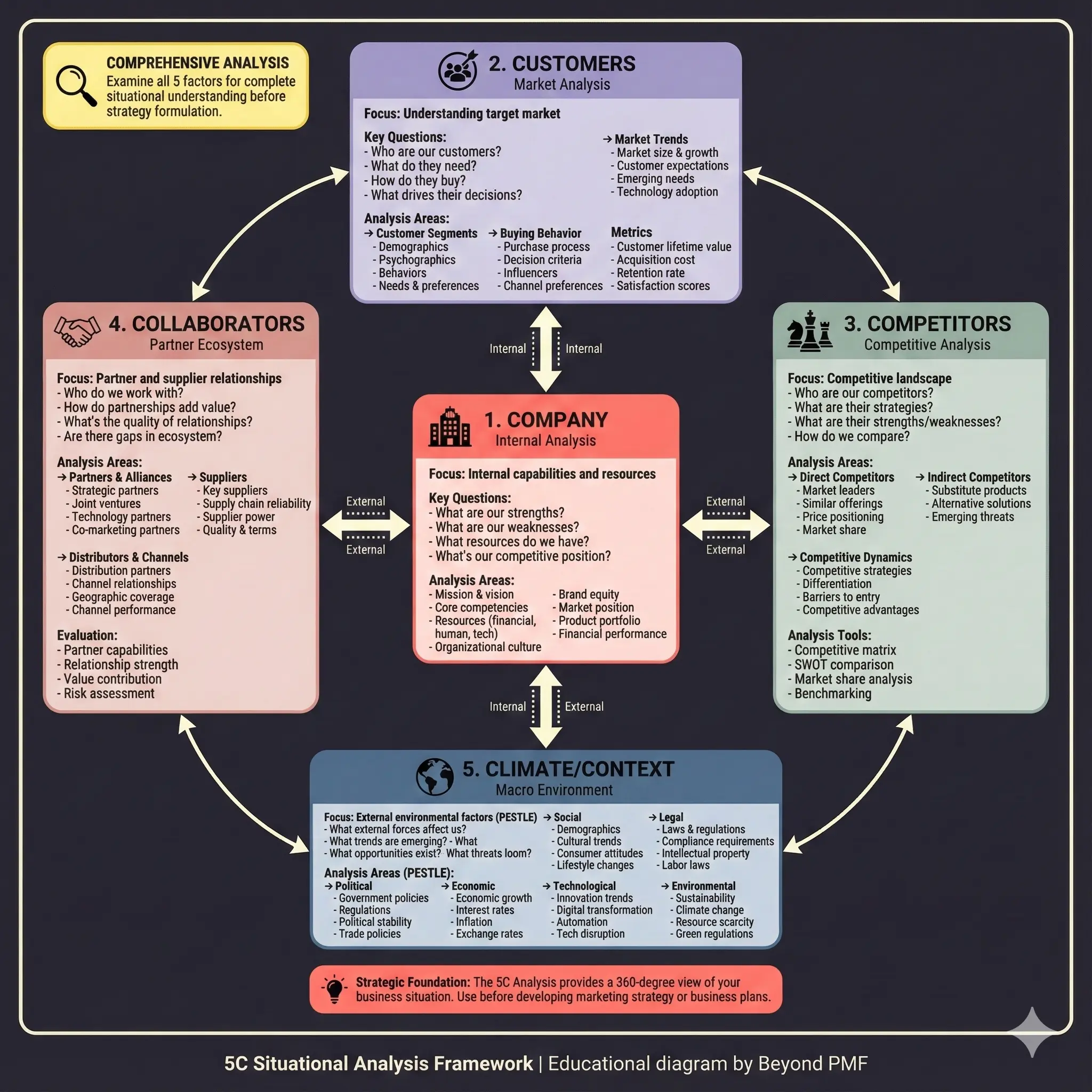
Diagram of the 5C Situational Analysis Framework with five interconnected components: Company, Customers, Competitors, Collaborators, and Climate/Context. Each section outlines focus areas, key questions, and analysis areas. Arrows show internal versus external factors and illustrate the cyclical process of evaluating a business environment.
5C Analysis helps businesses understand their environment, including customers, company, competitors, collaborators, and climate. This analysis is fundamental to informing strategic decisions about market positioning and overall business direction.

The 5C Analysis is a strategic framework used by businesses to evaluate five key areas that impact a company's operations and strategic decisions. These areas include Company, Competitors, Customers, Collaborators, and Climate. This framework helps in understanding both the internal capabilities and external opportunities or threats, guiding strategic planning and decision-making processes. It is particularly beneficial for assessing new markets, reevaluating current strategies, and maintaining competitive advantage.

Steps / Detailed Description

Company: Analyze the internal environment, focusing on strengths and weaknesses. | Competitors: Evaluate direct and indirect competitors, understanding their strategies, strengths, and weaknesses. | Customers: Assess customer demographics, preferences, and needs to better tailor products and services. | Collaborators: Identify and analyze key partners, suppliers, and other alliances that can influence business operations. | Climate: Examine the broader context in which the company operates, including economic, social, and technological factors.

Best Practices

Regularly update the analysis to reflect current conditions | Use reliable sources and methods for data collection | Integrate insights from the 5C analysis into strategic planning sessions

Pros

Provides a holistic view of the business environment | Facilitates targeted strategic planning | Enhances understanding of market dynamics and competitive landscape

Cons

Can be time-consuming to gather comprehensive data | May require constant updating as market conditions change | Relies heavily on the accuracy of the data collected

When to Use

When entering a new market | When reevaluating or updating business strategies

When Not to Use

In very stable, unchanging market conditions | When quick, tactical decisions are required without the need for deep analysis

Related Frameworks

Categories

Lifecycle

Scope

Scope not defined

Maturity Level

Maturity level not specified

Time to Implement

2–4 Weeks
3–6 Months
1–2 Weeks
3–6 Months
1–2 Months
3–6 Months
1–2 Weeks
Less Than 1 Day
1–2 Weeks
Longer Than 6 Months
1–2 Weeks
Longer Than 6 Months
1–2 Weeks
3–6 Months
1–2 Weeks
1–2 Weeks
1–2 Weeks
1–2 Weeks
1–2 Days
1–2 Weeks
1–2 Weeks
1–2 Weeks
1–2 Weeks
1–2 Weeks
1–2 Weeks
3–6 Months
1–2 Weeks
1–2 Weeks
1–2 Weeks
3–6 Months
1–2 Weeks
1–2 Weeks
2–4 Weeks
1–2 Weeks
1–2 Days
1–2 Weeks
Longer Than 6 Months
3–6 Months
Longer Than 6 Months
1–2 Weeks
Longer Than 6 Months
3–6 Months
Less Than 1 Day
3–6 Months
1–2 Months
3–6 Months
Longer Than 6 Months
3–6 Months
Less Than 1 Day
1–2 Weeks
3–6 Months
3–6 Months
1–2 Weeks
3–6 Months
1–2 Weeks
1–2 Weeks
1–2 Days
1–2 Weeks
1–2 Months
Longer Than 6 Months
1–2 Weeks
Longer Than 6 Months
1–2 Weeks
3–6 Months
1–2 Weeks
Less Than 1 Day
1–2 Weeks
3–6 Months
1–2 Weeks
3–6 Months
1–2 Weeks
1–2 Weeks
Longer Than 6 Months
Less Than 1 Day
3–6 Months
Longer Than 6 Months
1–2 Months
1–2 Weeks
Longer Than 6 Months
1–2 Weeks
3–6 Months
1–2 Weeks
1–2 Weeks
3–6 Months
Less Than 1 Day
1–2 Weeks
1–2 Weeks
3–6 Months
3–6 Months
Less Than 1 Day
1–2 Weeks
Longer Than 6 Months
1–2 Months
1–2 Weeks
1–2 Weeks
1–2 Weeks
Longer Than 6 Months

Copyright Information

Autor:
Public Domain
N/A
Publication:
Generic Business Tool