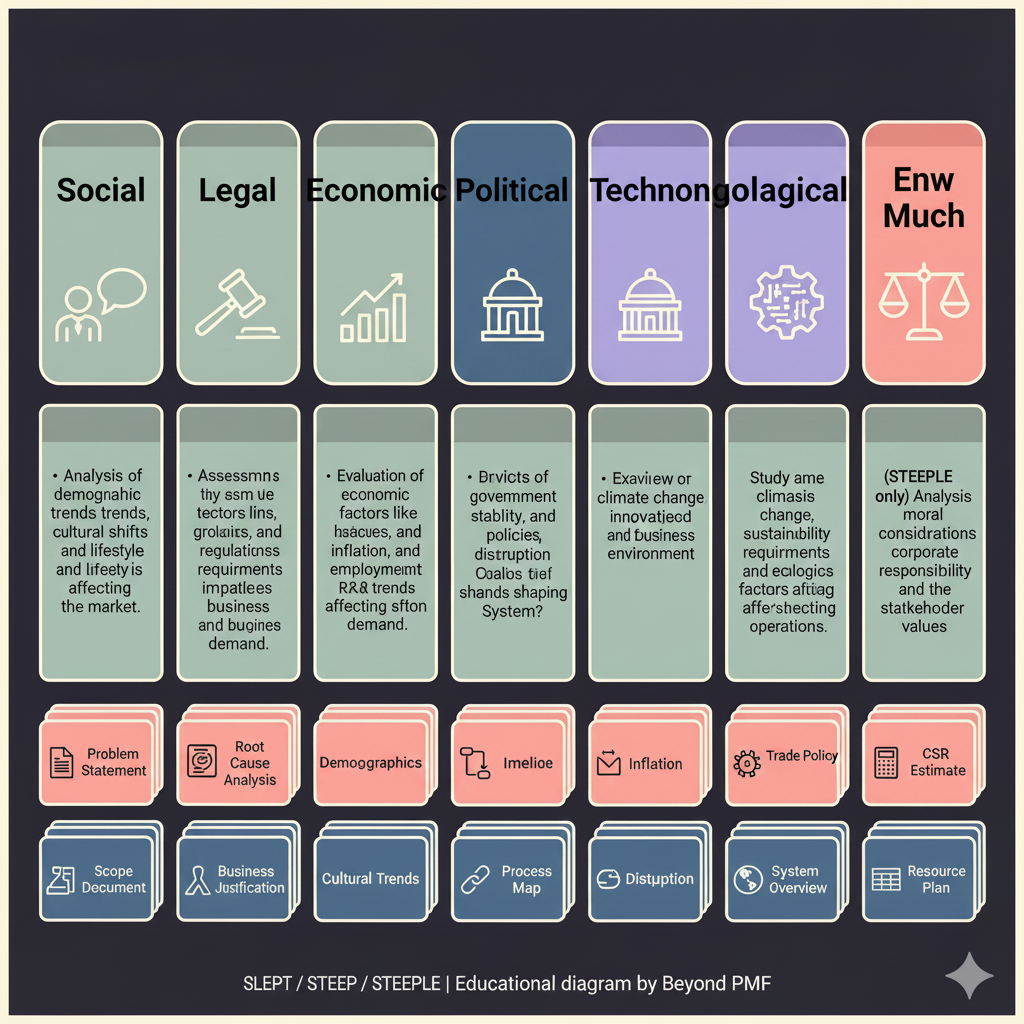
SLEPT / STEEP / STEEPLE

https://ik.imagekit.io/beyondpmf/frameworks/slept-steep-steeple.png
The SLEPT/STEEP/STEEPLE framework primarily addresses the strategic friction of unclear direction and lack of market alignment by providing a structured method for analyzing external environmental factors. This analysis helps organizations understand the forces shaping their industry, informing strategic decisions and enabling better market positioning.

The SLEPT / STEEP / STEEPLE framework is a comprehensive tool used to assess the external factors that could impact an organization's performance. It stands for Social, Legal, Economic, Political, Technological, Environmental, and Ethical factors. Businesses use this framework to identify potential opportunities and threats in their external environment, enabling them to strategize effectively and mitigate risks. The inclusion of environmental and ethical factors in STEEPLE makes it particularly relevant in today's sustainability-focused business landscape.

Steps / Detailed Description

Identify the relevant factors: Social, Legal, Economic, Political, Technological, Environmental, and Ethical. | Analyze how each factor currently affects the organization and how it might do so in the future. | Evaluate the impact of these factors on the organization's strategic decisions and operations. | Develop strategies to leverage opportunities and mitigate threats identified during the analysis.

Best Practices

Regularly update the analysis to reflect changes in the external environment. | Combine with internal analysis tools like SWOT for a balanced strategic view. | Engage stakeholders from various departments for a holistic analysis.

Pros

Provides a comprehensive overview of the external environment. | Helps in proactive risk management and strategic planning. | Enhances understanding of potential impacts from various external factors.

Cons

Can be time-consuming to gather accurate data for all factors. | May lead to analysis paralysis if too much information is considered. | External focus might overlook internal capabilities and resources.

When to Use

When entering a new market or launching a new product. | During the strategic planning process.

When Not to Use

When the organization requires immediate, tactical decisions. | In highly stable environments with little external change.

Related Frameworks

Categories

Lifecycle

Scope

Scope not defined

Maturity Level

Maturity level not specified

Time to Implement

2–4 Weeks
3–6 Months
1–2 Weeks
3–6 Months
1–2 Months
3–6 Months
1–2 Weeks
Less Than 1 Day
1–2 Weeks
Longer Than 6 Months
1–2 Weeks
Longer Than 6 Months
1–2 Weeks
3–6 Months
1–2 Weeks
1–2 Weeks
1–2 Weeks
1–2 Weeks
1–2 Days
1–2 Weeks
1–2 Weeks
1–2 Weeks
1–2 Weeks
1–2 Weeks
1–2 Weeks
3–6 Months
1–2 Weeks
1–2 Weeks
1–2 Weeks
3–6 Months
1–2 Weeks
1–2 Weeks
2–4 Weeks
1–2 Weeks
1–2 Days
1–2 Weeks
Longer Than 6 Months
3–6 Months
Longer Than 6 Months
1–2 Weeks
Longer Than 6 Months
3–6 Months
Less Than 1 Day
3–6 Months
1–2 Months
3–6 Months
Longer Than 6 Months
3–6 Months
Less Than 1 Day
1–2 Weeks
3–6 Months
3–6 Months
1–2 Weeks
3–6 Months
1–2 Weeks
1–2 Weeks
1–2 Days
1–2 Weeks
1–2 Months
Longer Than 6 Months
1–2 Weeks
Longer Than 6 Months
1–2 Weeks
3–6 Months
1–2 Weeks
Less Than 1 Day
1–2 Weeks
3–6 Months
1–2 Weeks
3–6 Months
1–2 Weeks
1–2 Weeks
Longer Than 6 Months
Less Than 1 Day
3–6 Months
Longer Than 6 Months
1–2 Months
1–2 Weeks
Longer Than 6 Months
1–2 Weeks
3–6 Months
1–2 Weeks
1–2 Weeks
3–6 Months
Less Than 1 Day
1–2 Weeks
1–2 Weeks
3–6 Months
3–6 Months
Less Than 1 Day
1–2 Weeks
Longer Than 6 Months
1–2 Months
1–2 Weeks
1–2 Weeks
1–2 Weeks
Longer Than 6 Months

Copyright Information

Autor:
Unknown
N/A
Publication:
Generic Business Tool