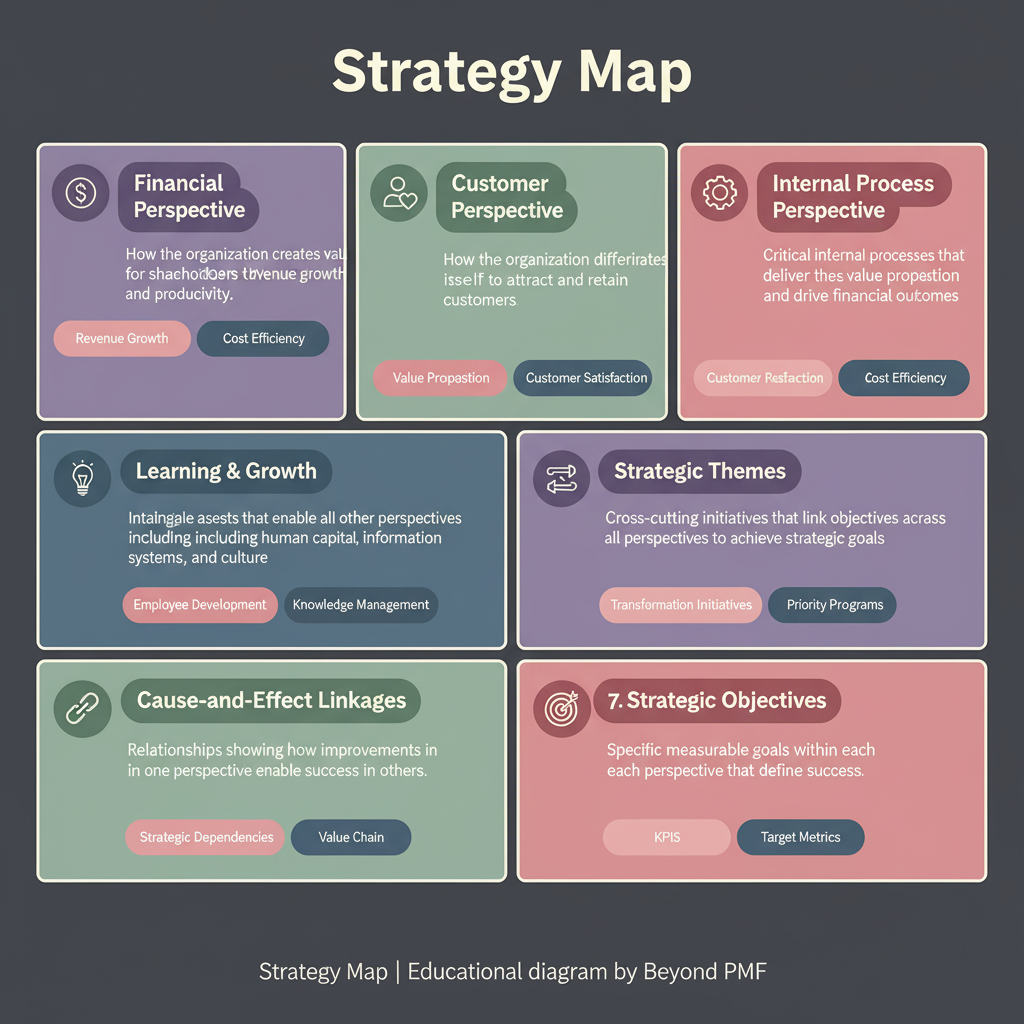
A Strategy Map is a visual representation used by businesses to align their objectives in a coherent way that promotes better strategic planning. It typically illustrates how various goals relate to each other across different perspectives such as financial, customer, internal processes, and learning and growth. This framework helps organizations translate their strategic objectives into performance metrics, providing a clear pathway for implementation and evaluation.
Identify strategic objectives across four perspectives: Financial, Customer, Internal Processes, and Learning and Growth. | Define clear cause-and-effect linkages between objectives to show how they interrelate. | Translate these objectives into specific, measurable performance metrics. | Use the map to communicate strategy throughout the organization and align initiatives. | Regularly review and update the Strategy Map as conditions and strategies evolve.
Ensure involvement from all relevant stakeholders during the creation process. | Keep the map simple and focused to avoid confusion. | Regularly review and revise the map to reflect changes in the business environment.
Provides a clear visualization of strategy and objectives. | Facilitates alignment of initiatives and resources with strategic goals. | Enhances communication and understanding of business strategy across the organization.
Can be overly simplistic, ignoring complex interdependencies. | Requires regular updates to remain relevant, which can be resource-intensive. | May not be suitable for highly dynamic industries where strategies frequently change.
When defining or revising an organization's strategy. | In strategic planning sessions to align team and department goals.
In highly volatile markets where long-term strategies are less applicable. | When the organization lacks clear strategic direction or objectives.