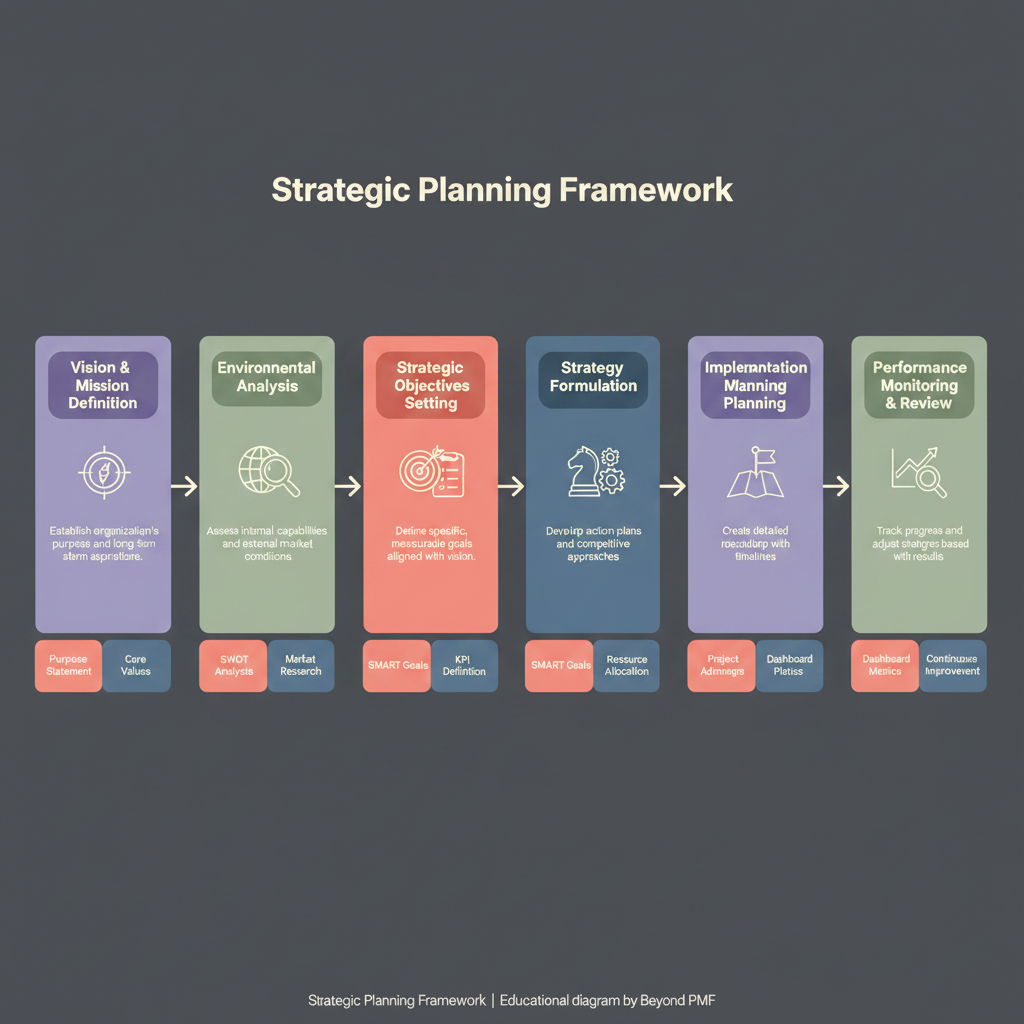
Strategic Planning Framework

https://ik.imagekit.io/beyondpmf/frameworks/strategic-planning-framework.png
The Strategic Planning Framework primarily addresses the friction of unclear direction and conflicting priorities by providing a structured approach to define an organization's strategy and allocate resources effectively. It helps clarify the vision, strategy, and business model.

The Strategic Planning Framework is a comprehensive tool that assists organizations in defining their long-term goals, identifying their strategic objectives, and developing a plan to achieve these objectives. It involves a thorough analysis of both internal and external factors that can impact the organization. This framework is crucial for aligning the company's vision with realistic goals and for ensuring that all aspects of the organization are working towards a common purpose. The benefits of using this framework include improved strategic alignment, enhanced decision-making, and better resource management.

Steps / Detailed Description

Define the organization's mission, vision, and values. | Conduct a situational analysis using tools like SWOT (Strengths, Weaknesses, Opportunities, Threats). | Identify strategic objectives and priorities. | Develop a strategy map to visualize and align objectives. | Formulate action plans and allocate resources. | Implement the strategy with timelines and responsibilities. | Monitor and evaluate the implementation of the plan and adjust as necessary.

Best Practices

Regularly update the strategic plan to reflect changes in the environment. | Ensure broad stakeholder engagement in the planning process. | Use clear, measurable objectives to track progress.

Pros

Provides a clear roadmap for the future. | Enhances alignment between different parts of the organization. | Facilitates proactive management of opportunities and threats.

Cons

Can be time-consuming and complex. | May require significant resources and commitment. | Risks of rigidity in rapidly changing environments.

When to Use

When defining or redefining the organization’s long-term objectives. | During annual planning cycles to align efforts and resources.

When Not to Use

In highly volatile or unpredictable markets where flexibility is crucial. | When immediate, tactical responses are required rather than long-term planning.

Related Frameworks

Lifecycle

Scope

Scope not defined

Maturity Level

Maturity level not specified

Time to Implement

2–4 Weeks
3–6 Months
1–2 Weeks
3–6 Months
1–2 Months
3–6 Months
1–2 Weeks
Less Than 1 Day
1–2 Weeks
Longer Than 6 Months
1–2 Weeks
Longer Than 6 Months
1–2 Weeks
3–6 Months
1–2 Weeks
1–2 Weeks
1–2 Weeks
1–2 Weeks
1–2 Days
1–2 Weeks
1–2 Weeks
1–2 Weeks
1–2 Weeks
1–2 Weeks
1–2 Weeks
3–6 Months
1–2 Weeks
1–2 Weeks
1–2 Weeks
3–6 Months
1–2 Weeks
1–2 Weeks
2–4 Weeks
1–2 Weeks
1–2 Days
1–2 Weeks
Longer Than 6 Months
3–6 Months
Longer Than 6 Months
1–2 Weeks
Longer Than 6 Months
3–6 Months
Less Than 1 Day
3–6 Months
1–2 Months
3–6 Months
Longer Than 6 Months
3–6 Months
Less Than 1 Day
1–2 Weeks
3–6 Months
3–6 Months
1–2 Weeks
3–6 Months
1–2 Weeks
1–2 Weeks
1–2 Days
1–2 Weeks
1–2 Months
Longer Than 6 Months
1–2 Weeks
Longer Than 6 Months
1–2 Weeks
3–6 Months
1–2 Weeks
Less Than 1 Day
1–2 Weeks
3–6 Months
1–2 Weeks
3–6 Months
1–2 Weeks
1–2 Weeks
Longer Than 6 Months
Less Than 1 Day
3–6 Months
Longer Than 6 Months
1–2 Months
1–2 Weeks
Longer Than 6 Months
1–2 Weeks
3–6 Months
1–2 Weeks
1–2 Weeks
3–6 Months
Less Than 1 Day
1–2 Weeks
1–2 Weeks
3–6 Months
3–6 Months
Less Than 1 Day
1–2 Weeks
Longer Than 6 Months
1–2 Months
1–2 Weeks
1–2 Weeks
1–2 Weeks
Longer Than 6 Months

Copyright Information

Autor:
Unknown
N/A
Publication:
Generic Business Tool