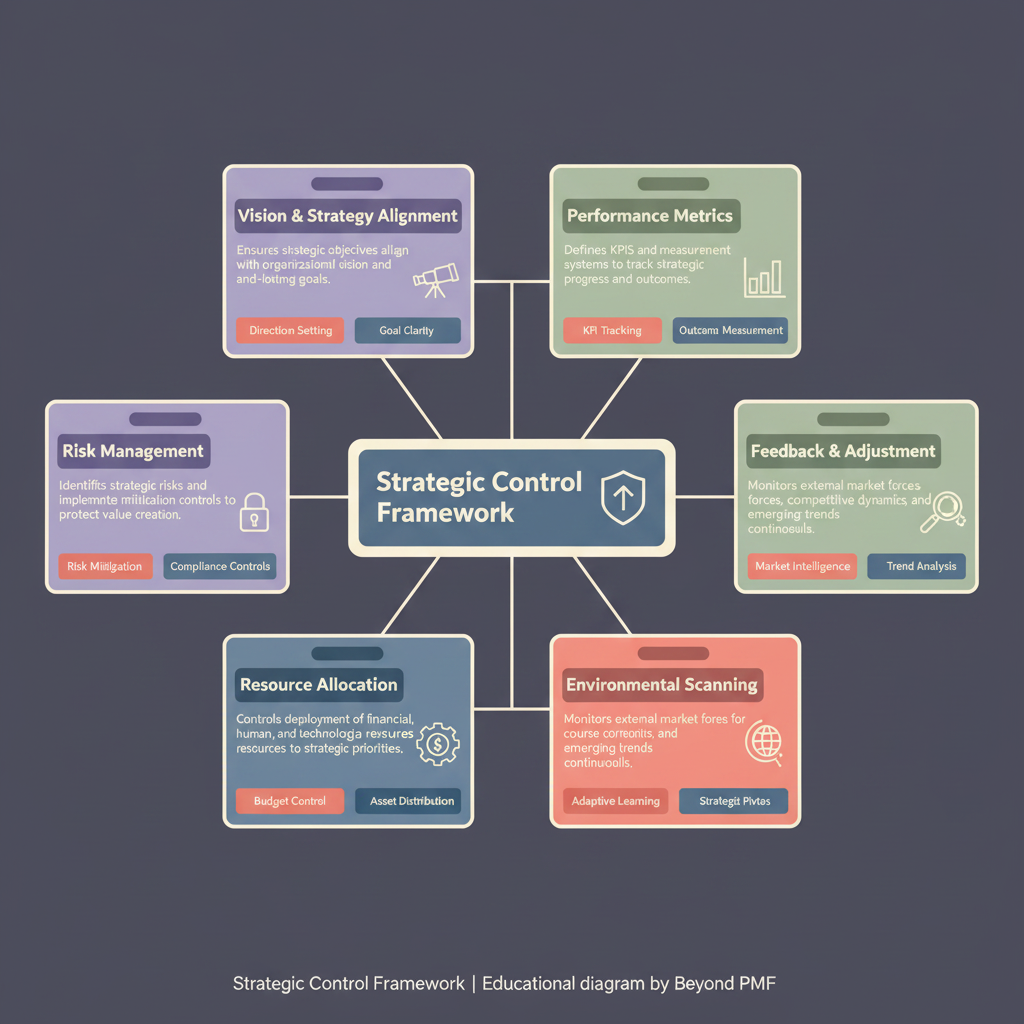
Strategic Control Framework

https://ik.imagekit.io/beyondpmf/frameworks/strategic-control-framework.png
The Strategic Control Framework primarily addresses friction related to unclear direction and lack of market alignment by monitoring and adjusting strategies. It helps ensure strategies remain aligned with overall company objectives and that the business model is still viable.

The Strategic Control Framework is a vital tool for organizations aiming to ensure that their strategic initiatives are on track and aligned with overall goals. It involves continuous monitoring and evaluation of the strategies being implemented, providing a systematic approach to assess their effectiveness and make necessary adjustments. This framework helps in identifying deviations from planned outcomes and facilitates timely decision-making to steer the company back on course, thus enhancing strategic agility and competitive advantage.

Steps / Detailed Description

  • Define strategic objectives and goals.
  • Develop key performance indicators (KPIs) to measure success.
  • Implement strategies and initiate monitoring processes.
  • Regularly review performance data against KPIs.
  • Identify deviations and analyze root causes.
  • Adjust strategies as necessary to realign with objectives.

Best Practices

  • Clearly define measurable and realistic KPIs
  • Ensure regular and systematic review processes
  • Promote a culture of flexibility and adaptability

Pros

  • Ensures alignment of strategies with business objectives
  • Facilitates proactive management and quick response
  • Enhances decision-making through continuous feedback

Cons

  • Can be resource-intensive to implement and maintain
  • May lead to short-term focus at the expense of long-term goals
  • Requires high-quality data for effective decision-making

When to Use

  • When implementing new strategic initiatives
  • In rapidly changing market conditions

When Not to Use

  • When the organization lacks the resources to effectively implement it
  • In highly stable and predictable market environments

Related Frameworks

Lifecycle

Maturity Level

Time to Implement

2–4 Weeks
3–6 Months
1–2 Weeks
3–6 Months
1–2 Months
3–6 Months
1–2 Weeks
Less Than 1 Day
1–2 Weeks
Longer Than 6 Months
1–2 Weeks
Longer Than 6 Months
1–2 Weeks
3–6 Months
1–2 Weeks
1–2 Weeks
1–2 Weeks
1–2 Weeks
1–2 Days
1–2 Weeks
1–2 Weeks
1–2 Weeks
1–2 Weeks
1–2 Weeks
1–2 Weeks
3–6 Months
1–2 Weeks
1–2 Weeks
1–2 Weeks
3–6 Months
1–2 Weeks
1–2 Weeks
2–4 Weeks
1–2 Weeks
1–2 Days
1–2 Weeks
Longer Than 6 Months
3–6 Months
Longer Than 6 Months
1–2 Weeks
Longer Than 6 Months
3–6 Months
Less Than 1 Day
3–6 Months
1–2 Months
3–6 Months
Longer Than 6 Months
3–6 Months
Less Than 1 Day
1–2 Weeks
3–6 Months
3–6 Months
1–2 Weeks
3–6 Months
1–2 Weeks
1–2 Weeks
1–2 Days
1–2 Weeks
1–2 Months
Longer Than 6 Months
1–2 Weeks
Longer Than 6 Months
1–2 Weeks
3–6 Months
1–2 Weeks
Less Than 1 Day
1–2 Weeks
3–6 Months
1–2 Weeks
3–6 Months
1–2 Weeks
1–2 Weeks
Longer Than 6 Months
Less Than 1 Day
3–6 Months
Longer Than 6 Months
1–2 Months
1–2 Weeks
Longer Than 6 Months
1–2 Weeks
3–6 Months
1–2 Weeks
1–2 Weeks
3–6 Months
Less Than 1 Day
1–2 Weeks
1–2 Weeks
3–6 Months
3–6 Months
Less Than 1 Day
1–2 Weeks
Longer Than 6 Months
1–2 Months
1–2 Weeks
1–2 Weeks
1–2 Weeks
Longer Than 6 Months

Copyright Information

Autor:
Unknown
N/A
Publication:
Generic Business Tool