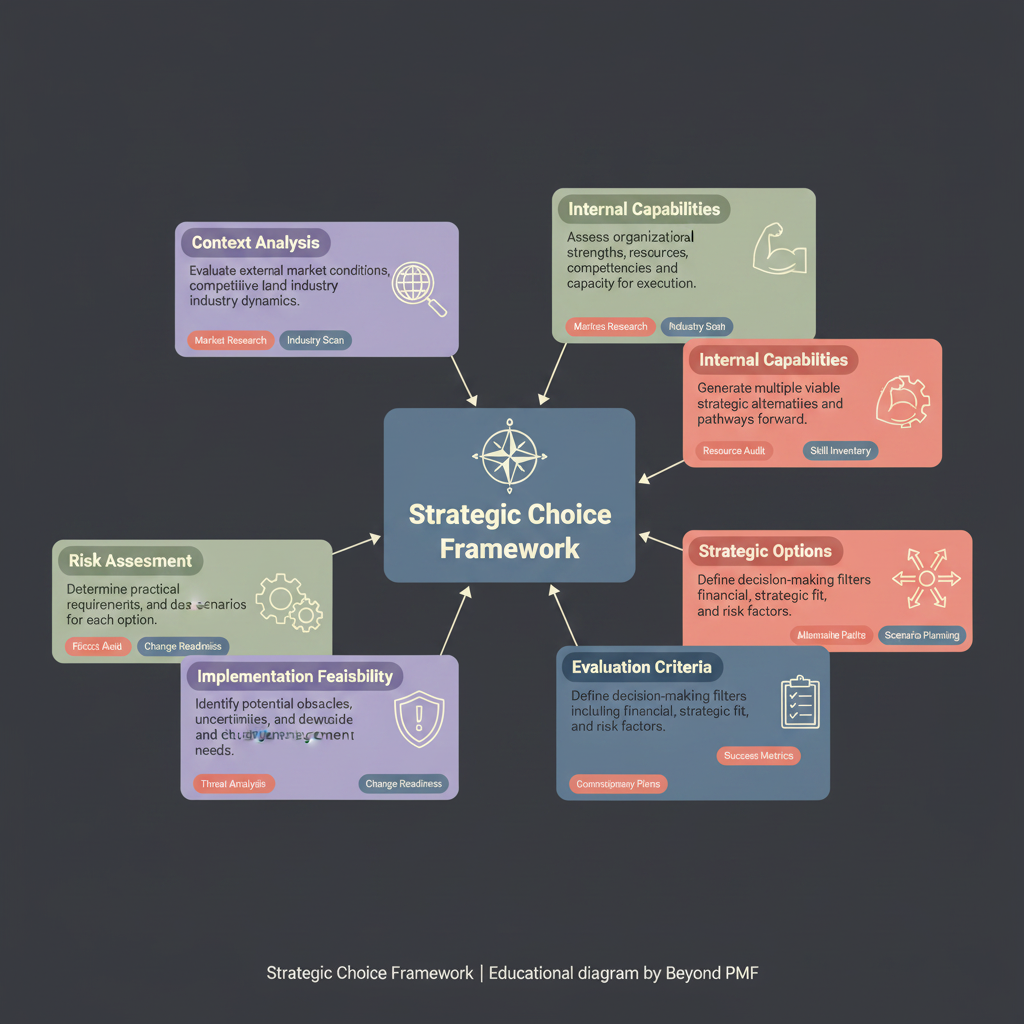
The Strategic Choice Framework is a decision-making tool used by businesses to systematically evaluate different strategic options and their potential outcomes. It helps organizations align their strategic actions with their overall objectives and market conditions. The framework is beneficial as it provides a structured approach to decision-making, ensuring that all potential strategies are considered and that the chosen strategy is robust against various future scenarios.
Identify strategic issues and opportunities that the organization faces. | Generate a comprehensive list of strategic options available to address these issues. | Evaluate each strategic option based on criteria such as feasibility, impact, and alignment with organizational goals. | Use scenario planning to anticipate possible outcomes for each strategy under different future conditions. | Select the optimal strategy based on evaluation and scenario analysis. | Develop an implementation plan for the chosen strategy.
Clearly define criteria for evaluating strategic options. | Involve stakeholders from different departments to gain diverse perspectives. | Regularly update and revisit the strategic choices as market conditions evolve.
Enhances decision-making by providing a systematic approach to evaluate options. | Helps in anticipating the impact of different strategic choices under various scenarios. | Aligns strategic decisions with long-term organizational goals.
Can be time-consuming due to the detailed analysis required. | May require substantial resources and expertise to conduct effectively. | Risk of analysis paralysis where too many options and scenarios hinder decision-making.
When facing significant strategic decisions that will impact the long-term direction of the organization. | During times of uncertainty where multiple potential market scenarios could unfold.
For routine operational decisions that do not significantly impact strategic direction. | When quick decisions are needed without the luxury of detailed analysis.