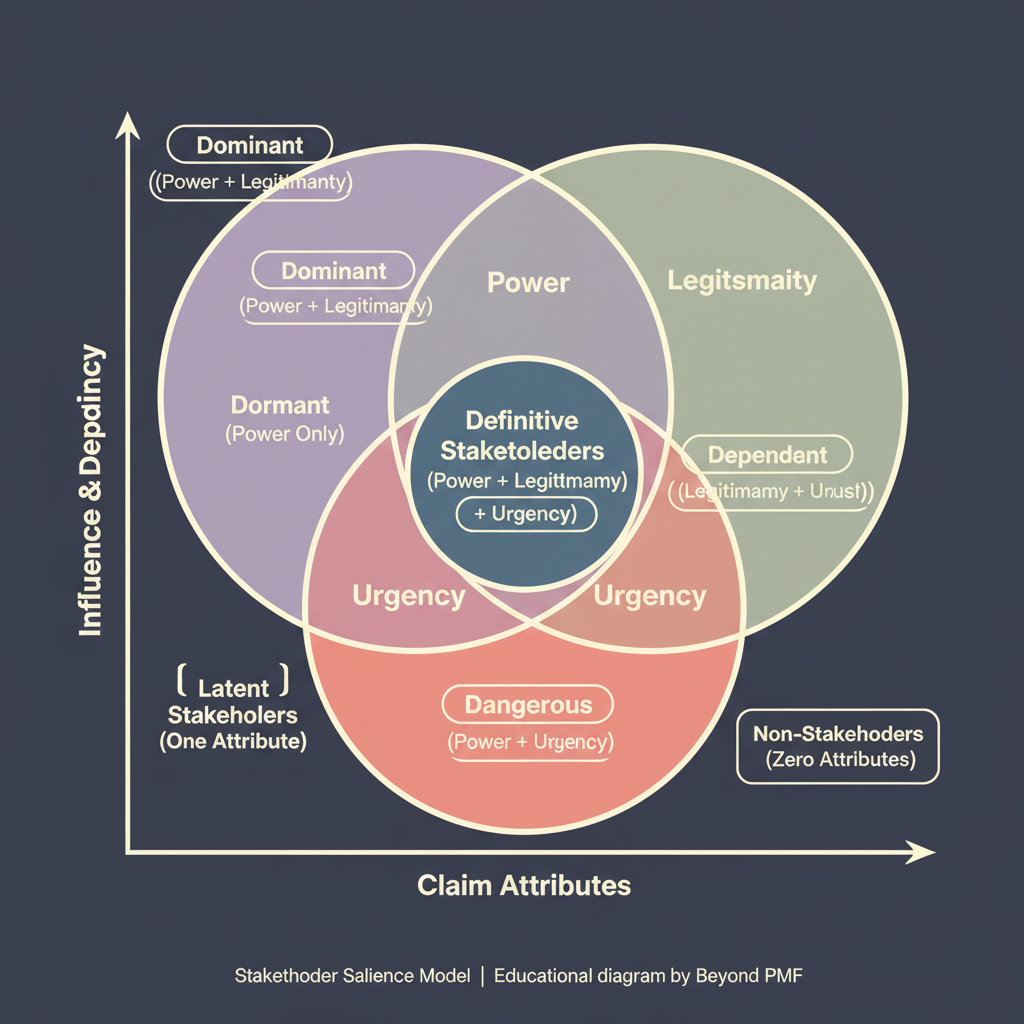
The Stakeholder Salience Model is a strategic tool used by businesses to analyze and prioritize stakeholders according to three key attributes: power, legitimacy, and urgency. This framework assists in understanding which stakeholders are most influential and how their needs should be addressed in decision-making processes. It is particularly beneficial for managing complex stakeholder relationships and ensuring that critical stakeholder demands are met efficiently.
Identify all potential stakeholders relevant to the project or organization. | Assess each stakeholder based on the three attributes: power (ability to influence), legitimacy (appropriateness of their involvement), and urgency (need for immediate attention). | Classify stakeholders into categories based on their attribute scores: dormant, discretionary, demanding, dominant, dangerous, dependent, or definitive. | Prioritize stakeholders based on their classification and develop engagement strategies tailored to each group. | Regularly review and adjust stakeholder classifications and strategies as project conditions or organizational priorities change.
Continuously update and validate stakeholder information to keep the model relevant. | Engage in open communication with stakeholders to better understand their perspectives and needs. | Use the model in conjunction with other analytical tools for a comprehensive stakeholder analysis.
Facilitates targeted stakeholder management strategies. | Enhances organizational awareness of stakeholder influences. | Improves resource allocation by prioritizing key stakeholder needs.
Can be time-consuming to assess and classify all stakeholders. | May overlook less obvious stakeholders who do not fit neatly into the model's categories. | Requires regular updates as stakeholder dynamics change.
When entering a new market or launching a new project. | During crisis management or when dealing with complex stakeholder environments.
For small-scale projects with limited or well-known stakeholder groups. | When rapid decision-making is required without the luxury of detailed analysis.