5S Framework

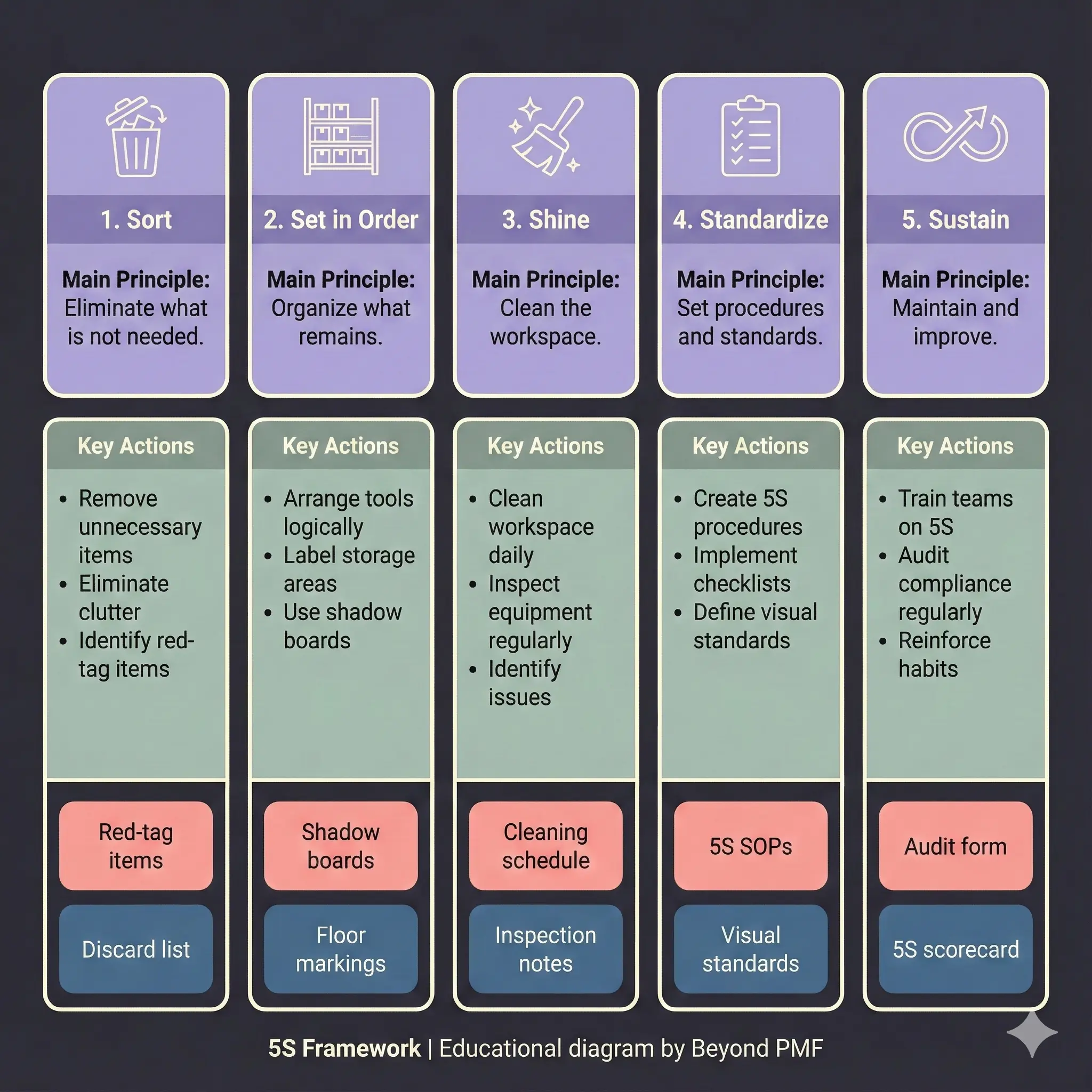
Diagram of the 5S Framework showing five stepsβ€”Sort, Set in Order, Shine, Standardize, and Sustainβ€”each with main principles, key actions, and example tools such as red-tag items, shadow boards, cleaning schedules, visual standards, and audit forms. Icons represent each stage of workplace organization.
The 5S Framework primarily addresses friction in operational workflows by standardizing and organizing the workplace. It streamlines processes, improves coordination, and reduces waste, leading to a more efficient operational environment.

The 5S Framework is a popular lean management tool that focuses on organizing the workplace to improve efficiency and effectiveness. It is based on five principles: Sort, Set in order, Shine, Standardize, and Sustain. This framework helps businesses reduce waste and optimize productivity by maintaining an orderly environment and using visual cues to achieve more consistent operational results. It is widely used in manufacturing, warehousing, and office settings to create a clean, uncluttered, safe, and well-organized workspace.

Steps / Detailed Description

Sort: Remove unnecessary items and dispose of them properly. | Set in order: Arrange necessary items in a way that promotes efficient workflow. | Shine: Clean the workspace and equipment regularly to maintain standards and functionality. | Standardize: Implement uniform procedures and norms for operations. | Sustain: Maintain and review standards to ensure continuous improvement.

Best Practices

Regularly audit the 5S process with cross-functional teams. | Engage all employees in training to foster a culture of continuous improvement. | Use visual aids like labels and color coding to maintain organization.

Pros

Increases productivity by reducing time spent searching for items. | Improves safety by keeping the work environment clean and organized. | Enhances employee morale and engagement through a structured work environment.

Cons

Can be time-consuming to implement and maintain. | May be resisted by employees as it requires change in habits. | Initial costs for training and implementation.

When to Use

In environments where efficiency and safety are critical. | When introducing lean management practices.

When Not to Use

In highly creative environments where flexibility is more valuable than strict order. | When the cost and effort of implementation outweigh the potential benefits.

Related Frameworks

Scope

Scope not defined

Maturity Level

Maturity level not specified

Time to Implement

2–4 Weeks
3–6 Months
1–2 Weeks
3–6 Months
1–2 Months
3–6 Months
1–2 Weeks
Less Than 1 Day
1–2 Weeks
Longer Than 6 Months
1–2 Weeks
Longer Than 6 Months
1–2 Weeks
3–6 Months
1–2 Weeks
1–2 Weeks
1–2 Weeks
1–2 Weeks
1–2 Days
1–2 Weeks
1–2 Weeks
1–2 Weeks
1–2 Weeks
1–2 Weeks
1–2 Weeks
3–6 Months
1–2 Weeks
1–2 Weeks
1–2 Weeks
3–6 Months
1–2 Weeks
1–2 Weeks
2–4 Weeks
1–2 Weeks
1–2 Days
1–2 Weeks
Longer Than 6 Months
3–6 Months
Longer Than 6 Months
1–2 Weeks
Longer Than 6 Months
3–6 Months
Less Than 1 Day
3–6 Months
1–2 Months
3–6 Months
Longer Than 6 Months
3–6 Months
Less Than 1 Day
1–2 Weeks
3–6 Months
3–6 Months
1–2 Weeks
3–6 Months
1–2 Weeks
1–2 Weeks
1–2 Days
1–2 Weeks
1–2 Months
Longer Than 6 Months
1–2 Weeks
Longer Than 6 Months
1–2 Weeks
3–6 Months
1–2 Weeks
Less Than 1 Day
1–2 Weeks
3–6 Months
1–2 Weeks
3–6 Months
1–2 Weeks
1–2 Weeks
Longer Than 6 Months
Less Than 1 Day
3–6 Months
Longer Than 6 Months
1–2 Months
1–2 Weeks
Longer Than 6 Months
1–2 Weeks
3–6 Months
1–2 Weeks
1–2 Weeks
3–6 Months
Less Than 1 Day
1–2 Weeks
1–2 Weeks
3–6 Months
3–6 Months
Less Than 1 Day
1–2 Weeks
Longer Than 6 Months
1–2 Months
1–2 Weeks
1–2 Weeks
1–2 Weeks
Longer Than 6 Months

Copyright Information

Autor:
Public Domain
N/A
Publication:
Generic Business Tool