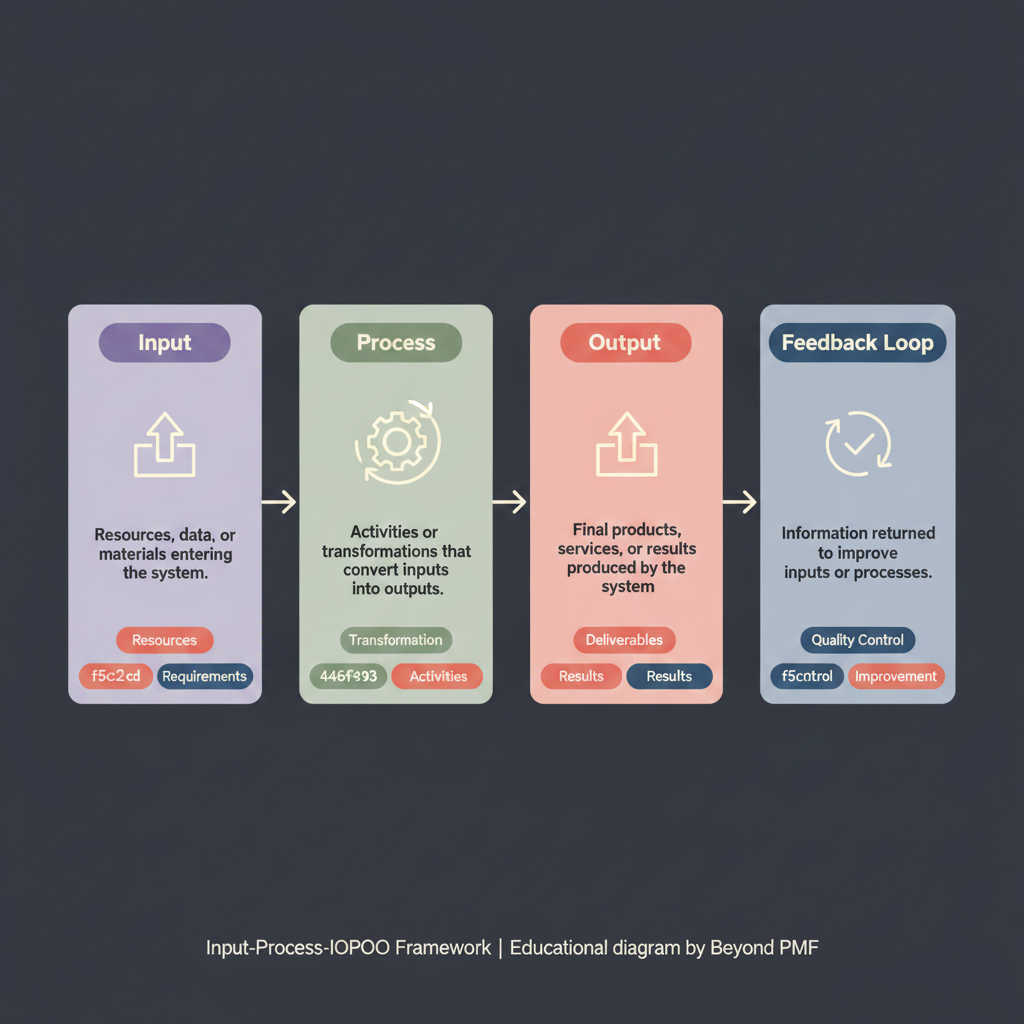
The Input-Process-Output Framework is a fundamental tool in systems analysis and business process modeling. It helps organizations identify and map out the essential elements of any process. Inputs are the resources that are used to produce outputs via a series of processes. This framework is particularly useful for improving efficiency, understanding the flow of information, and identifying areas for improvement within business operations.
Identify the inputs required for the process. These can include raw materials, data, or human resources. | Define the processes that transform the inputs into outputs. This involves mapping out each step involved in the production or operational process. | Determine the outputs, which are the results or products generated from the processes. | Analyze the efficiency of the process and the quality of the outputs, making adjustments as necessary.
Regularly update the process maps to reflect any changes in the business environment. | Engage stakeholders from different departments to provide a comprehensive view of the inputs and processes. | Use quantitative and qualitative data to measure the effectiveness of the outputs.
Provides a clear structure for analyzing business processes | Facilitates identification of inefficiencies and areas for improvement | Helps in understanding the dependencies and relationships between different business activities
May oversimplify complex processes | Can be too rigid in dynamic environments where inputs and outputs are not clearly defined | Focuses primarily on the flow and transformation of information, possibly neglecting the human or cultural elements
When mapping out new processes or systems | In process improvement initiatives to identify inefficiencies
In highly unpredictable or creative environments where processes are not standardized | When the focus is on human elements or cultural aspects which the framework may not capture effectively