8D Problem-Solving

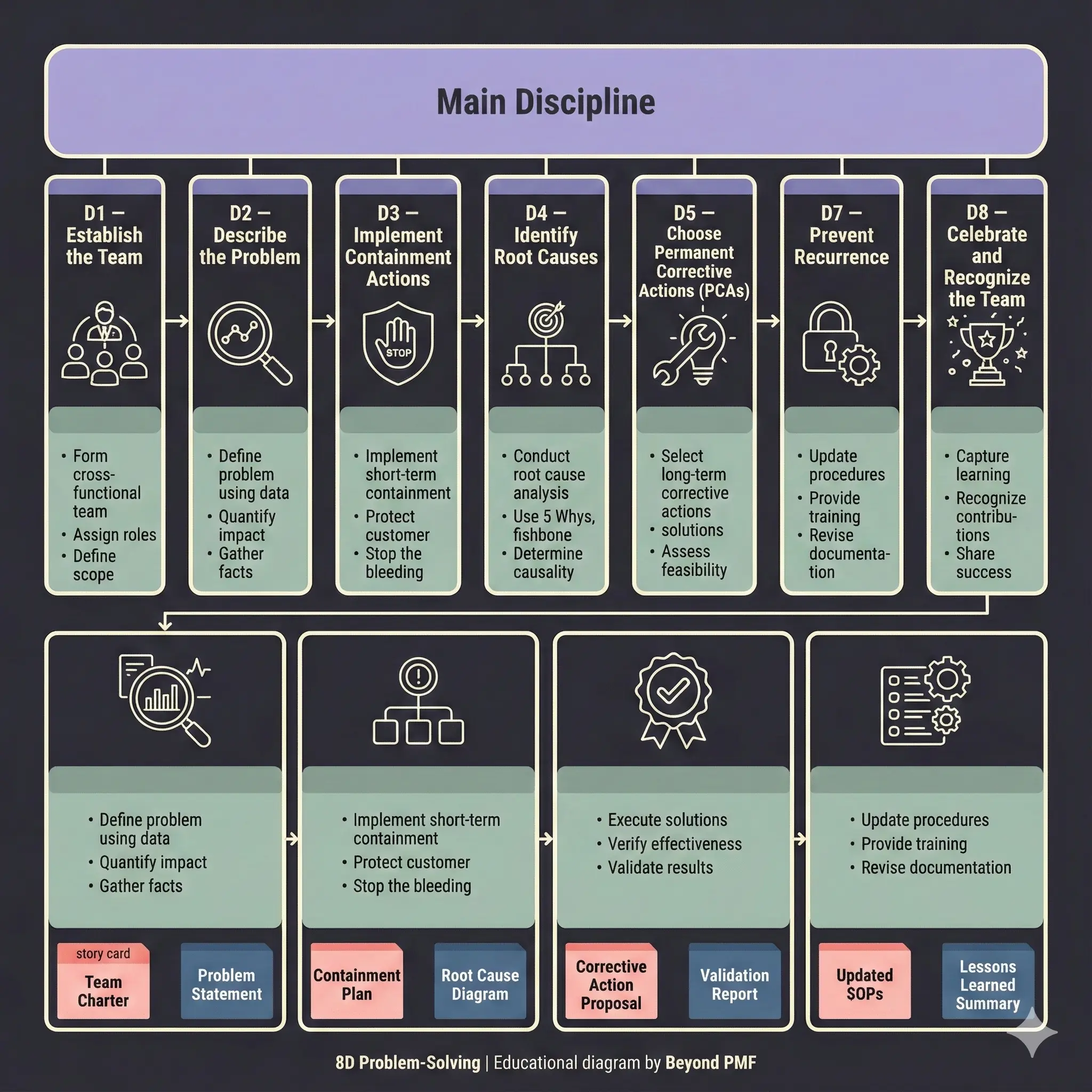
Diagram of the 8D Problem-Solving process showing eight steps: Establish the Team, Describe the Problem, Implement Containment Actions, Identify Root Causes, Choose Permanent Corrective Actions, Prevent Recurrence, and Celebrate and Recognize the Team. Each step lists key activities such as data gathering, containment, root cause analysis, solution selection, validation, updating procedures, and capturing lessons learned, with icons and example outputs.”
The 8D Problem-Solving framework directly addresses issues related to problem resolution, a core aspect of efficient delivery and technical quality within manufacturing and engineering. It focuses on the implementation and improvement of technical aspects to resolve issues.

The 8D Problem-Solving framework, also known as the Eight Disciplines, is a comprehensive approach used by teams to identify, correct, and eliminate recurring problems. This method promotes product and process improvement and focuses on team synergy. The 8D approach is structured into eight sequential steps, starting with problem identification and culminating in preventive measures. It is widely adopted in industries where quality and safety are critical, providing a systematic method to uncover root causes and implement lasting solutions.

Steps / Detailed Description

D1: Establish the Team - Assemble a group with the knowledge, time, authority, and skill to solve the problem and implement corrective actions. | D2: Define and Describe the Problem - Specify the problem by identifying in quantifiable terms who, what, where, when, why, how, and how many (5W2H). | D3: Develop Interim Containment Plan - Implement and verify interim actions to isolate the problem from any customer. | D4: Determine, Identify, and Verify Root Causes and Escape Points - Identify all applicable causes that could explain why the problem occurred. Verify the true root causes by demonstrating why the problem will not recur. | D5: Choose and Verify Permanent Corrections (PCs) for Problem - Identify solutions that will resolve the problem for the customer and will not cause undesirable side effects. | D6: Implement and Validate Corrective Actions - Implement the chosen corrective actions and validate that they are effective and that the problem has been resolved. | D7: Take Preventive Measures - Modify the management systems, operation systems, practices, and procedures to prevent recurrence of this and all similar problems. | D8: Congratulate Your Team - Recognize the collective efforts of the team. Review and summarize the lessons learned and best practices to be applied to future issues.

Best Practices

Ensure all team members are trained on the 8D process | Maintain clear and open communication throughout the process | Document each step thoroughly for future reference and learning

Pros

Provides a systematic and thorough approach to problem-solving | Enhances teamwork and cross-functional collaboration | Helps in identifying root causes and implementing long-term solutions

Cons

Can be time-consuming and resource-intensive | May be overly complex for simple or straightforward problems | Requires trained and experienced personnel to be effective

When to Use

When dealing with complex issues that have significant impacts | When previous attempts to solve a problem have failed

When Not to Use

For simple or immediate problems that require quick fixes | When the team lacks the time or resources to complete the process

Related Frameworks

Categories

Scope

Scope not defined

Maturity Level

Maturity level not specified

Time to Implement

2–4 Weeks
3–6 Months
1–2 Weeks
3–6 Months
1–2 Months
3–6 Months
1–2 Weeks
Less Than 1 Day
1–2 Weeks
Longer Than 6 Months
1–2 Weeks
Longer Than 6 Months
1–2 Weeks
3–6 Months
1–2 Weeks
1–2 Weeks
1–2 Weeks
1–2 Weeks
1–2 Days
1–2 Weeks
1–2 Weeks
1–2 Weeks
1–2 Weeks
1–2 Weeks
1–2 Weeks
3–6 Months
1–2 Weeks
1–2 Weeks
1–2 Weeks
3–6 Months
1–2 Weeks
1–2 Weeks
2–4 Weeks
1–2 Weeks
1–2 Days
1–2 Weeks
Longer Than 6 Months
3–6 Months
Longer Than 6 Months
1–2 Weeks
Longer Than 6 Months
3–6 Months
Less Than 1 Day
3–6 Months
1–2 Months
3–6 Months
Longer Than 6 Months
3–6 Months
Less Than 1 Day
1–2 Weeks
3–6 Months
3–6 Months
1–2 Weeks
3–6 Months
1–2 Weeks
1–2 Weeks
1–2 Days
1–2 Weeks
1–2 Months
Longer Than 6 Months
1–2 Weeks
Longer Than 6 Months
1–2 Weeks
3–6 Months
1–2 Weeks
Less Than 1 Day
1–2 Weeks
3–6 Months
1–2 Weeks
3–6 Months
1–2 Weeks
1–2 Weeks
Longer Than 6 Months
Less Than 1 Day
3–6 Months
Longer Than 6 Months
1–2 Months
1–2 Weeks
Longer Than 6 Months
1–2 Weeks
3–6 Months
1–2 Weeks
1–2 Weeks
3–6 Months
Less Than 1 Day
1–2 Weeks
1–2 Weeks
3–6 Months
3–6 Months
Less Than 1 Day
1–2 Weeks
Longer Than 6 Months
1–2 Months
1–2 Weeks
1–2 Weeks
1–2 Weeks
Longer Than 6 Months

Copyright Information

Autor:
Ford Motor Company
1987
Publication:
Organization