
Problem‑solving frameworks provide structured methods to diagnose causes, explore options, and select effective interventions. They reduce guesswork and prevent premature solutioning. These approaches are valuable in product, engineering, and operational contexts with high complexity. Use them to improve decision quality and speed under uncertainty.
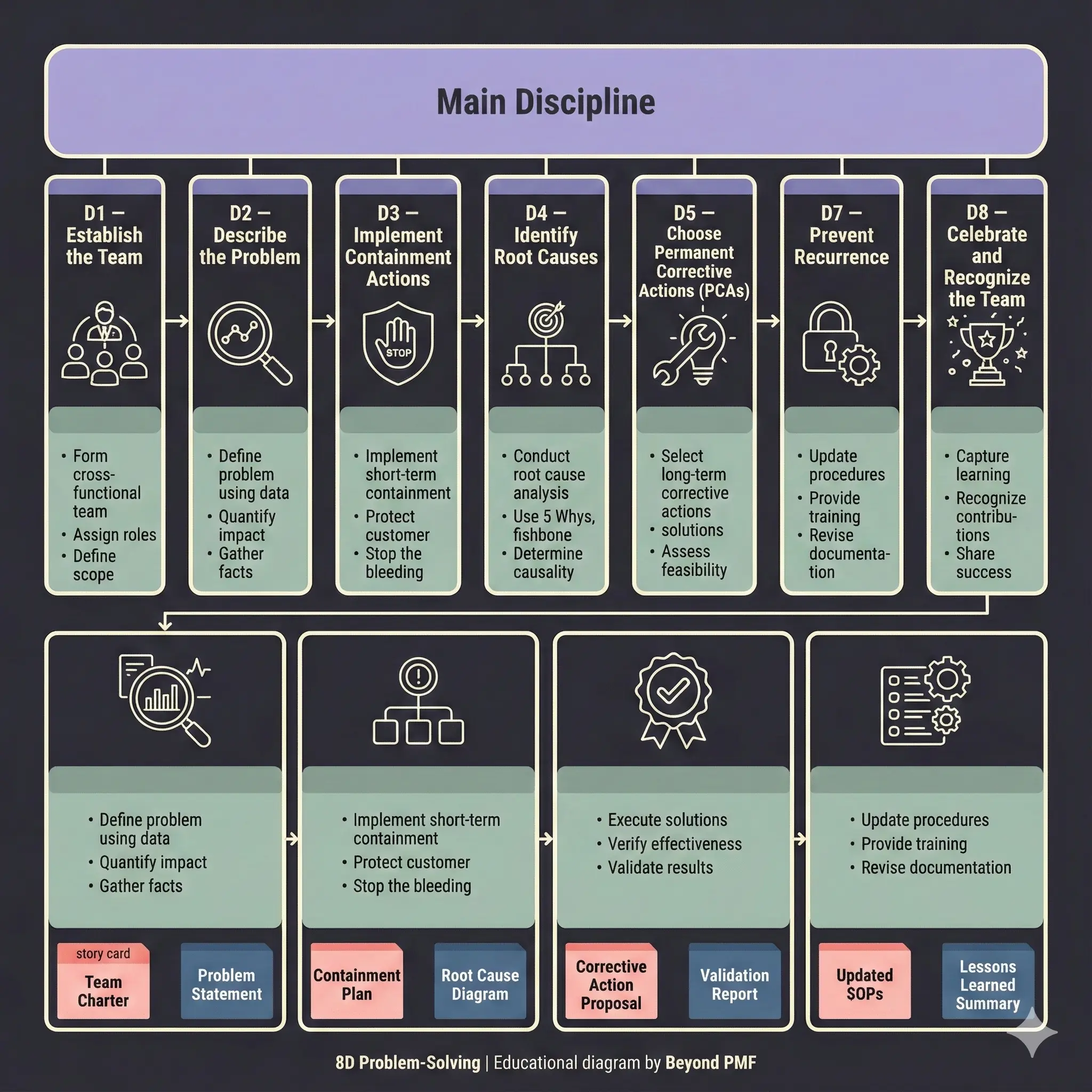
The 8D Problem-Solving framework, also known as the Eight Disciplines, is a comprehensive approach used by teams to identify, correct, and eliminate recurring problems. This method promotes product and process improvement and focuses on team synergy. The 8D approach is structured into eight sequential steps, starting with problem identification and culminating in preventive measures. It is widely adopted in industries where quality and safety are critical, providing a systematic method to uncover root causes and implement lasting solutions.
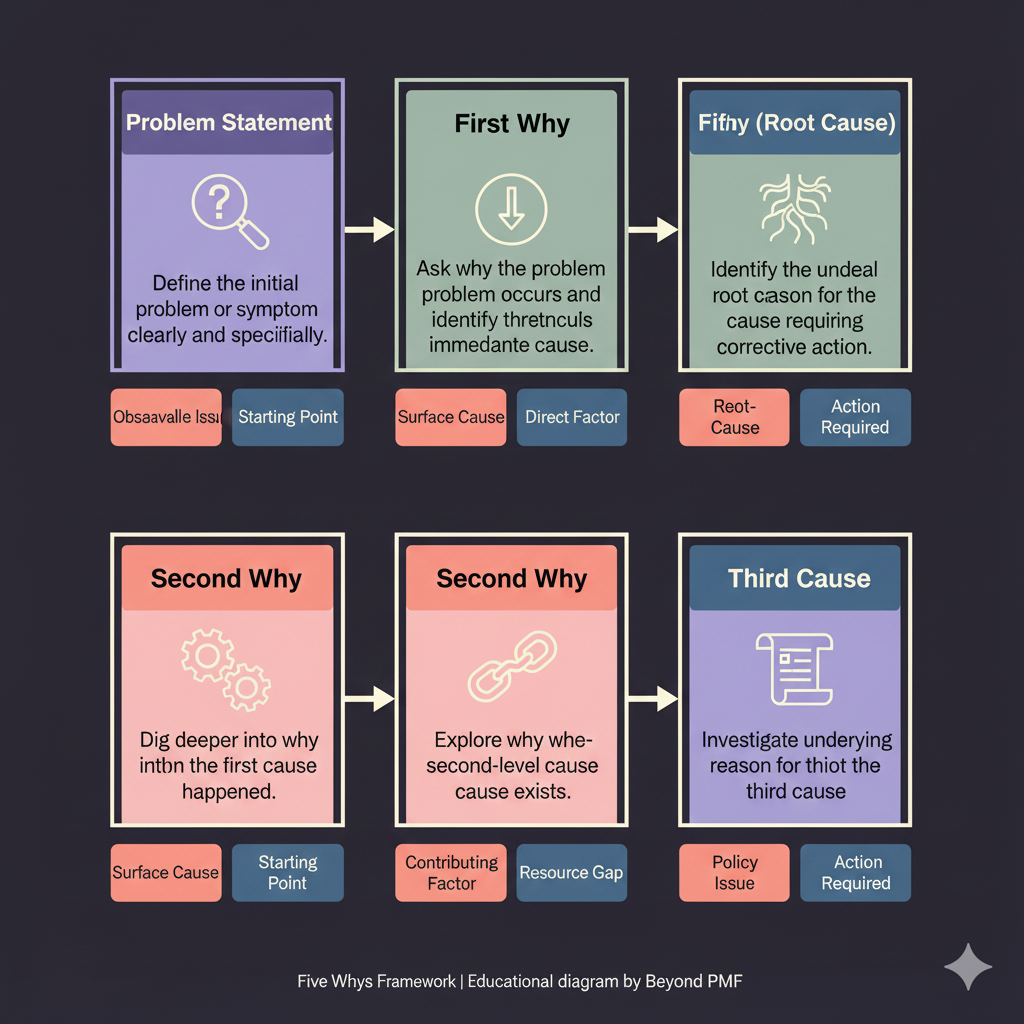
The Five Whys framework is a simple but powerful tool used primarily for root cause analysis. It involves asking the question 'Why?' successively five times or more until the fundamental cause of a problem is identified. This iterative interrogative technique helps peel away the layers of symptoms to reach the core of an issue. It is widely used because it is easy to understand and implement, and it helps teams quickly get to the root of a problem.

The Kepner-Tregoe Problem-Solving framework is a structured approach to problem-solving that emphasizes clarity in understanding the problem, analyzing the causes, making decisions, and taking actions. Developed by Charles Kepner and Benjamin Tregoe, this method is used to enhance the efficiency and effectiveness of organizational decision-making processes. It helps teams to systematically identify critical issues, evaluate alternatives, and implement solutions effectively, thereby reducing the risk of poor decisions and enhancing operational performance.