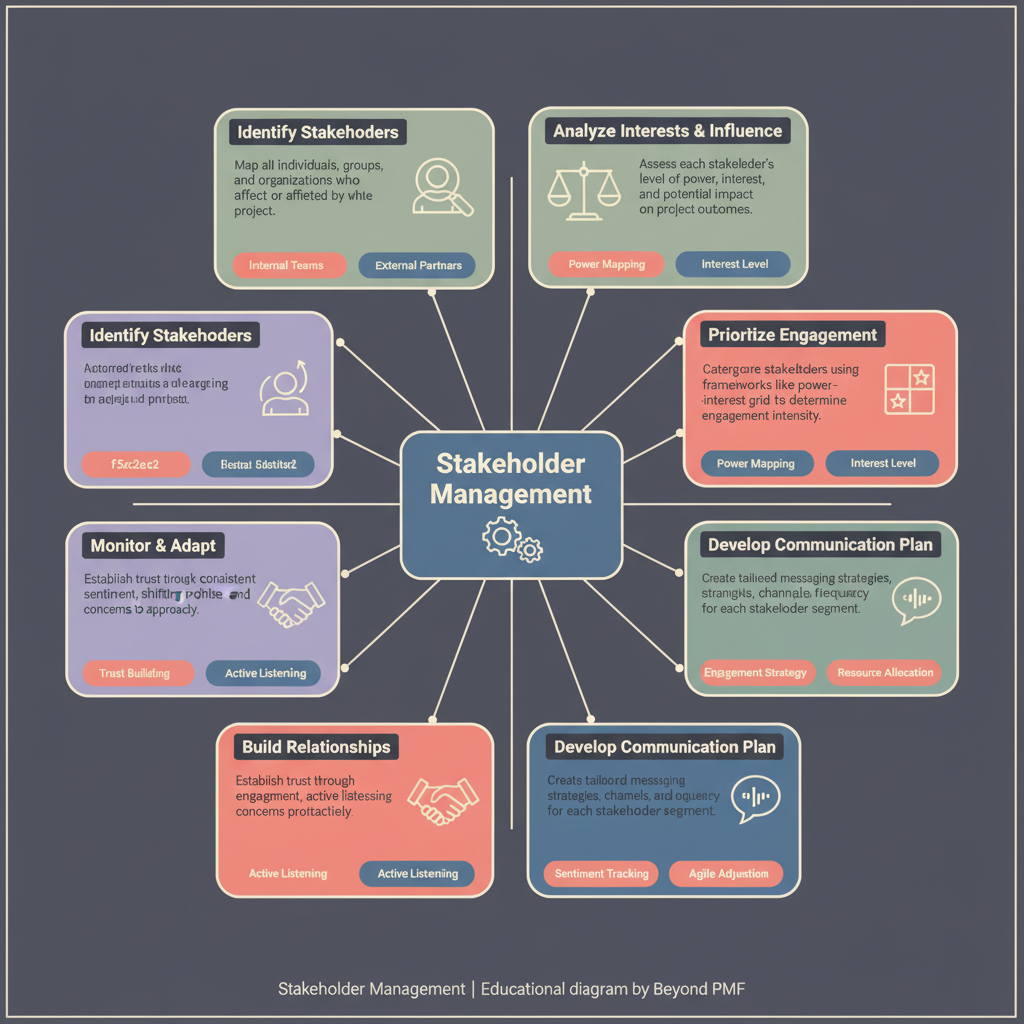
Stakeholder Management involves strategies and techniques used to understand and address the needs and expectations of stakeholders in a project or business environment. This framework helps in prioritizing stakeholder concerns and influences, facilitating better communication, and ensuring successful project outcomes. It is essential for maintaining positive relationships and securing the support needed for project success, thereby enhancing overall project performance and stakeholder satisfaction.
Identify all potential stakeholders and analyze their interests and potential impact on the project. | Prioritize stakeholders based on their influence and interest. | Develop a communication plan tailored to the needs and expectations of each stakeholder group. | Engage with stakeholders through regular updates and feedback sessions to manage expectations and gather insights. | Monitor and adapt strategies based on stakeholder feedback and changes in the project environment.
Regularly update and review the stakeholder analysis to adapt to changes. | Use clear and open communication to ensure transparency with stakeholders. | Involve stakeholders early in the project to foster collaboration and buy-in.
Improves project outcomes by aligning stakeholder expectations with project goals. | Enhances communication and builds trust among stakeholders. | Reduces project risks by proactively managing stakeholder concerns.
Can be time-consuming to identify and engage all relevant stakeholders. | Potential for conflicts of interest among stakeholders. | Requires continuous effort and resources to maintain stakeholder relationships.
During the planning phase of any project or initiative. | When changes in project scope or direction are anticipated.
In very small projects with limited impact and few stakeholders. | When stakeholder interests are already known and aligned with project goals.