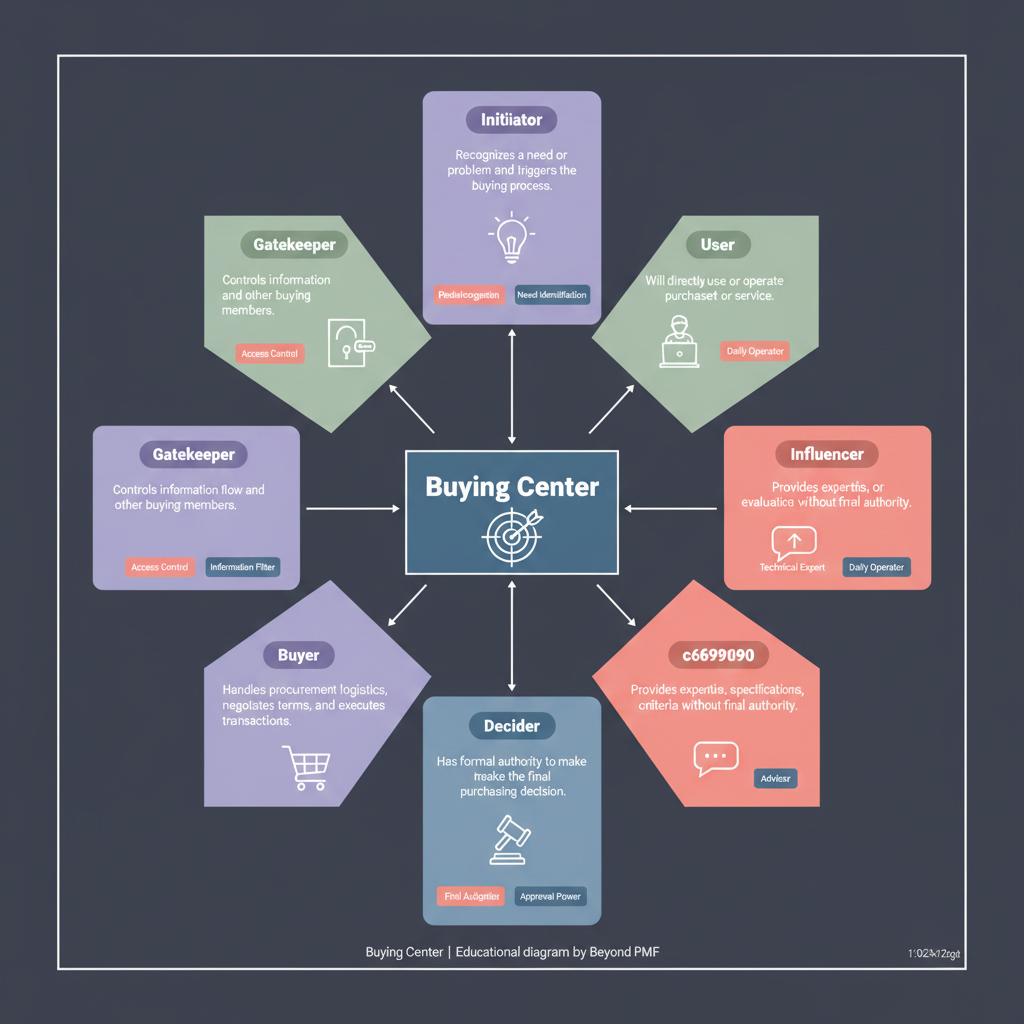
The Buying Center framework is a collective term used to describe a group of individuals within an organization who, collectively, are involved in the purchasing decision process. This framework helps businesses understand and analyze the dynamics of group purchasing decisions, facilitating targeted marketing strategies and improving sales effectiveness. By identifying the roles and influence of each member, companies can tailor their approaches to better meet the needs and preferences of each stakeholder involved in the decision-making process.
Identify the members of the buying center and their roles. | Analyze the specific needs, preferences, and influence of each member. | Develop tailored marketing strategies that address the concerns and priorities of each member. | Engage with the buying center through appropriate communication channels. | Monitor and adapt strategies based on feedback and changing dynamics within the center.
Regularly update the information on the roles and preferences of buying center members. | Use CRM systems to manage and analyze data related to the buying center. | Build strong relationships with key members of the buying center.
Enhances understanding of the decision-making process within organizations. | Allows for more targeted and effective marketing strategies. | Improves the chances of successful sales by addressing specific needs.
Can be time-consuming to identify and analyze all members accurately. | Dynamic nature of roles within the buying center can complicate strategy implementation. | Requires substantial resources to maintain up-to-date knowledge of each member's influence and preferences.
In complex B2B sales environments. | When dealing with high-value transactions involving multiple stakeholders.
In simple, low-value, or transactional sales. | When the buying process is highly centralized or involves few decision-makers.