BRAVE Cultural Framework

https://ik.imagekit.io/beyondpmf/frameworks/brave-cultural-framework.png
The BRAVE Cultural Framework assesses and shapes corporate culture, which is directly linked to an organization's vision, values, and overall strategic direction. A strong culture is crucial for achieving strategic goals and market alignment.

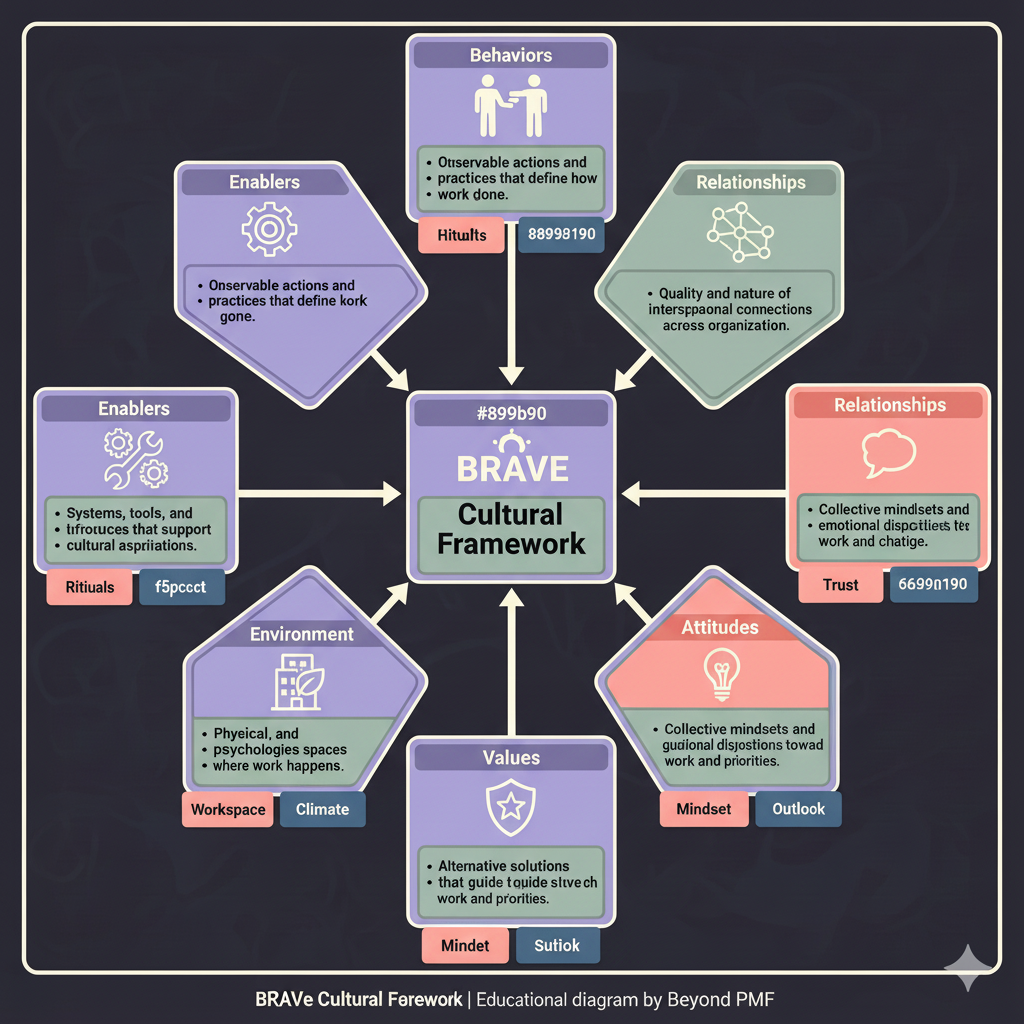
The BRAVE Cultural Framework is a comprehensive model designed to help organizations understand and cultivate their corporate culture. It emphasizes the importance of aligning behaviors, relationships, attitudes, values, and the environment to foster a positive and productive workplace. This framework is used to diagnose cultural issues, guide cultural transformations, and ensure that the culture aligns with the organization's strategic goals, thereby enhancing overall performance and employee satisfaction.

Steps / Detailed Description

Behavior: Analyze and align behaviors with desired organizational outcomes. | Relationships: Foster positive relationships among stakeholders to enhance collaboration. | Attitudes: Cultivate positive attitudes and perceptions within the organization. | Values: Define and integrate core values that resonate with all members of the organization. | Environment: Create an environment that supports the desired culture through physical, emotional, and intellectual means.

Best Practices

Regularly communicate and reinforce the cultural goals to all employees | Involve employees at all levels in the cultural assessment and transformation process | Continuously monitor and adjust the framework application to ensure effectiveness

Pros

Enhances alignment between organizational values and employee behavior | Improves employee engagement and satisfaction | Facilitates better change management and adaptation

Cons

Can be time-consuming to implement effectively | Requires significant buy-in from all levels of the organization | Risk of oversimplification of complex cultural issues

When to Use

During major organizational changes such as mergers or leadership shifts | When addressing issues related to employee morale or productivity

When Not to Use

In situations where quick fixes are needed without deep cultural transformations | When the organization lacks resources to fully commit to a comprehensive cultural overhaul

Related Frameworks

Lifecycle

Not tied to a specific lifecycle stage

Scope

Scope not defined

Maturity Level

Maturity level not specified

Time to Implement

2–4 Weeks
3–6 Months
1–2 Weeks
3–6 Months
1–2 Months
3–6 Months
1–2 Weeks
Less Than 1 Day
1–2 Weeks
Longer Than 6 Months
1–2 Weeks
Longer Than 6 Months
1–2 Weeks
3–6 Months
1–2 Weeks
1–2 Weeks
1–2 Weeks
1–2 Weeks
1–2 Days
1–2 Weeks
1–2 Weeks
1–2 Weeks
1–2 Weeks
1–2 Weeks
1–2 Weeks
3–6 Months
1–2 Weeks
1–2 Weeks
1–2 Weeks
3–6 Months
1–2 Weeks
1–2 Weeks
2–4 Weeks
1–2 Weeks
1–2 Days
1–2 Weeks
Longer Than 6 Months
3–6 Months
Longer Than 6 Months
1–2 Weeks
Longer Than 6 Months
3–6 Months
Less Than 1 Day
3–6 Months
1–2 Months
3–6 Months
Longer Than 6 Months
3–6 Months
Less Than 1 Day
1–2 Weeks
3–6 Months
3–6 Months
1–2 Weeks
3–6 Months
1–2 Weeks
1–2 Weeks
1–2 Days
1–2 Weeks
1–2 Months
Longer Than 6 Months
1–2 Weeks
Longer Than 6 Months
1–2 Weeks
3–6 Months
1–2 Weeks
Less Than 1 Day
1–2 Weeks
3–6 Months
1–2 Weeks
3–6 Months
1–2 Weeks
1–2 Weeks
Longer Than 6 Months
Less Than 1 Day
3–6 Months
Longer Than 6 Months
1–2 Months
1–2 Weeks
Longer Than 6 Months
1–2 Weeks
3–6 Months
1–2 Weeks
1–2 Weeks
3–6 Months
Less Than 1 Day
1–2 Weeks
1–2 Weeks
3–6 Months
3–6 Months
Less Than 1 Day
1–2 Weeks
Longer Than 6 Months
1–2 Months
1–2 Weeks
1–2 Weeks
1–2 Weeks
Longer Than 6 Months

Copyright Information

Autor:
Unknown
N/A
Publication:
Unknown