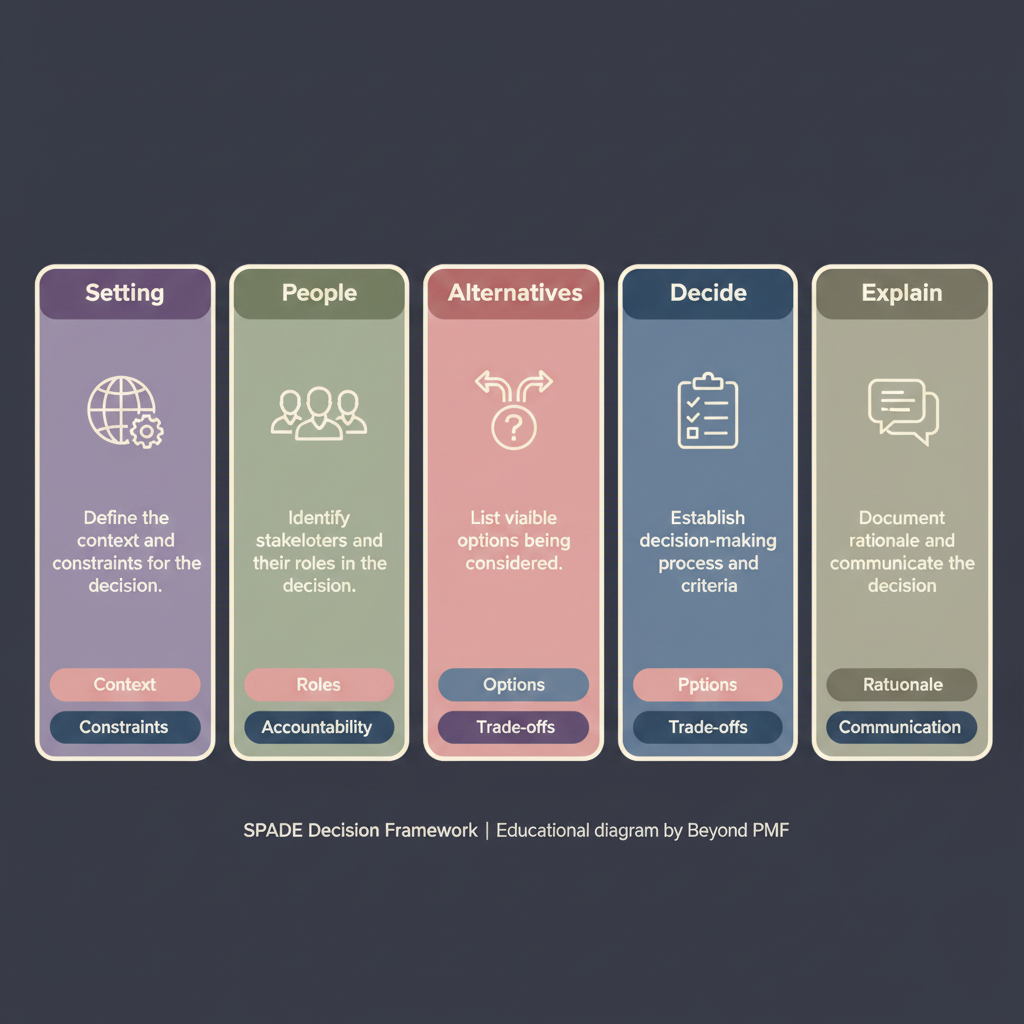
The SPADE Decision Framework helps teams and individuals make thorough and thoughtful decisions by defining the problem, identifying alternatives, and systematically evaluating each option. It stands for Setting, People, Alternatives, Decide, and Execute. This framework is particularly beneficial for ensuring all aspects of a decision are considered, promoting transparency and accountability in the decision-making process.
Setting: Define the context and scope of the decision. | People: Identify who will be involved in making the decision and their roles. | Alternatives: Generate and list all possible alternatives for the decision. | Decide: Choose the best alternative based on the evaluation criteria. | Execute: Implement the decision and establish a follow-up plan to assess the outcomes.
Clearly define the decision context in the Setting stage | Ensure all relevant stakeholders are involved in the People stage | Regularly review and assess the outcomes post-execution
Promotes a comprehensive evaluation of options | Enhances team collaboration and consensus | Improves accountability and transparency in decision-making
Can be time-consuming | May be overly complex for simple decisions | Requires clear communication and role definition to be effective
When facing complex, high-stakes business decisions | When a decision involves multiple stakeholders or departments
For simple or routine decisions that do not require extensive analysis | When quick decision-making is critical and time is limited