
Decision‑making frameworks provide structured ways to evaluate options, reduce bias, and make trade‑offs explicit. They help leaders and teams decide faster under uncertainty without sacrificing quality. These approaches are foundational in product management, strategy, and transformation execution. Use them to improve consistency, accountability, and stakeholder trust in high‑impact choices.
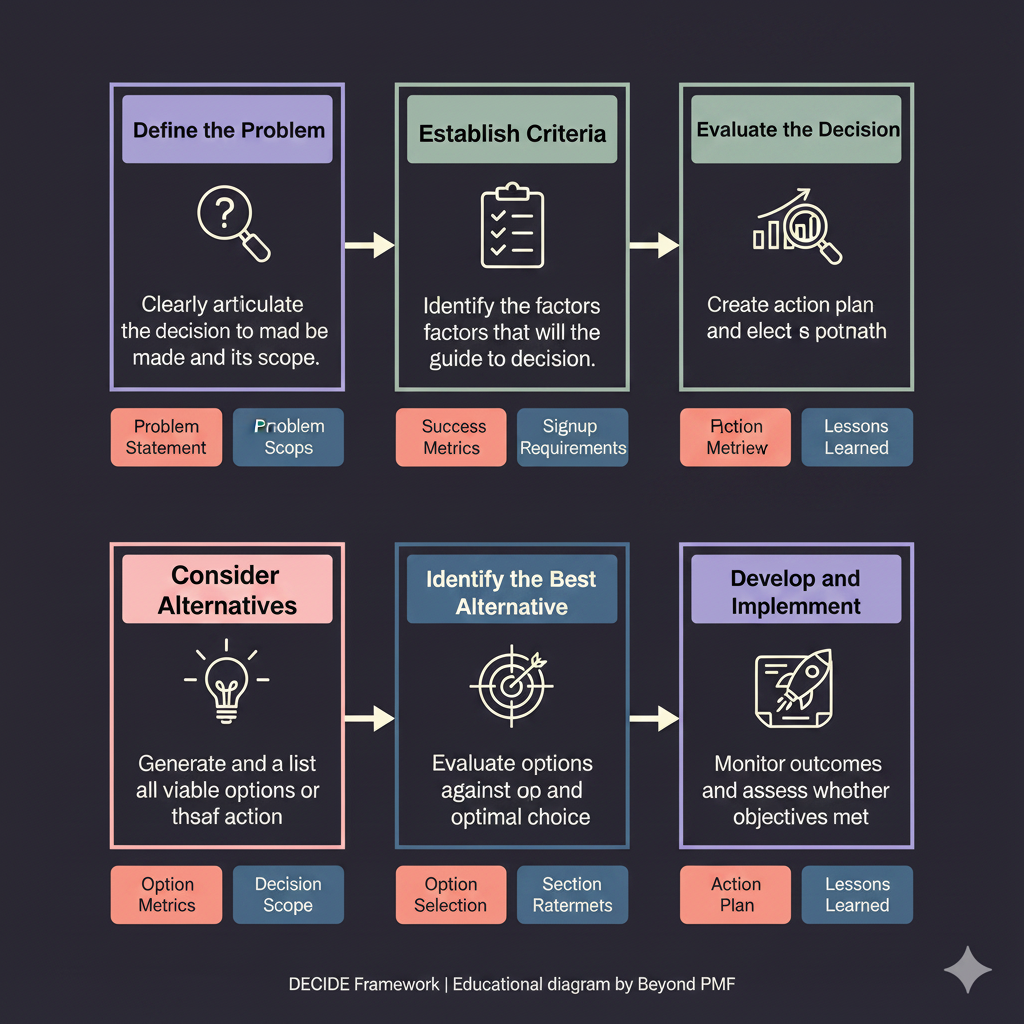
The DECIDE Framework is a structured approach used by businesses and organizations to enhance decision-making processes. It stands for Define the problem, Establish the criteria, Consider the alternatives, Identify the best alternative, Develop and implement a plan, and Evaluate the decision. This framework is beneficial because it ensures thoroughness in decision-making and helps prevent oversight by guiding users through a series of logical steps.
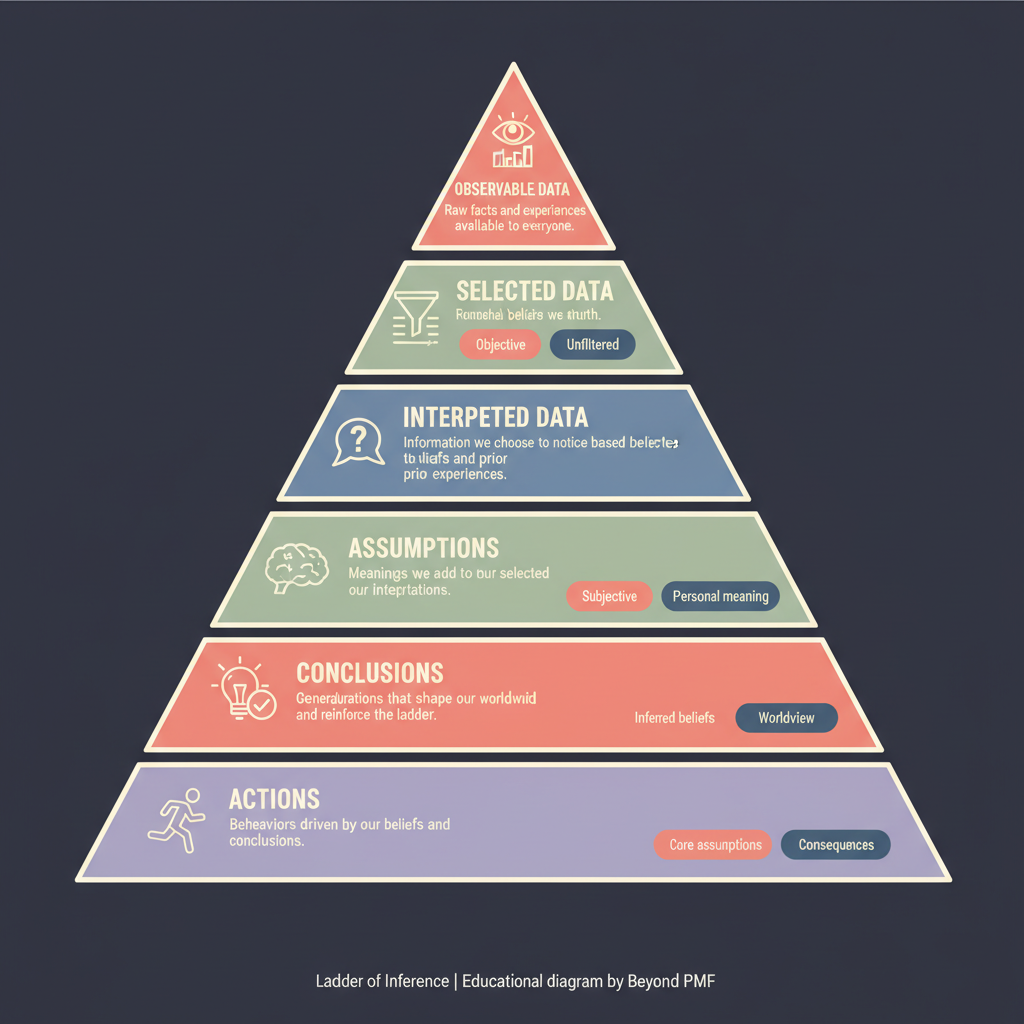
The Ladder of Inference, developed by Chris Argyris and used in organizational psychology, describes the step-by-step process by which individuals move from observable data to a decision or action. The framework helps users understand how their beliefs or assumptions can influence their conclusions, often without their awareness. By making this process explicit, the Ladder of Inference encourages critical thinking and helps reduce biases, leading to more effective decision-making.
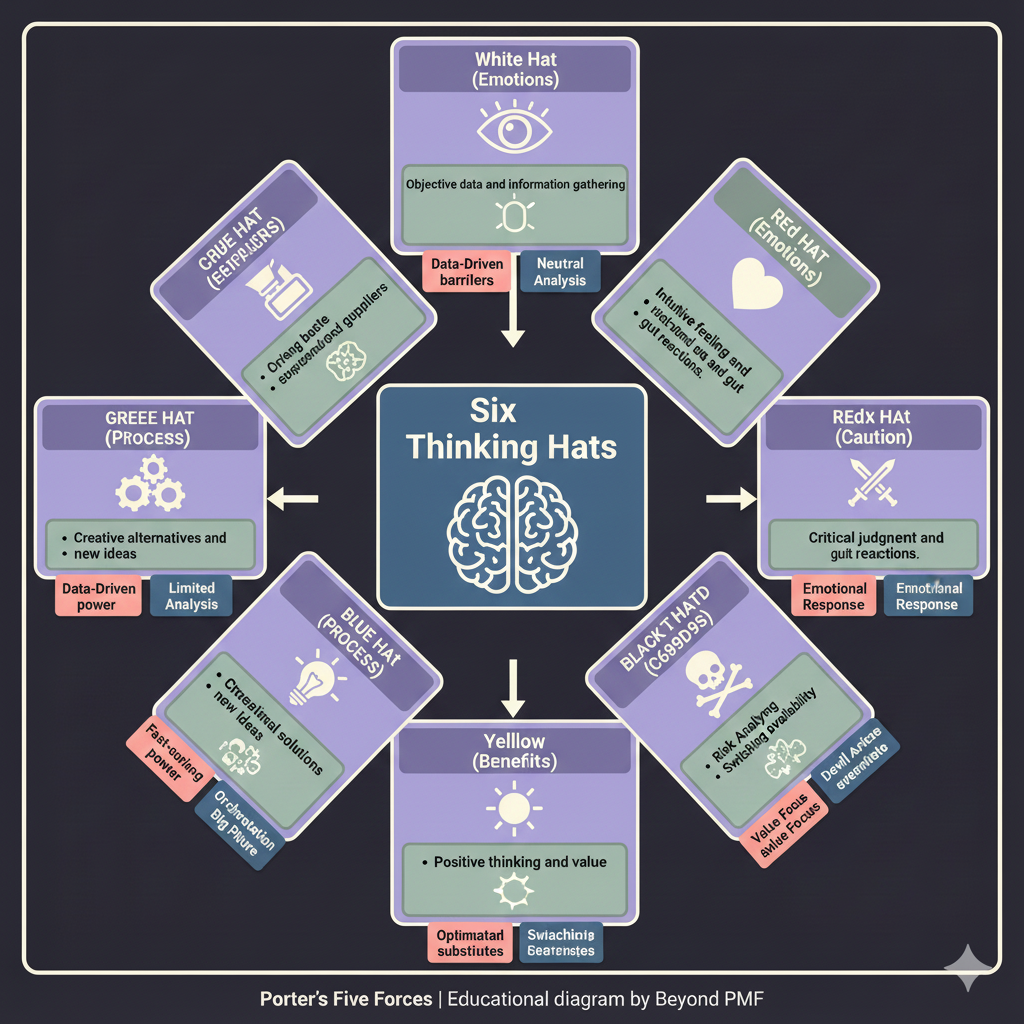
The Six Thinking Hats, developed by Edward de Bono, is a framework designed to enhance the process of decision-making and problem-solving in groups. Each 'hat' represents a different perspective or approach to thinking, encouraging participants to switch their way of thinking to view problems from multiple angles. This method helps in reducing conflict, ensuring more thorough exploration of ideas, and fostering constructive and creative thinking. It is widely used in business meetings, educational settings, and workshops to facilitate effective communication and innovative solutions.
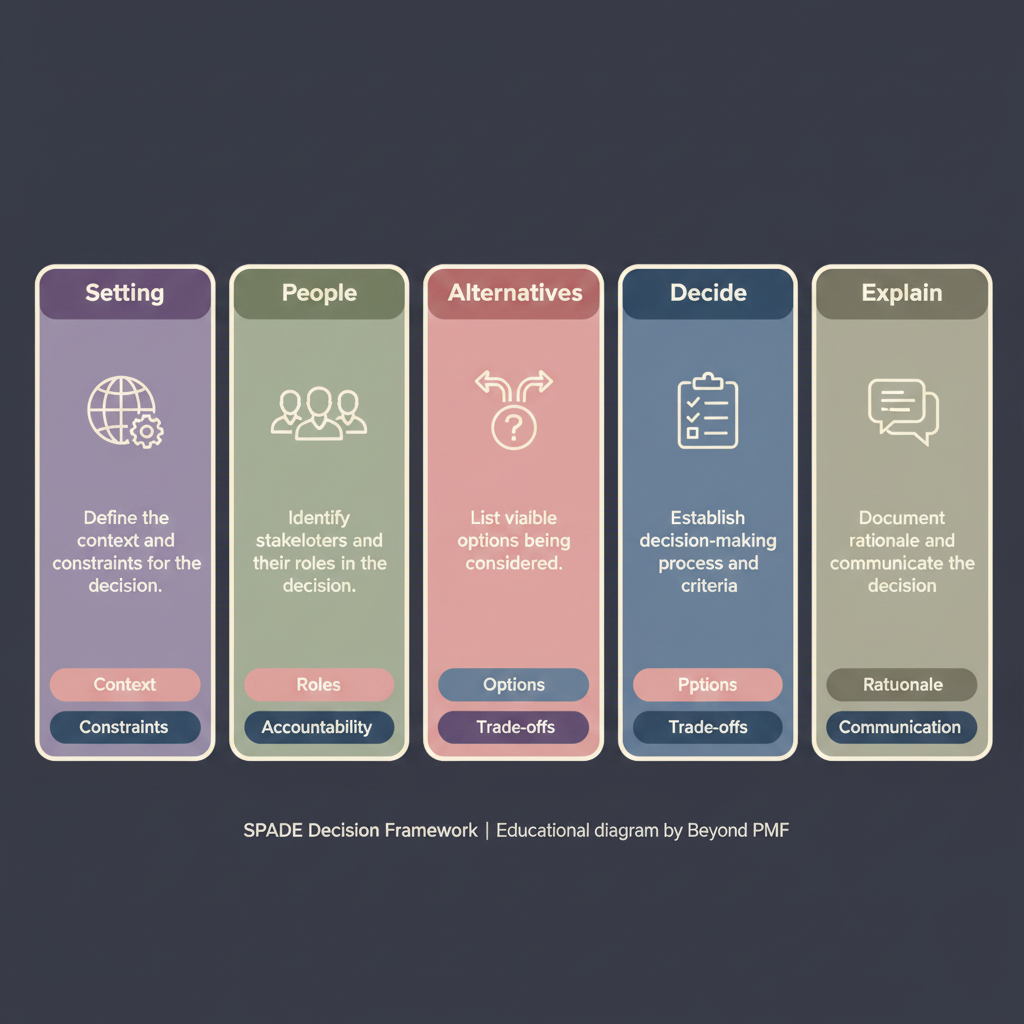
The SPADE Decision Framework helps teams and individuals make thorough and thoughtful decisions by defining the problem, identifying alternatives, and systematically evaluating each option. It stands for Setting, People, Alternatives, Decide, and Execute. This framework is particularly beneficial for ensuring all aspects of a decision are considered, promoting transparency and accountability in the decision-making process.