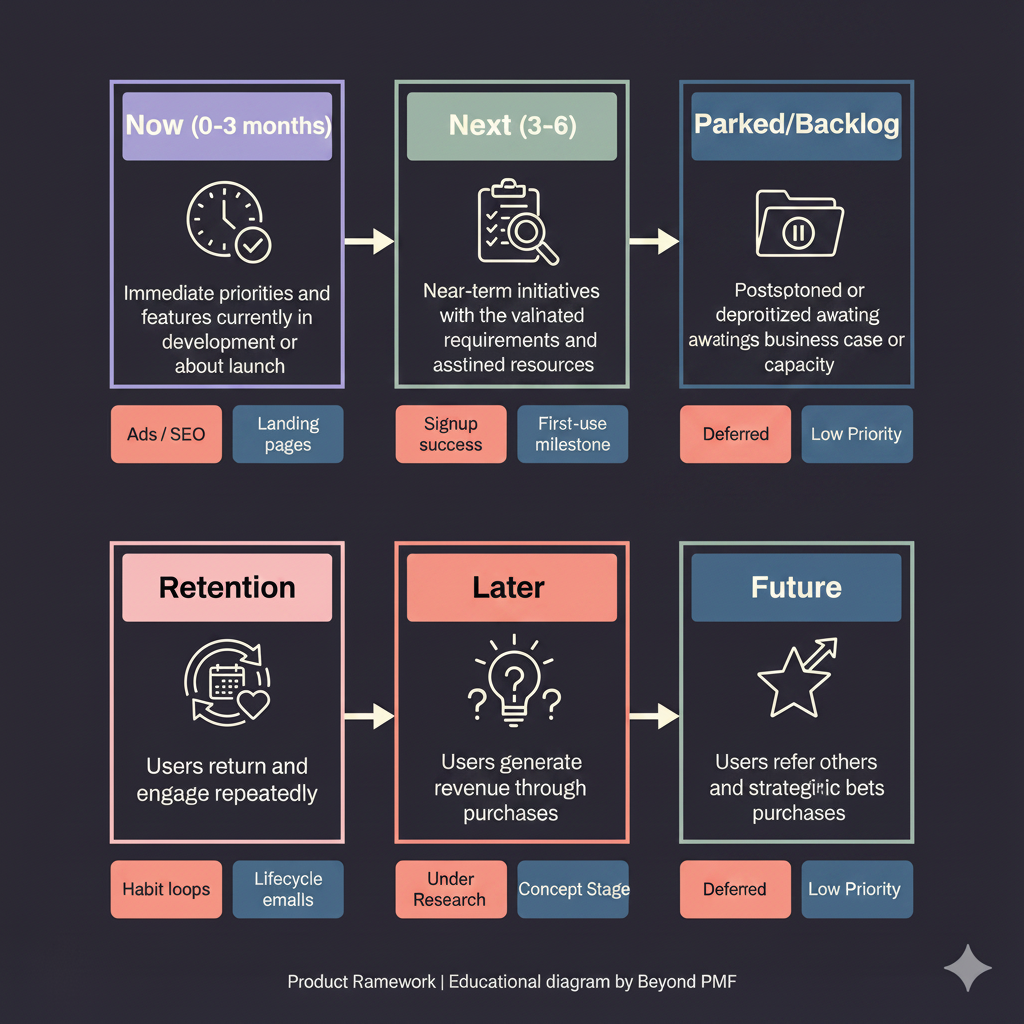
Product Roadmap

https://ik.imagekit.io/beyondpmf/frameworks/product-roadmap.png
A product roadmap primarily addresses the strategic friction of unclear direction and conflicting priorities by providing a clear vision and outlining the product's direction over time. It helps ensure alignment on what to build and why.

A product roadmap is a strategic planning tool that communicates the direction and progress of a product's development. It aligns the organization around short and long-term goals for the product, and it helps to prioritize features, allocate resources, and manage stakeholder expectations. The roadmap serves as a blueprint for executing the product strategy, facilitating discussions and decision-making processes across teams.

Steps / Detailed Description

Define the product vision and strategic goals. | Gather inputs from stakeholders including customers, product teams, and executives. | Prioritize features and initiatives based on value and alignment with product strategy. | Set clear timelines and milestones for development phases. | Communicate the roadmap to all relevant stakeholders and regularly update it to reflect changes.

Best Practices

Regularly update the roadmap to reflect new insights and changes in market conditions. | Ensure transparency and involve all relevant stakeholders in the roadmap development process. | Balance flexibility with structure by allowing room for adjustments and iterations.

Pros

Provides a clear vision and direction for product development. | Enhances alignment and communication across teams. | Helps prioritize features and manage resources effectively.

Cons

Can become quickly outdated if not regularly revised. | May lead to rigid planning, reducing flexibility in response to market changes. | Risk of misalignment if not all stakeholders are adequately involved.

When to Use

When launching a new product to define the development journey. | When managing a product through various stages of its lifecycle.

When Not to Use

In highly volatile markets where long-term planning is impractical. | When immediate and reactive development is required more than strategic long-term planning.

Related Frameworks

Categories

Lifecycle

Scope

Scope not defined

Maturity Level

Maturity level not specified

Time to Implement

2–4 Weeks
3–6 Months
1–2 Weeks
3–6 Months
1–2 Months
3–6 Months
1–2 Weeks
Less Than 1 Day
1–2 Weeks
Longer Than 6 Months
1–2 Weeks
Longer Than 6 Months
1–2 Weeks
3–6 Months
1–2 Weeks
1–2 Weeks
1–2 Weeks
1–2 Weeks
1–2 Days
1–2 Weeks
1–2 Weeks
1–2 Weeks
1–2 Weeks
1–2 Weeks
1–2 Weeks
3–6 Months
1–2 Weeks
1–2 Weeks
1–2 Weeks
3–6 Months
1–2 Weeks
1–2 Weeks
2–4 Weeks
1–2 Weeks
1–2 Days
1–2 Weeks
Longer Than 6 Months
3–6 Months
Longer Than 6 Months
1–2 Weeks
Longer Than 6 Months
3–6 Months
Less Than 1 Day
3–6 Months
1–2 Months
3–6 Months
Longer Than 6 Months
3–6 Months
Less Than 1 Day
1–2 Weeks
3–6 Months
3–6 Months
1–2 Weeks
3–6 Months
1–2 Weeks
1–2 Weeks
1–2 Days
1–2 Weeks
1–2 Months
Longer Than 6 Months
1–2 Weeks
Longer Than 6 Months
1–2 Weeks
3–6 Months
1–2 Weeks
Less Than 1 Day
1–2 Weeks
3–6 Months
1–2 Weeks
3–6 Months
1–2 Weeks
1–2 Weeks
Longer Than 6 Months
Less Than 1 Day
3–6 Months
Longer Than 6 Months
1–2 Months
1–2 Weeks
Longer Than 6 Months
1–2 Weeks
3–6 Months
1–2 Weeks
1–2 Weeks
3–6 Months
Less Than 1 Day
1–2 Weeks
1–2 Weeks
3–6 Months
3–6 Months
Less Than 1 Day
1–2 Weeks
Longer Than 6 Months
1–2 Months
1–2 Weeks
1–2 Weeks
1–2 Weeks
Longer Than 6 Months

Copyright Information

Autor:
Unknown
N/A
Publication:
Generic Business Tool