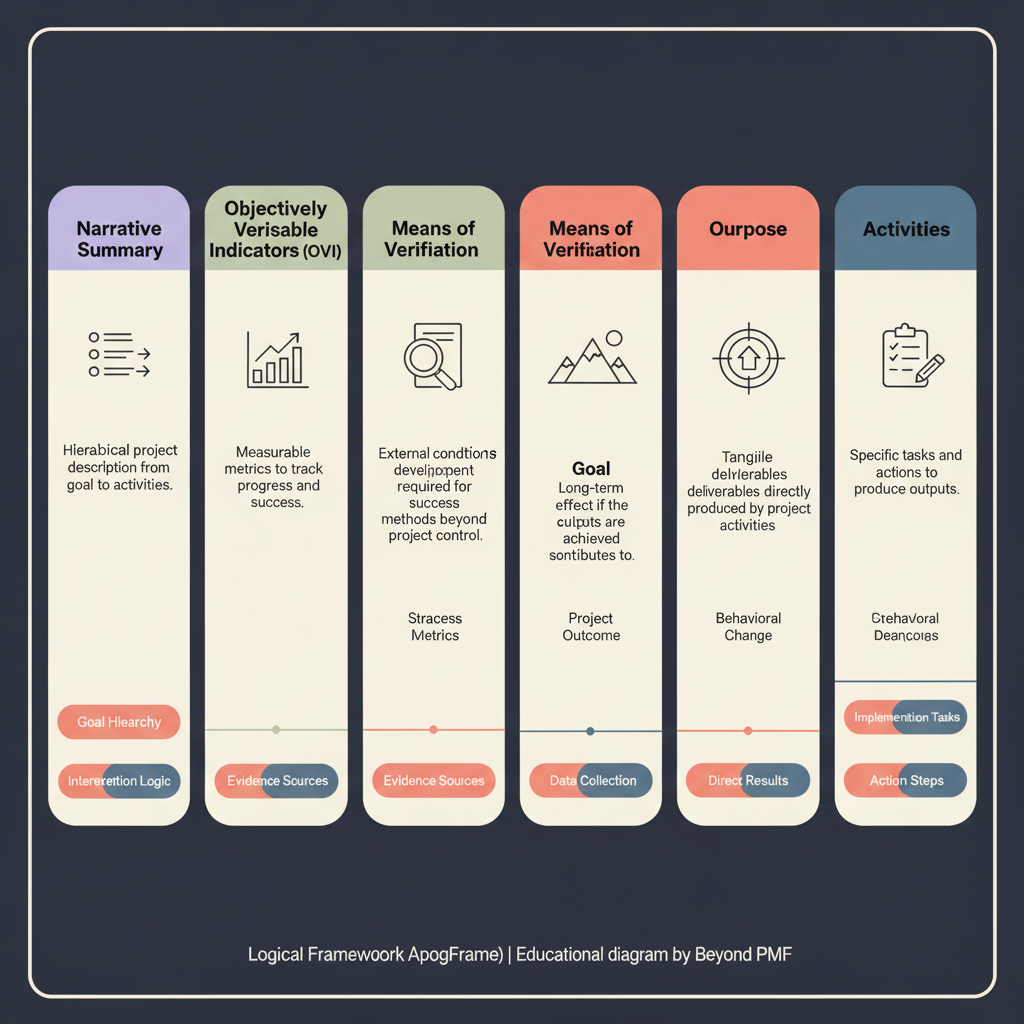
Logical Framework Approach (LogFrame)

https://ik.imagekit.io/beyondpmf/frameworks/logical-framework-approach-logframe.png
The Logical Framework Approach primarily addresses operational friction by improving project planning and execution through structured processes. It provides a framework for defining project goals, objectives, activities, and indicators, thus streamlining workflows and coordination.

The Logical Framework Approach, or LogFrame, is a systematic tool used primarily in the design, monitoring, and evaluation of international development projects. It provides a clear structure for identifying expected outcomes, measuring progress, and assessing the impact of projects. By defining objectives and activities in a logical sequence, it helps ensure that project goals are achievable and aligned with broader development aims. The framework facilitates communication among stakeholders and helps in securing funding by clearly outlining project components.

Steps / Detailed Description

Define the overall goal and purpose of the project. | Identify key outputs and activities required to achieve the objectives. | Establish indicators for measuring outputs and outcomes. | Define assumptions and risks associated with the project. | Prepare a detailed implementation schedule. | Monitor progress and make adjustments as needed.

Best Practices

Engage all key stakeholders in the LogFrame process to ensure alignment and commitment. | Regularly review and update the LogFrame to reflect changes and new insights. | Use clear, measurable indicators to facilitate effective monitoring and evaluation.

Pros

Provides a clear structure for project planning and evaluation. | Facilitates communication and understanding among stakeholders. | Helps in securing funding by demonstrating project feasibility and impact.

Cons

Can be overly rigid, limiting flexibility in project management. | May oversimplify complex projects, overlooking potential challenges. | Relies heavily on accurate initial assumptions, which can be problematic if they are incorrect.

When to Use

In international development projects requiring structured planning and clear outcomes. | When applying for funding, to clearly articulate project goals and feasibility.

When Not to Use

In highly adaptive projects where flexibility and rapid changes are necessary. | When project goals and outcomes are not clearly defined or are expected to evolve.

Related Frameworks

Categories

Lifecycle

Scope

Scope not defined

Maturity Level

Maturity level not specified

Time to Implement

2–4 Weeks
3–6 Months
1–2 Weeks
3–6 Months
1–2 Months
3–6 Months
1–2 Weeks
Less Than 1 Day
1–2 Weeks
Longer Than 6 Months
1–2 Weeks
Longer Than 6 Months
1–2 Weeks
3–6 Months
1–2 Weeks
1–2 Weeks
1–2 Weeks
1–2 Weeks
1–2 Days
1–2 Weeks
1–2 Weeks
1–2 Weeks
1–2 Weeks
1–2 Weeks
1–2 Weeks
3–6 Months
1–2 Weeks
1–2 Weeks
1–2 Weeks
3–6 Months
1–2 Weeks
1–2 Weeks
2–4 Weeks
1–2 Weeks
1–2 Days
1–2 Weeks
Longer Than 6 Months
3–6 Months
Longer Than 6 Months
1–2 Weeks
Longer Than 6 Months
3–6 Months
Less Than 1 Day
3–6 Months
1–2 Months
3–6 Months
Longer Than 6 Months
3–6 Months
Less Than 1 Day
1–2 Weeks
3–6 Months
3–6 Months
1–2 Weeks
3–6 Months
1–2 Weeks
1–2 Weeks
1–2 Days
1–2 Weeks
1–2 Months
Longer Than 6 Months
1–2 Weeks
Longer Than 6 Months
1–2 Weeks
3–6 Months
1–2 Weeks
Less Than 1 Day
1–2 Weeks
3–6 Months
1–2 Weeks
3–6 Months
1–2 Weeks
1–2 Weeks
Longer Than 6 Months
Less Than 1 Day
3–6 Months
Longer Than 6 Months
1–2 Months
1–2 Weeks
Longer Than 6 Months
1–2 Weeks
3–6 Months
1–2 Weeks
1–2 Weeks
3–6 Months
Less Than 1 Day
1–2 Weeks
1–2 Weeks
3–6 Months
3–6 Months
Less Than 1 Day
1–2 Weeks
Longer Than 6 Months
1–2 Months
1–2 Weeks
1–2 Weeks
1–2 Weeks
Longer Than 6 Months

Copyright Information

Autor:
Unknown
N/A
Publication:
Unknown