GROW Model

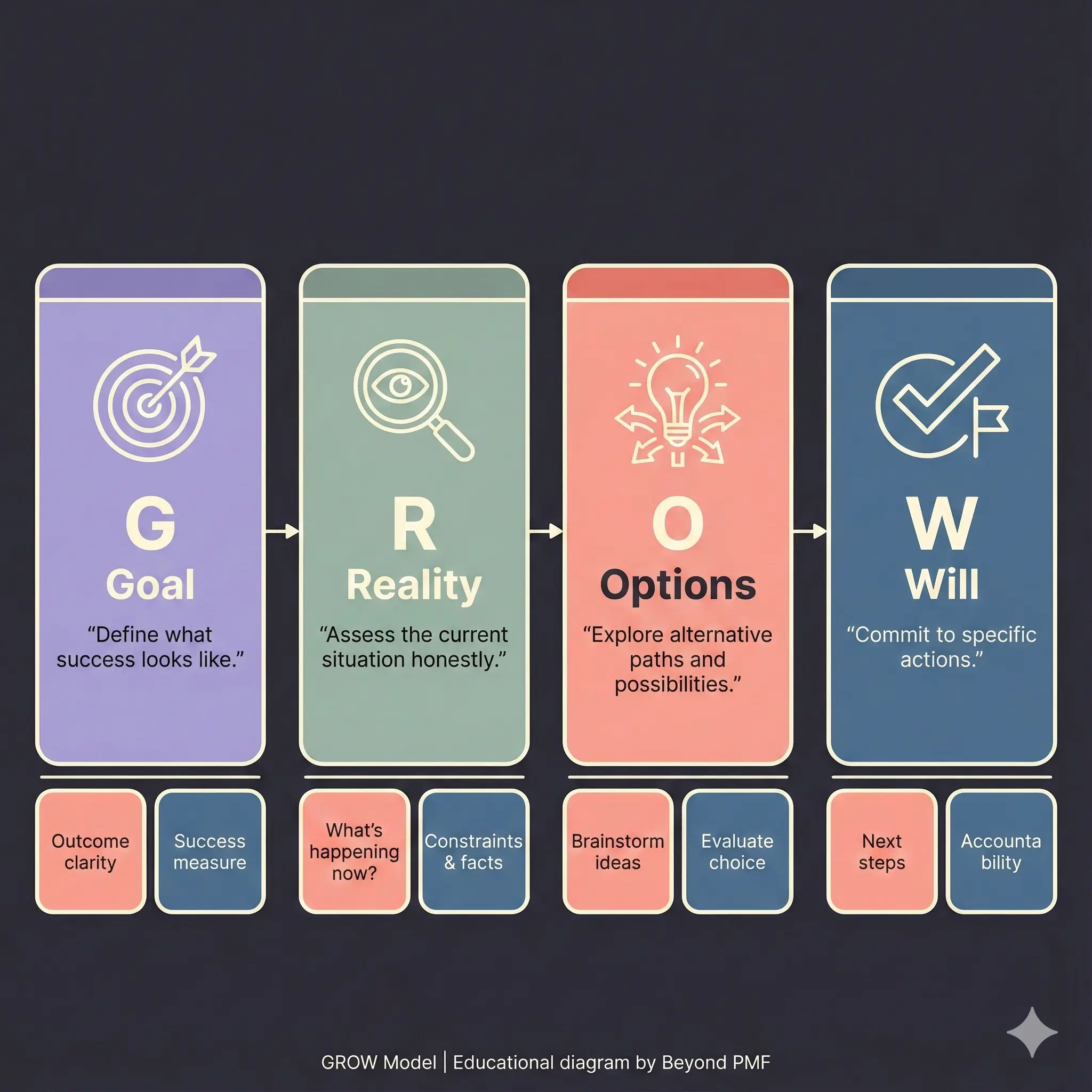
GROW Model diagram illustrating four coaching steps: Goal (define success and desired outcomes), Reality (assess the current situation and constraints), Options (explore possible ideas and choices), and Will (commit to next steps and accountability).
The GROW Model provides a structured approach to conversations and decision-making, which primarily addresses friction related to coordination and workflows by guiding individuals through a defined process.

The GROW Model is a simple yet powerful framework for structuring coaching and mentoring sessions. GROW stands for Goal, Reality, Options, and Will. It helps individuals and teams set clear goals, assess the current reality, explore various options, and commit to specific actions. The model is widely used due to its flexibility, ease of understanding, and effectiveness in facilitating personal and professional development.

Steps / Detailed Description

Goal: Define clear, specific, and achievable goals. | Reality: Analyze the current situation to understand what is happening and identify obstacles. | Options: Explore different strategies and actions that can be taken to achieve the goal. | Will: Commit to specific actions and establish the will to execute the chosen options.

Best Practices

Tailor the model to fit the specific needs and context of the individual or team | Ensure goals are SMART (Specific, Measurable, Achievable, Relevant, Time-bound) | Follow up regularly to track progress and adjust plans as necessary

Pros

Provides clear structure to coaching sessions | Facilitates effective goal setting and action planning | Adaptable to various personal and professional contexts

Cons

May oversimplify complex situations | Can be too rigid if not adapted to the specific context | Depends heavily on the coach's skill in guiding the conversation

When to Use

In personal coaching to improve individual performance | In team settings to enhance group collaboration and effectiveness

When Not to Use

In crisis situations where immediate action is required | When the goals are unclear or the individual is not ready for coaching

Related Frameworks

Categories

Scope

Scope not defined

Maturity Level

Maturity level not specified

Time to Implement

2–4 Weeks
3–6 Months
1–2 Weeks
3–6 Months
1–2 Months
3–6 Months
1–2 Weeks
Less Than 1 Day
1–2 Weeks
Longer Than 6 Months
1–2 Weeks
Longer Than 6 Months
1–2 Weeks
3–6 Months
1–2 Weeks
1–2 Weeks
1–2 Weeks
1–2 Weeks
1–2 Days
1–2 Weeks
1–2 Weeks
1–2 Weeks
1–2 Weeks
1–2 Weeks
1–2 Weeks
3–6 Months
1–2 Weeks
1–2 Weeks
1–2 Weeks
3–6 Months
1–2 Weeks
1–2 Weeks
2–4 Weeks
1–2 Weeks
1–2 Days
1–2 Weeks
Longer Than 6 Months
3–6 Months
Longer Than 6 Months
1–2 Weeks
Longer Than 6 Months
3–6 Months
Less Than 1 Day
3–6 Months
1–2 Months
3–6 Months
Longer Than 6 Months
3–6 Months
Less Than 1 Day
1–2 Weeks
3–6 Months
3–6 Months
1–2 Weeks
3–6 Months
1–2 Weeks
1–2 Weeks
1–2 Days
1–2 Weeks
1–2 Months
Longer Than 6 Months
1–2 Weeks
Longer Than 6 Months
1–2 Weeks
3–6 Months
1–2 Weeks
Less Than 1 Day
1–2 Weeks
3–6 Months
1–2 Weeks
3–6 Months
1–2 Weeks
1–2 Weeks
Longer Than 6 Months
Less Than 1 Day
3–6 Months
Longer Than 6 Months
1–2 Months
1–2 Weeks
Longer Than 6 Months
1–2 Weeks
3–6 Months
1–2 Weeks
1–2 Weeks
3–6 Months
Less Than 1 Day
1–2 Weeks
1–2 Weeks
3–6 Months
3–6 Months
Less Than 1 Day
1–2 Weeks
Longer Than 6 Months
1–2 Months
1–2 Weeks
1–2 Weeks
1–2 Weeks
Longer Than 6 Months

Copyright Information

Autor:
Sir John Whitmore, Graham Alexander, and Alan Fine
1980s
Publication:
Performance Consultants International