
Coaching frameworks help leaders and practitioners develop people, teams, and organizations through structured reflection and growth processes. They support capability building, mindset shifts, and performance improvement in complex environments. These frameworks are especially relevant for product leaders, transformation leads, and managers who need to enable autonomy and accountability. Use them to create sustainable skills, healthier team dynamics, and better decision quality over time.
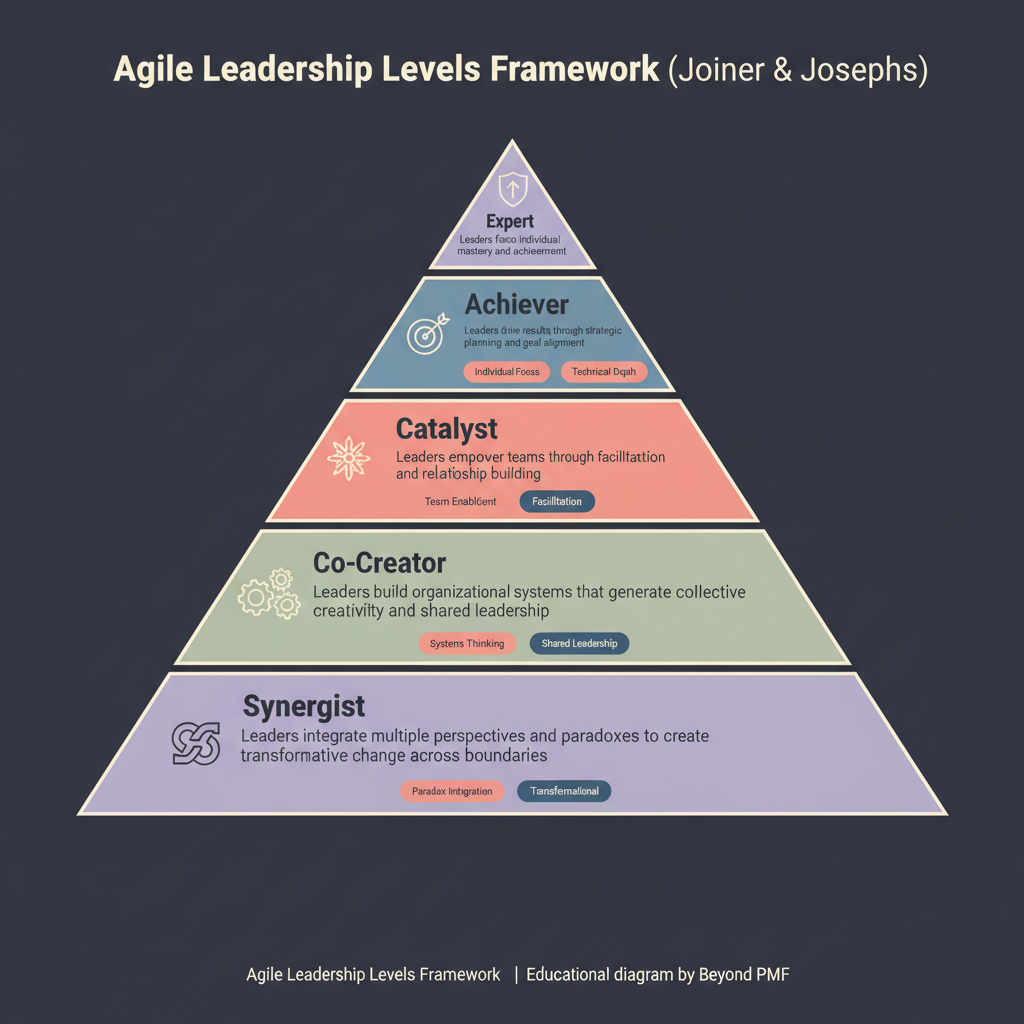
The Agile Leadership Levels Framework, developed by Bill Joiner and Stephen Josephs, is a leadership maturity model that explains how leaders grow their capacity to handle complexity, drive change, and align stakeholders over time.
Rather than focusing on specific agile practices, the framework emphasizes how leaders think, decide, and act under pressure and ambiguity.
The model outlines five progressive leadership levels, each representing a more advanced way of interpreting reality, engaging others, and shaping outcomes. As leaders move through these levels, they become better equipped to navigate organizational friction, conflicting priorities, and systemic challenges — making the framework particularly relevant for agile transformations, digital change initiatives, and strategy execution in complex environments.
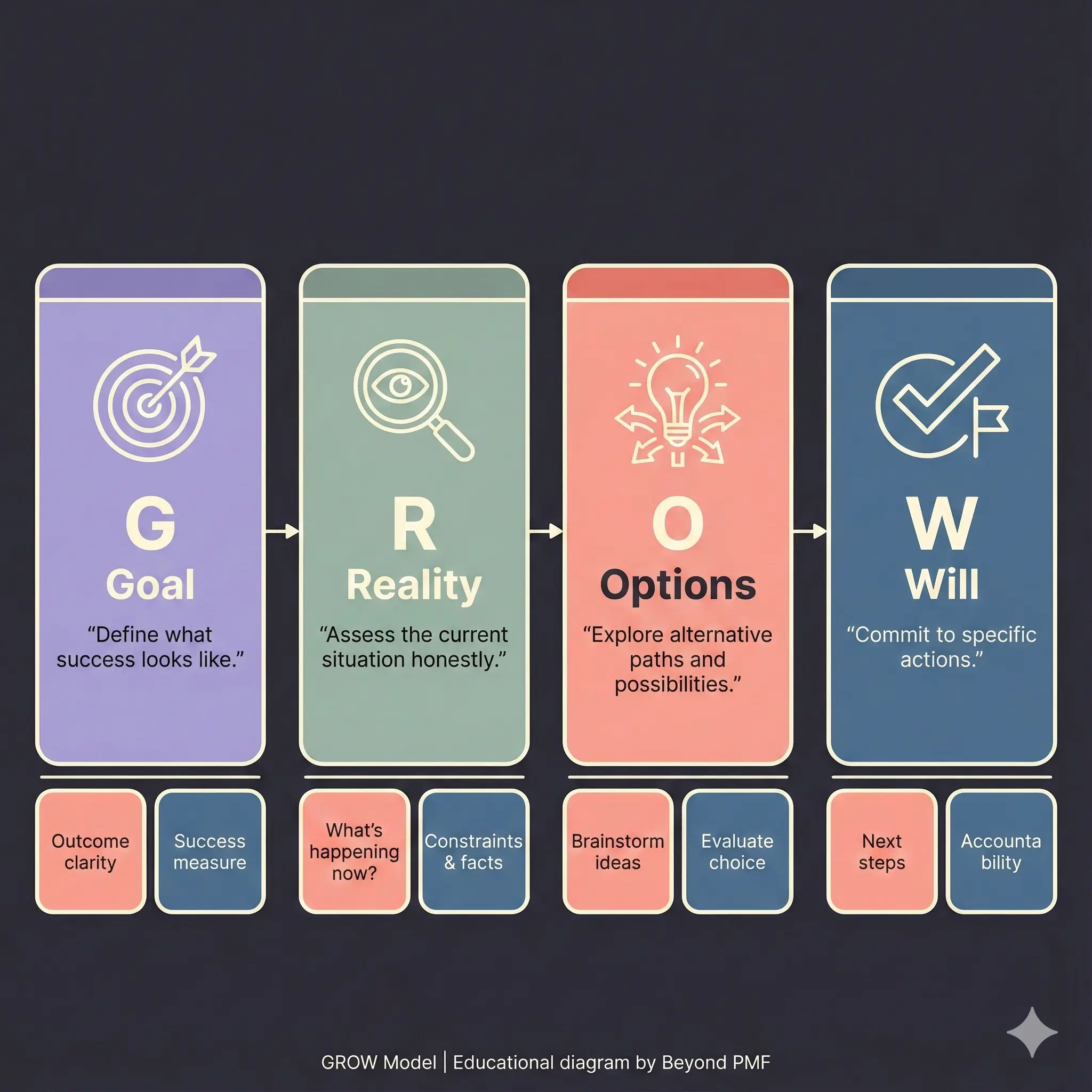
The GROW Model is a simple yet powerful framework for structuring coaching and mentoring sessions. GROW stands for Goal, Reality, Options, and Will. It helps individuals and teams set clear goals, assess the current reality, explore various options, and commit to specific actions. The model is widely used due to its flexibility, ease of understanding, and effectiveness in facilitating personal and professional development.