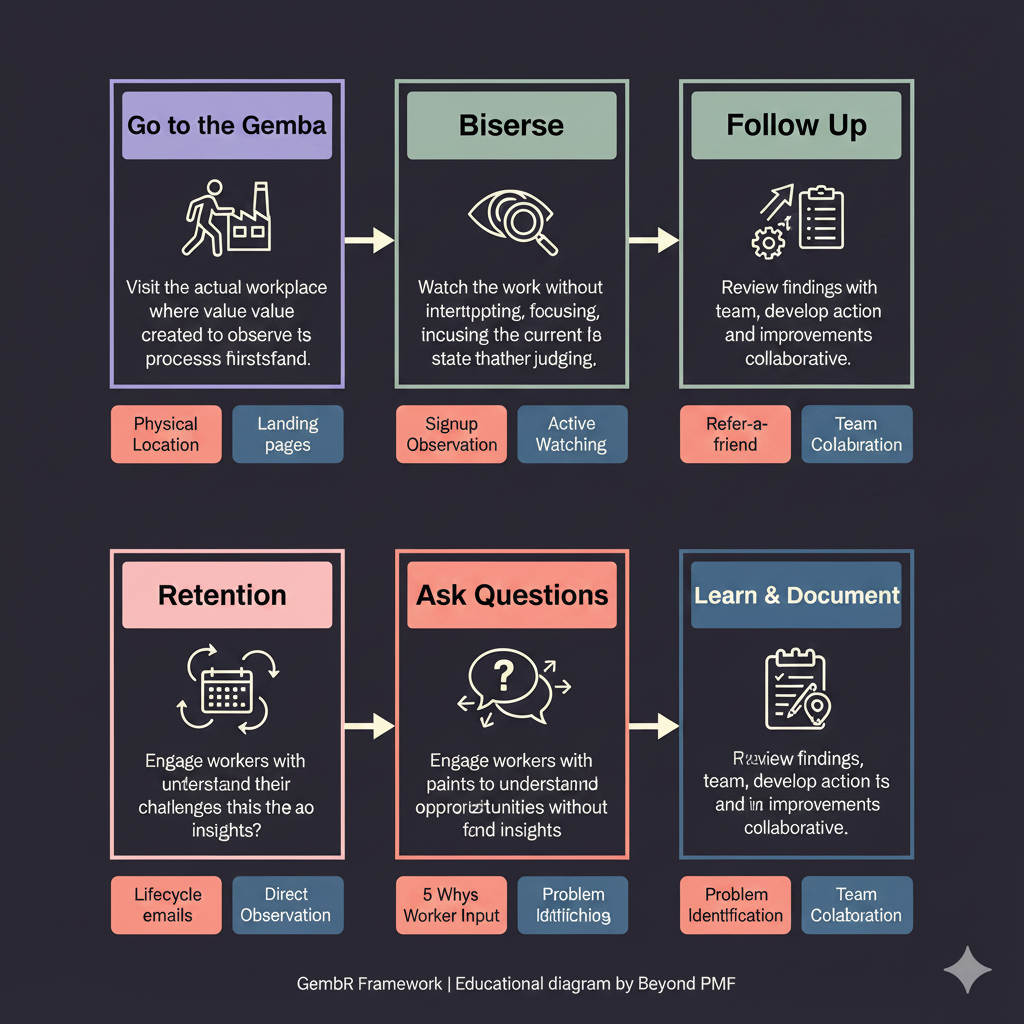
The Gemba Walk is a management technique derived from the Japanese term 'gemba' meaning 'the real place'. Managers and leaders use this approach to observe firsthand the work processes, engage with employees, and identify areas of improvement. It emphasizes the value of understanding the actual work environment to make informed decisions. This practice is beneficial for fostering open communication, improving operational efficiency, and building a culture of continuous improvement.
Planning the walk: Define objectives, scope, and schedule the walk. | Engaging with the team: Communicate the purpose of the Gemba Walk to the team members to ensure transparency and cooperation. | Observing the process: Walk through the actual workplace, observe processes without interfering, and take notes. | Asking questions: Engage with employees, ask insightful questions to understand their challenges and ideas. | Reflecting on observations: Post-walk, review notes and observations to identify patterns or issues. | Taking action: Develop action plans based on insights gathered to address the identified issues. | Follow-up: Regularly revisit the areas to ensure implemented changes are effective and to demonstrate commitment to continuous improvement.
Be consistent and regular with Gemba Walks | Focus on learning and collaboration rather than fault-finding | Prepare specific, open-ended questions to engage workers
Increases visibility of actual work processes | Enhances employee engagement and communication | Facilitates real-time problem identification and solution
Time-consuming if not properly planned | Potential for perceived micromanagement | Relies heavily on the skill of the observer to be effective
To understand workflow and process bottlenecks | To engage and empower front-line employees
When there is no clear objective or purpose | In highly disruptive or crisis situations where presence might hinder operations