
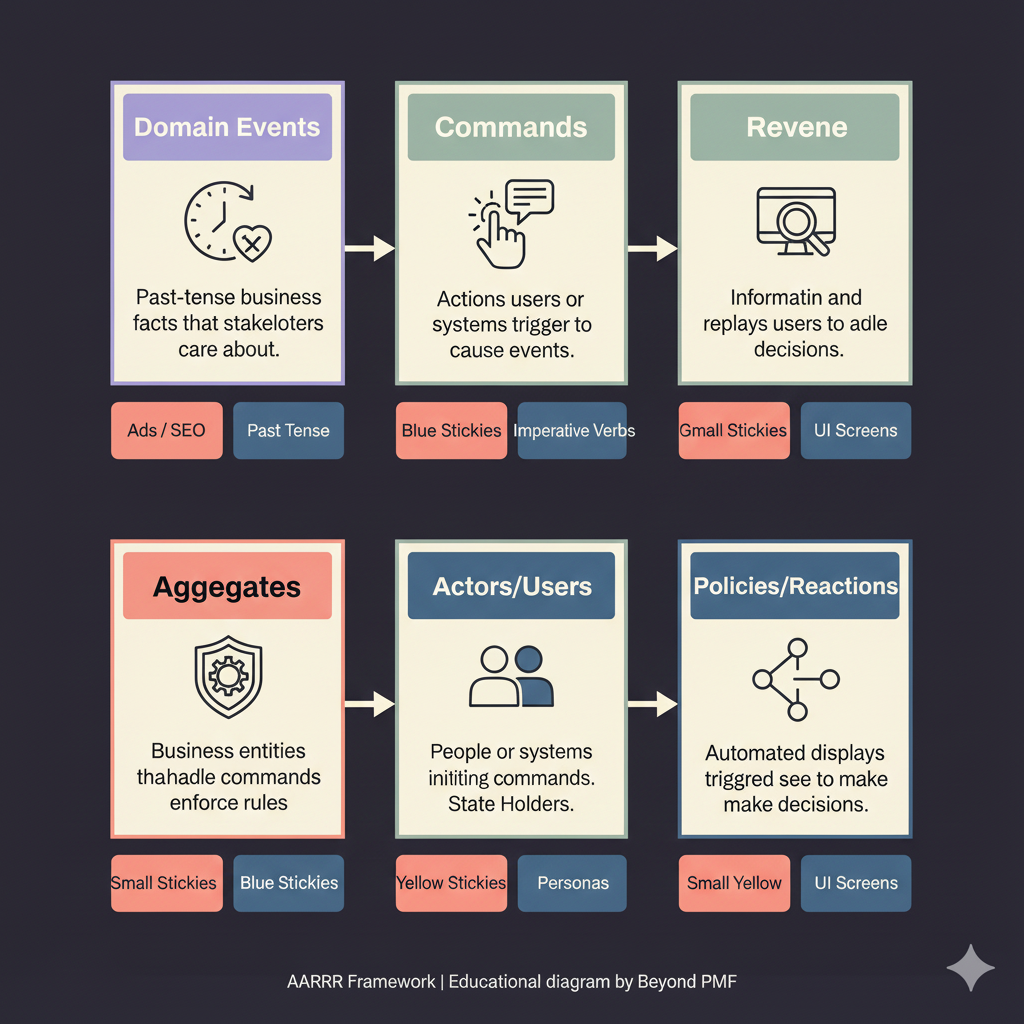
Event Storming is a workshop-based method that brings together domain experts and development teams to brainstorm and model business processes using domain events. It helps in uncovering hidden interactions, bottlenecks, and inconsistencies in a system. The framework uses sticky notes to represent events, commands, and aggregates, facilitating a visual map of the entire business domain. This approach promotes a better understanding of the system requirements and fosters a high level of engagement among stakeholders.
Preparation: Gather all necessary materials and ensure the participation of cross-functional team members. | Kick-off: Start by explaining the goals and rules of the session. | Rapid Event Generation: Participants write down domain events on sticky notes and place them on a timeline. | Chronological Arrangement: Arrange the events in the order they occur within the system. | Explore Models and Bounded Contexts: Identify and group related events into aggregates and bounded contexts. | Enrich the Model: Add commands, policies, and read models to the event map. | Consolidate Learning: Review the model for completeness and consistency, and adjust as necessary.
Ensure representation from all relevant stakeholders | Keep the session dynamic and maintain a high energy level | Regularly summarize findings and clarify any ambiguities
Enhances collaboration across different stakeholders | Quickly identifies complexity and inconsistencies in business processes | Facilitates a deep understanding of the business domain
Can be chaotic without experienced facilitation | Depends heavily on the engagement and expertise of participants | May result in an overwhelming amount of information if not managed properly
When starting a new project requiring deep understanding of complex business processes | In scenarios where integration of multiple systems or processes is needed
For simple projects with well-defined and straightforward requirements | When there is a lack of availability of key domain experts