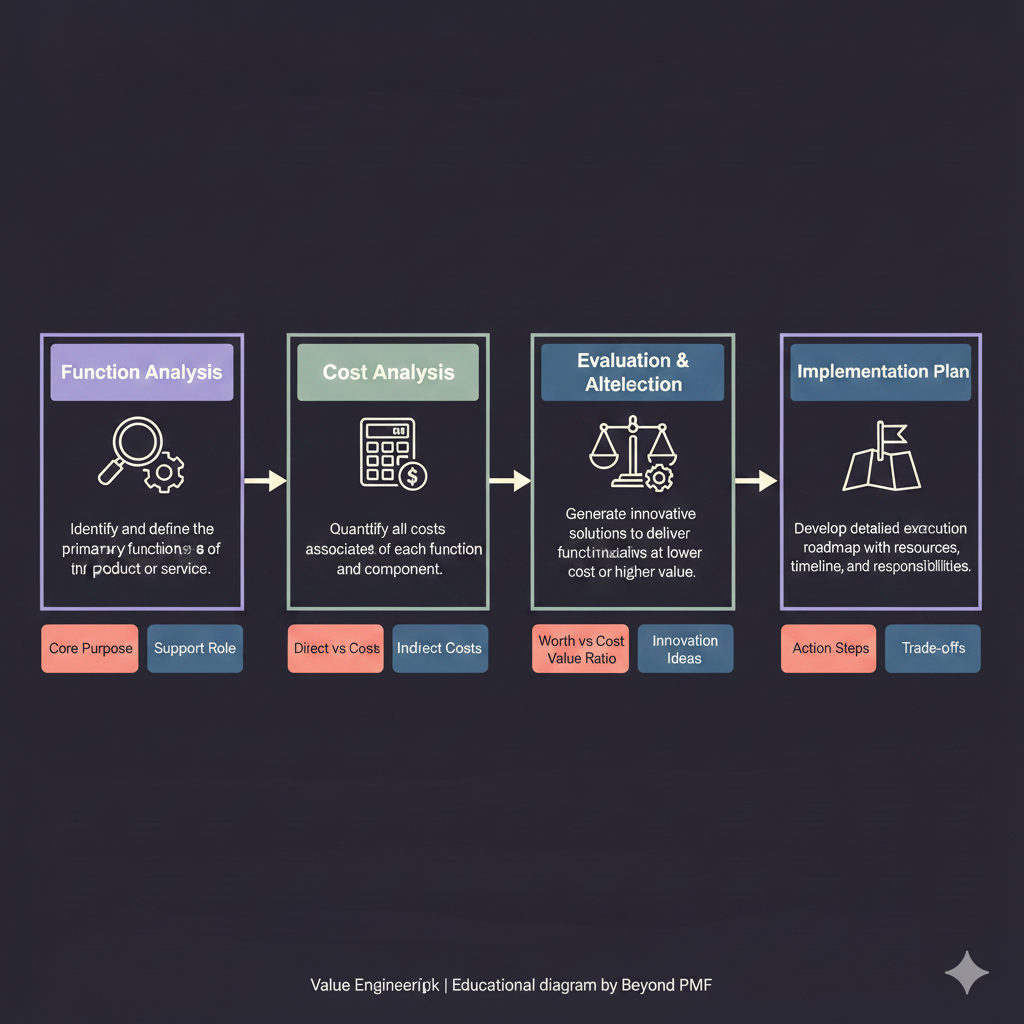
Value Engineering (VE) is a structured process aimed at optimizing projects, products, or processes by analyzing their functions and identifying ways to reduce costs while maintaining or improving quality and performance. It is used to enhance value by examining the balance between cost, reliability, and performance of a product or service. The benefits of VE include reduced costs, improved product functionality, and increased customer satisfaction.
Preparation: Define the project scope and gather relevant data. | Information phase: Collect and analyze data to understand all aspects of the item or process. | Function analysis: Identify and list the functions of the product or process being examined. | Creative phase: Generate ideas on how to improve the functions without increasing costs. | Evaluation phase: Assess the feasibility and potential impacts of the ideas generated. | Development phase: Develop the solutions that survive the evaluation phase into usable improvements. | Presentation phase: Present the developed solutions to stakeholders for approval and implementation.
Engage all relevant stakeholders early in the process | Maintain a clear focus on the functions that add real value | Regularly review and update the value engineering process
Increases the functionality of products or services while reducing costs | Enhances product quality and customer satisfaction | Promotes innovation through creative problem-solving
Can be time-consuming and resource-intensive | Requires skilled personnel with specific expertise | Potential resistance to change from stakeholders
When looking to cut costs without sacrificing quality | During the product development phase to optimize product design
In projects where time constraints do not allow for a thorough analysis | When the cost of the VE process outweighs potential savings