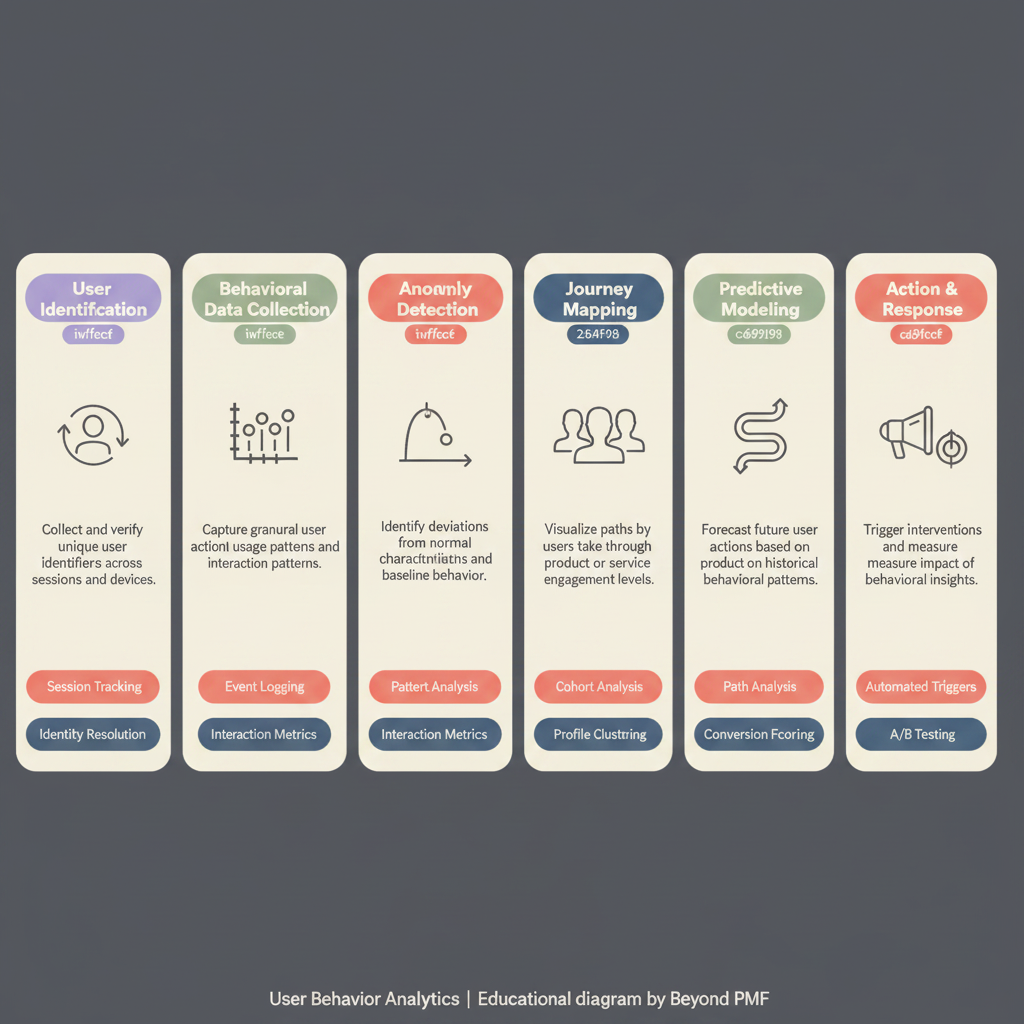
The User Behavior Analytics Framework is designed to help organizations monitor and analyze user behavior to detect anomalies, predict trends, and improve security measures. By leveraging data analytics and machine learning techniques, this framework processes large volumes of user data to identify patterns and irregular activities that could indicate potential threats or areas for improvement. It is particularly beneficial in enhancing security protocols, optimizing user engagement, and ensuring compliance with regulatory standards.
Data Collection: Gather user data from various sources such as logs, databases, and real-time user interactions. | Data Integration: Consolidate collected data into a unified analytics platform to ensure consistency and accessibility. | Behavioral Modeling: Develop models that define normal user behavior based on historical data. | Anomaly Detection: Use statistical and machine learning techniques to identify deviations from normal behavior patterns. | Alert Generation: Configure alerts to notify administrators of detected anomalies for timely intervention. | Response and Action: Implement automated or manual responses to identified threats or areas of concern. | Continuous Improvement: Regularly update behavioral models and refine data collection and analysis processes based on new insights and evolving user behaviors.
Ensure data privacy and compliance with relevant laws and regulations | Regularly update and validate models to adapt to changing behaviors | Integrate clear, actionable insights into business processes for effective use
Enhanced security through early detection of potential threats | Improved user experience by understanding user behavior patterns | Supports compliance with data protection and privacy regulations
Can be resource-intensive in terms of data storage and processing | Potential privacy concerns if not managed with strict data governance | Dependence on the quality and completeness of collected data
In sectors where security is paramount, such as finance and healthcare | For enhancing user engagement and personalization in digital platforms
When data collection is limited or does not represent a diverse user base | In environments where rapid, real-time analysis is not feasible