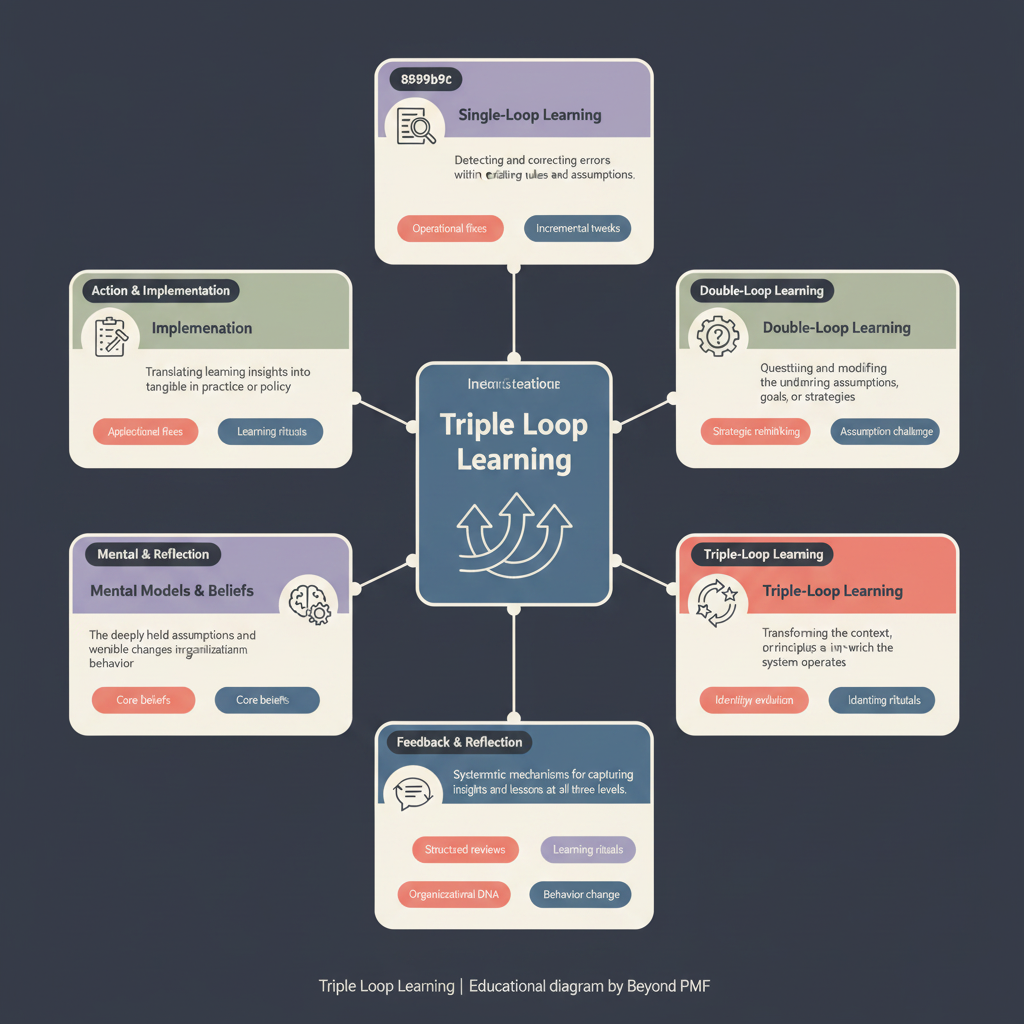
Triple Loop Learning is an advanced learning framework that extends beyond simple problem-solving to deeply analyze the effectiveness of decision-making processes. It encourages individuals and organizations to not only reflect on their actions (single-loop learning) and strategies (double-loop learning), but also to critically evaluate their underlying assumptions and values (triple loop). This introspective approach fosters more adaptive and flexible strategies, leading to sustainable long-term improvements.
Identify and articulate the initial problem or decision. | Reflect on the actions taken to address the problem (Single Loop). | Evaluate the strategies and goals that guided the actions (Double Loop). | Challenge and reassess the underlying assumptions and values (Triple Loop). | Develop new insights and strategic approaches based on this deep reflection. | Implement changes and monitor the outcomes of the new strategies.
Facilitate open and honest communication among all participants. | Ensure a safe environment where challenging questions can be posed without fear of repercussion. | Regularly schedule sessions to ensure continuous improvement.
Promotes a deep understanding of decision-making processes. | Encourages sustainable changes by addressing core values and assumptions. | Enhances organizational adaptability and resilience.
Time-consuming and requires significant introspection. | Can be challenging to implement without skilled facilitation. | May lead to discomfort or resistance when questioning deeply held beliefs.
When an organization faces recurring problems despite previous solutions. | In strategic planning sessions to align actions with core organizational values.
In crisis situations where immediate, tactical decisions are necessary. | When there is no willingness or capacity to challenge existing paradigms.