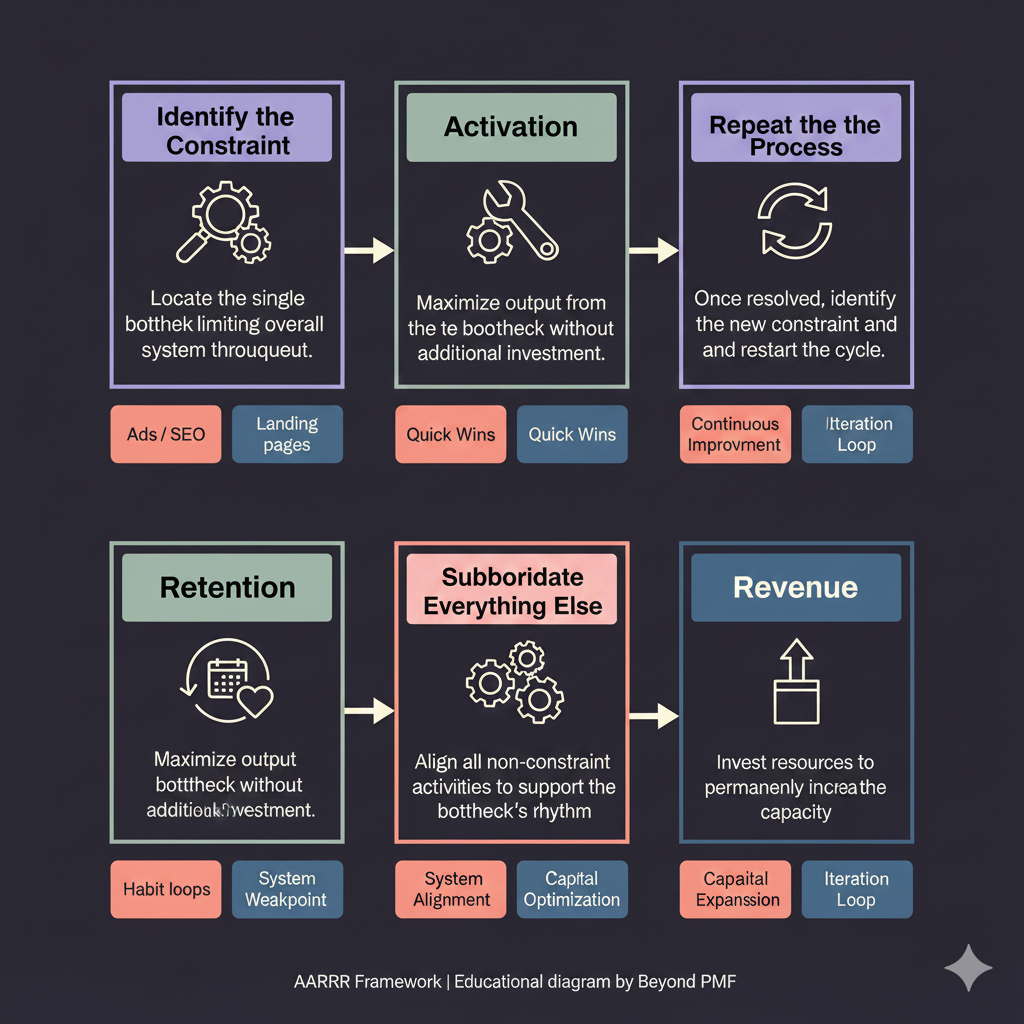
The Theory of Constraints (TOC) is a methodology for identifying the most critical limiting factor (i.e., constraint) that stands in the way of achieving a goal and systematically improving that constraint until it is no longer the limiting factor. Developed by Dr. Eliyahu M. Goldratt in his 1984 book titled 'The Goal', TOC is used across various industries to improve organizations' performance by strategically focusing on bottleneck processes. The benefits of applying TOC include improved decision-making, increased throughput, reduced operational expenses, and enhanced organizational performance.
Identify the System's Constraint: Determine the most limiting factor in the system that is preventing the organization from achieving higher performance. | Exploit the Constraint: Make quick and effective changes to get the most out of the constraint without significant investment. | Subordinate Everything Else: Align all other processes and resources to support the decision made to exploit the constraint. | Elevate the Constraint: If the constraint still exists after exploitation, consider actions to increase its capacity or capability. | Repeat the Process: Once a constraint is broken or no longer exists, go back to step one and identify the new constraint.
Regularly review and reassess the constraints within the system | Ensure team alignment and understanding of the TOC principles | Use TOC in conjunction with other management strategies to cover broader operational aspects
Focuses on leveraging the smallest number of changes for the biggest impact | Improves throughput and operational efficiency | Systematic approach that can be applied to any type of organization
Can be overly simplistic in complex systems with multiple constraints | Requires continuous reassessment which can be resource-intensive | Potential neglect of areas not identified as constraints
When facing production bottlenecks | When needing to improve process efficiencies
In highly variable environments where constraints frequently change | When the organization lacks the discipline to follow through the iterative steps of TOC