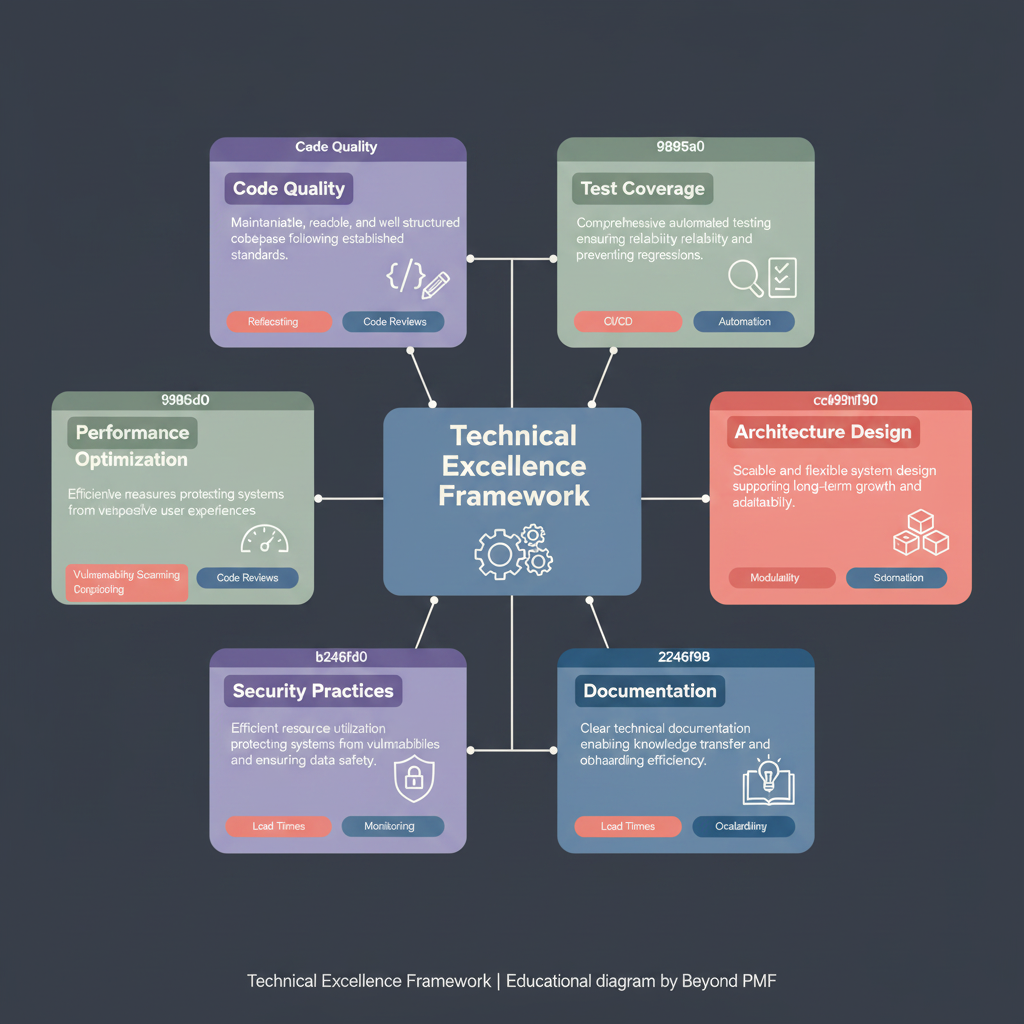
Technical Excellence Framework

https://ik.imagekit.io/beyondpmf/frameworks/technical-excellence-framework.png
The Technical Excellence Framework directly addresses issues related to technical performance, innovation, and ultimately, the quality of the technical output. This points toward challenges in delivery, implementation, and overall technical execution within the organization.

The Technical Excellence Framework is a comprehensive set of practices and principles designed to enhance the technical capabilities of an organization. It focuses on continuous improvement, innovation, and maintaining high standards in technical work. The framework helps organizations to systematically improve their technical skills, processes, and tools, ensuring they remain competitive and effective in their respective industries.

Steps / Detailed Description

Assess current technical capabilities and identify areas for improvement. | Define clear technical standards and best practices. | Implement training and development programs for technical skills enhancement. | Establish a culture of continuous learning and innovation. | Regularly review and update technical practices and tools.

Best Practices

Regularly update training materials and technical resources | Foster a culture of open communication and knowledge sharing | Incorporate feedback mechanisms to continually refine technical practices

Pros

Improves technical skill levels across the organization | Encourages innovation and continuous improvement | Enhances product quality and customer satisfaction

Cons

Can be resource-intensive to implement | Requires ongoing commitment and support from all levels of management | May be challenging to measure direct impact on business outcomes

When to Use

When aiming to enhance product quality and innovation | When preparing for technological transformations or upgrades

When Not to Use

In very small organizations where resources are limited | When immediate business survival issues take precedence over long-term technical excellence

Related Frameworks

Lifecycle

Not tied to a specific lifecycle stage

Scope

Scope not defined

Maturity Level

Maturity level not specified

Time to Implement

2–4 Weeks
3–6 Months
1–2 Weeks
3–6 Months
1–2 Months
3–6 Months
1–2 Weeks
Less Than 1 Day
1–2 Weeks
Longer Than 6 Months
1–2 Weeks
Longer Than 6 Months
1–2 Weeks
3–6 Months
1–2 Weeks
1–2 Weeks
1–2 Weeks
1–2 Weeks
1–2 Days
1–2 Weeks
1–2 Weeks
1–2 Weeks
1–2 Weeks
1–2 Weeks
1–2 Weeks
3–6 Months
1–2 Weeks
1–2 Weeks
1–2 Weeks
3–6 Months
1–2 Weeks
1–2 Weeks
2–4 Weeks
1–2 Weeks
1–2 Days
1–2 Weeks
Longer Than 6 Months
3–6 Months
Longer Than 6 Months
1–2 Weeks
Longer Than 6 Months
3–6 Months
Less Than 1 Day
3–6 Months
1–2 Months
3–6 Months
Longer Than 6 Months
3–6 Months
Less Than 1 Day
1–2 Weeks
3–6 Months
3–6 Months
1–2 Weeks
3–6 Months
1–2 Weeks
1–2 Weeks
1–2 Days
1–2 Weeks
1–2 Months
Longer Than 6 Months
1–2 Weeks
Longer Than 6 Months
1–2 Weeks
3–6 Months
1–2 Weeks
Less Than 1 Day
1–2 Weeks
3–6 Months
1–2 Weeks
3–6 Months
1–2 Weeks
1–2 Weeks
Longer Than 6 Months
Less Than 1 Day
3–6 Months
Longer Than 6 Months
1–2 Months
1–2 Weeks
Longer Than 6 Months
1–2 Weeks
3–6 Months
1–2 Weeks
1–2 Weeks
3–6 Months
Less Than 1 Day
1–2 Weeks
1–2 Weeks
3–6 Months
3–6 Months
Less Than 1 Day
1–2 Weeks
Longer Than 6 Months
1–2 Months
1–2 Weeks
1–2 Weeks
1–2 Weeks
Longer Than 6 Months

Copyright Information

Autor:
Unknown
N/A
Publication:
Unknown