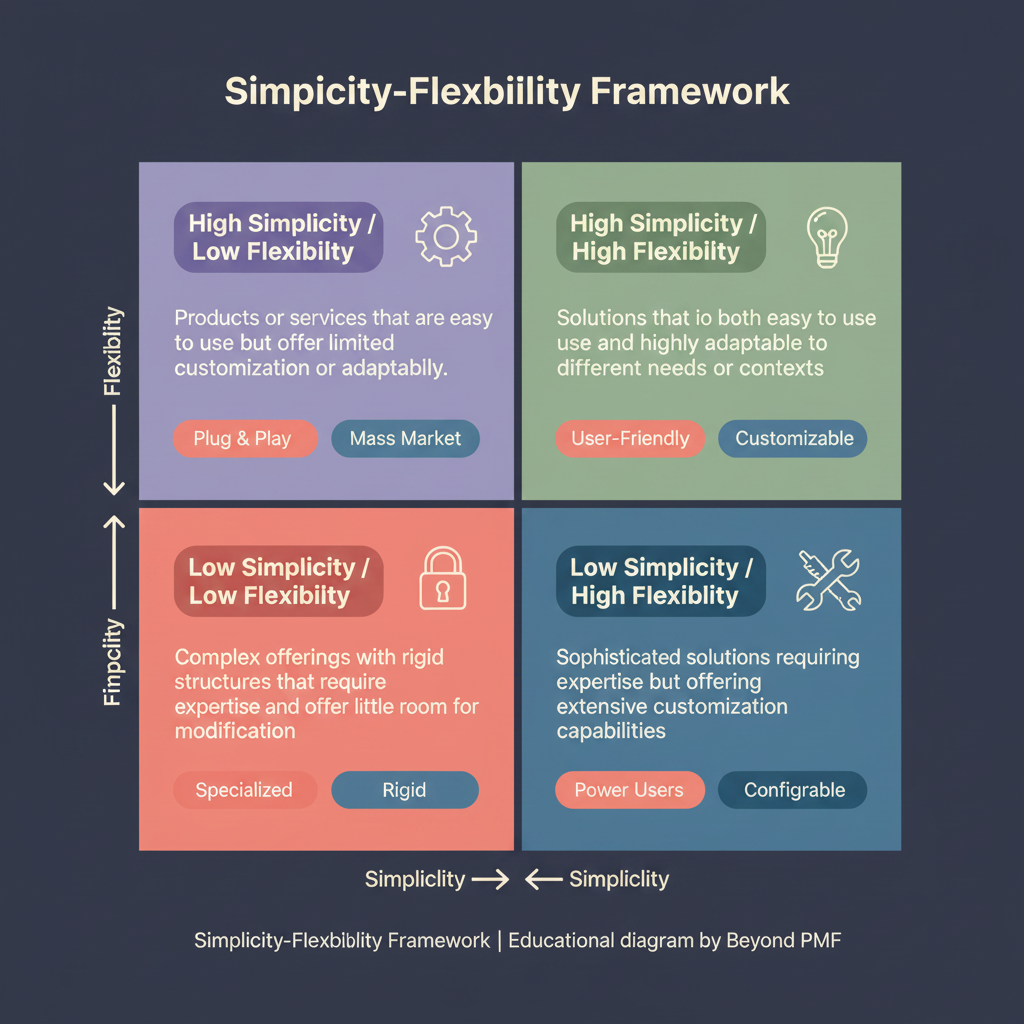
The Simplicity-Flexibility Framework is designed to help organizations achieve a balance between streamlined, easy-to-implement processes and the ability to adapt to changing circumstances. This framework is particularly useful in dynamic business environments where agility and simplicity are both critical for success. It encourages businesses to develop clear, simple procedures that can be easily modified as needed, enhancing both efficiency and responsiveness.
Identify core processes and simplify them to their essential components. | Establish clear guidelines for when and how processes can be adapted. | Train team members on both the standard procedures and the methods for adapting them. | Implement monitoring mechanisms to assess the effectiveness of the simple and flexible approaches. | Regularly review and update processes to maintain an optimal balance between simplicity and flexibility.
Maintain a clear documentation of all core processes and their flexible elements. | Regularly train staff on the importance of balance between simplicity and flexibility. | Use technology to monitor and facilitate adjustments in real-time.
Enhances adaptability to changing market conditions. | Reduces complexity, making it easier to train new employees. | Improves speed and efficiency in process execution.
Risk of oversimplification leading to inadequate responses to complex challenges. | Potential for inconsistency in how flexibility is applied across different departments. | Requires continuous oversight and adjustment, which can be resource-intensive.
In rapidly changing industries where quick adaptation is crucial. | When introducing new products or services that may require iterative adjustments.
In highly regulated industries where changes need extensive vetting. | When the business model or market is very stable and does not require frequent adjustments.