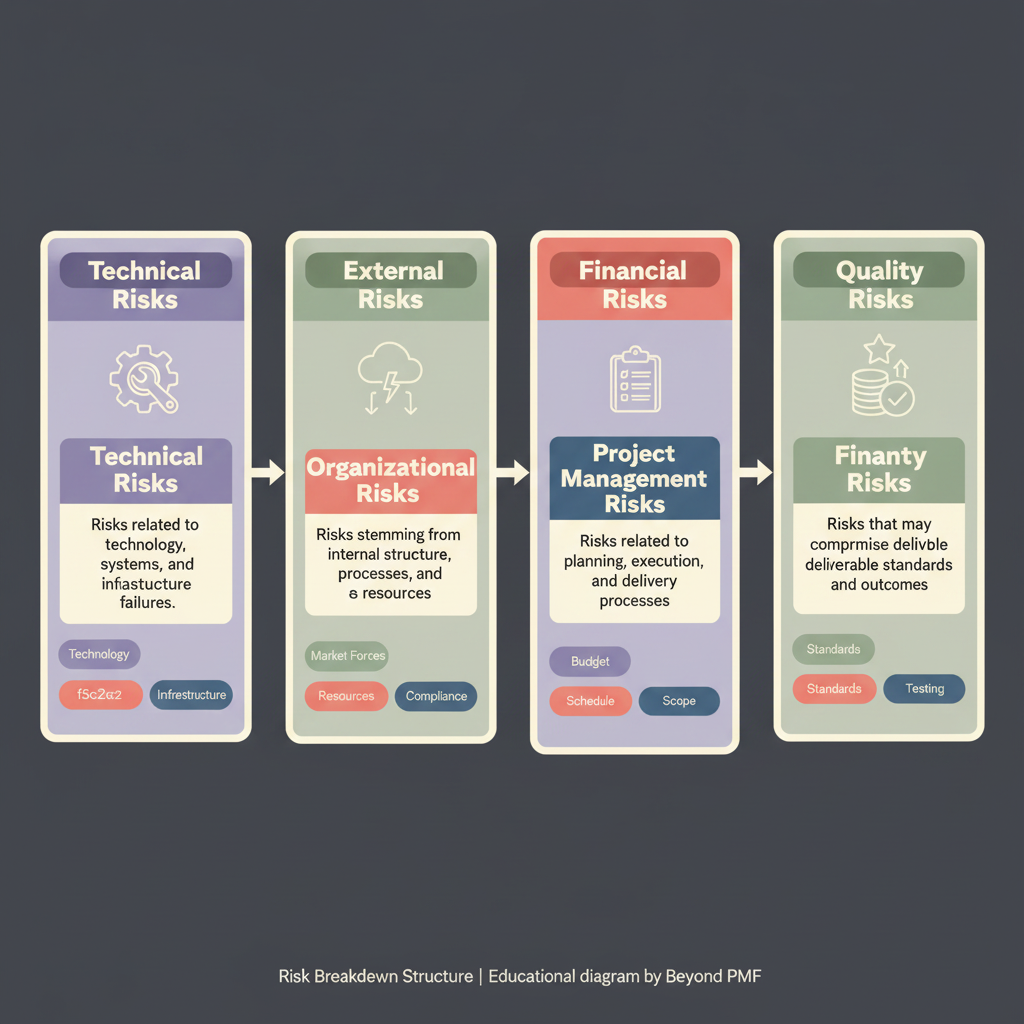
Risk Breakdown Structure

https://ik.imagekit.io/beyondpmf/frameworks/risk-breakdown-structure.png
The Risk Breakdown Structure (RBS) primarily addresses friction in the operational domain by providing a structured approach to categorize and manage project risks. This allows for improved coordination and control over potential issues that could disrupt project workflows and processes.

The Risk Breakdown Structure is a hierarchical decomposition of risks that could impact a project's objectives. It organizes risks into categories and subcategories, making it easier to identify, assess, and manage them systematically. This framework is essential for project managers to prioritize risks and develop effective mitigation strategies, thereby enhancing the overall risk management process and increasing the likelihood of project success.

Steps / Detailed Description

Identify all potential risks associated with the project. | Categorize these risks into main categories (e.g., technical, external, organizational). | Break down each main category into subcategories for more detailed analysis. | Assess the likelihood and impact of risks in each category. | Prioritize risks based on their potential impact on project objectives. | Develop mitigation strategies for the highest priority risks.

Best Practices

Involve stakeholders from different disciplines to ensure comprehensive risk identification. | Regularly update the RBS to reflect new risks and changes in project scope. | Use software tools to manage and visualize the RBS effectively.

Pros

Provides a clear structure for identifying and analyzing risks. | Facilitates better communication about risks among project stakeholders. | Helps in prioritizing risks and focusing on the most critical ones.

Cons

Can be time-consuming to develop and maintain. | May not capture all risks if initial categorization is not comprehensive. | Depends heavily on the expertise of those categorizing the risks.

When to Use

In complex projects where risks are numerous and diverse. | During the initial planning phase to set the stage for effective risk management.

When Not to Use

For very small or short-term projects where the setup might outweigh the benefits. | When the project scope and deliverables are extremely clear and unlikely to change.

Related Frameworks

Categories

Lifecycle

Scope

Scope not defined

Maturity Level

Maturity level not specified

Time to Implement

2–4 Weeks
3–6 Months
1–2 Weeks
3–6 Months
1–2 Months
3–6 Months
1–2 Weeks
Less Than 1 Day
1–2 Weeks
Longer Than 6 Months
1–2 Weeks
Longer Than 6 Months
1–2 Weeks
3–6 Months
1–2 Weeks
1–2 Weeks
1–2 Weeks
1–2 Weeks
1–2 Days
1–2 Weeks
1–2 Weeks
1–2 Weeks
1–2 Weeks
1–2 Weeks
1–2 Weeks
3–6 Months
1–2 Weeks
1–2 Weeks
1–2 Weeks
3–6 Months
1–2 Weeks
1–2 Weeks
2–4 Weeks
1–2 Weeks
1–2 Days
1–2 Weeks
Longer Than 6 Months
3–6 Months
Longer Than 6 Months
1–2 Weeks
Longer Than 6 Months
3–6 Months
Less Than 1 Day
3–6 Months
1–2 Months
3–6 Months
Longer Than 6 Months
3–6 Months
Less Than 1 Day
1–2 Weeks
3–6 Months
3–6 Months
1–2 Weeks
3–6 Months
1–2 Weeks
1–2 Weeks
1–2 Days
1–2 Weeks
1–2 Months
Longer Than 6 Months
1–2 Weeks
Longer Than 6 Months
1–2 Weeks
3–6 Months
1–2 Weeks
Less Than 1 Day
1–2 Weeks
3–6 Months
1–2 Weeks
3–6 Months
1–2 Weeks
1–2 Weeks
Longer Than 6 Months
Less Than 1 Day
3–6 Months
Longer Than 6 Months
1–2 Months
1–2 Weeks
Longer Than 6 Months
1–2 Weeks
3–6 Months
1–2 Weeks
1–2 Weeks
3–6 Months
Less Than 1 Day
1–2 Weeks
1–2 Weeks
3–6 Months
3–6 Months
Less Than 1 Day
1–2 Weeks
Longer Than 6 Months
1–2 Months
1–2 Weeks
1–2 Weeks
1–2 Weeks
Longer Than 6 Months

Copyright Information

Autor:
Public Domain
N/A
Publication:
Generic Business Tool