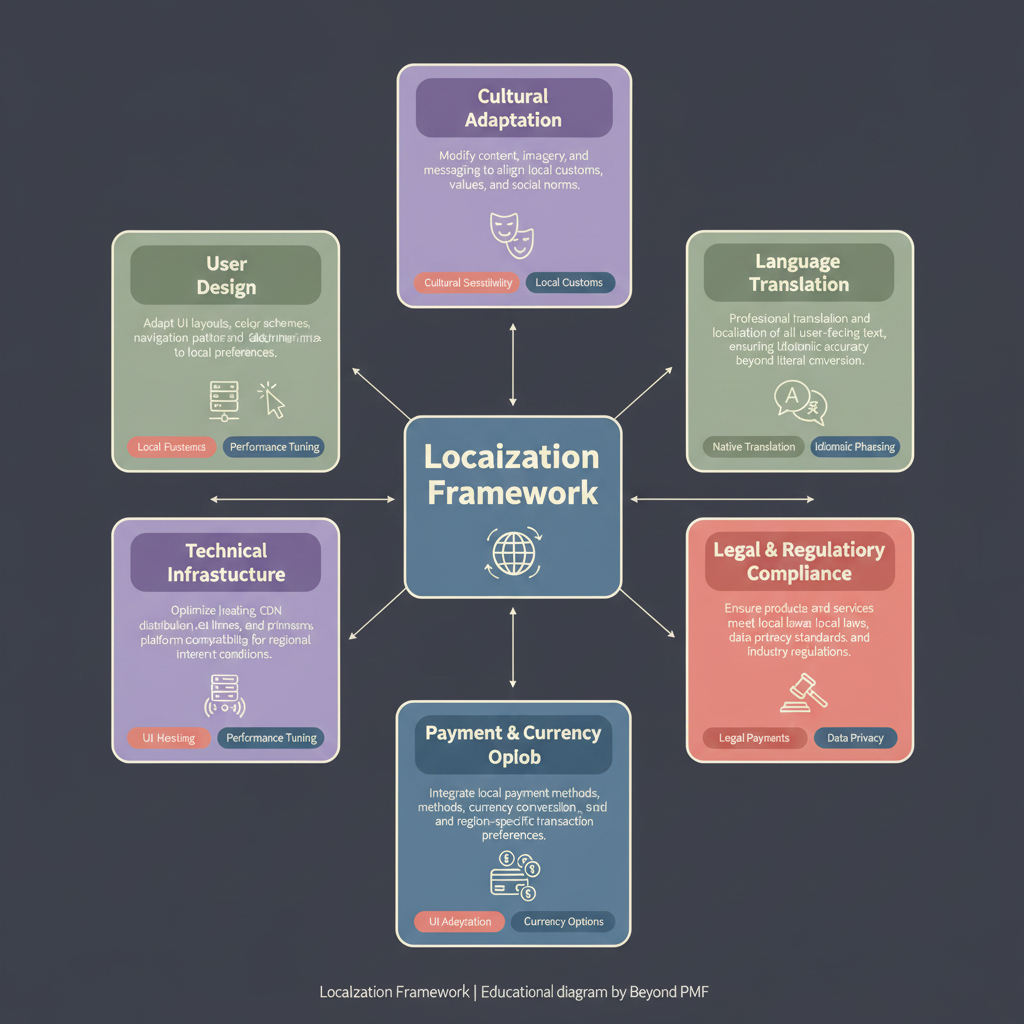
The Localization Framework is a strategic approach used by businesses to adapt their offerings to meet the specific cultural, linguistic, and regulatory requirements of different markets. It involves a series of steps to ensure that products, services, and content resonate with local audiences, thereby increasing market penetration and customer satisfaction. The framework is crucial for global expansion and helps companies maintain relevance in diverse markets.
Assess market needs and cultural differences. | Translate and localize content, including language and cultural nuances. | Adapt product features and design to local preferences and regulations. | Implement local marketing and distribution strategies. | Gather feedback from local users and iterate on the product.
Engage local experts for cultural and linguistic insights. | Regularly update localized content to keep up with cultural shifts. | Use technology and tools to streamline the localization process.
Increases market relevance and customer engagement. | Enhances compliance with local regulations and standards. | Boosts brand loyalty and market share in international markets.
Can be resource-intensive in terms of time and finances. | Risk of misinterpretation and cultural insensitivity if not done correctly. | Complex coordination required across multiple departments.
Expanding business into new international markets. | Launching new products or services globally.
In markets where the primary audience prefers globalized, standard products. | When the cost of localization exceeds the potential return on investment.