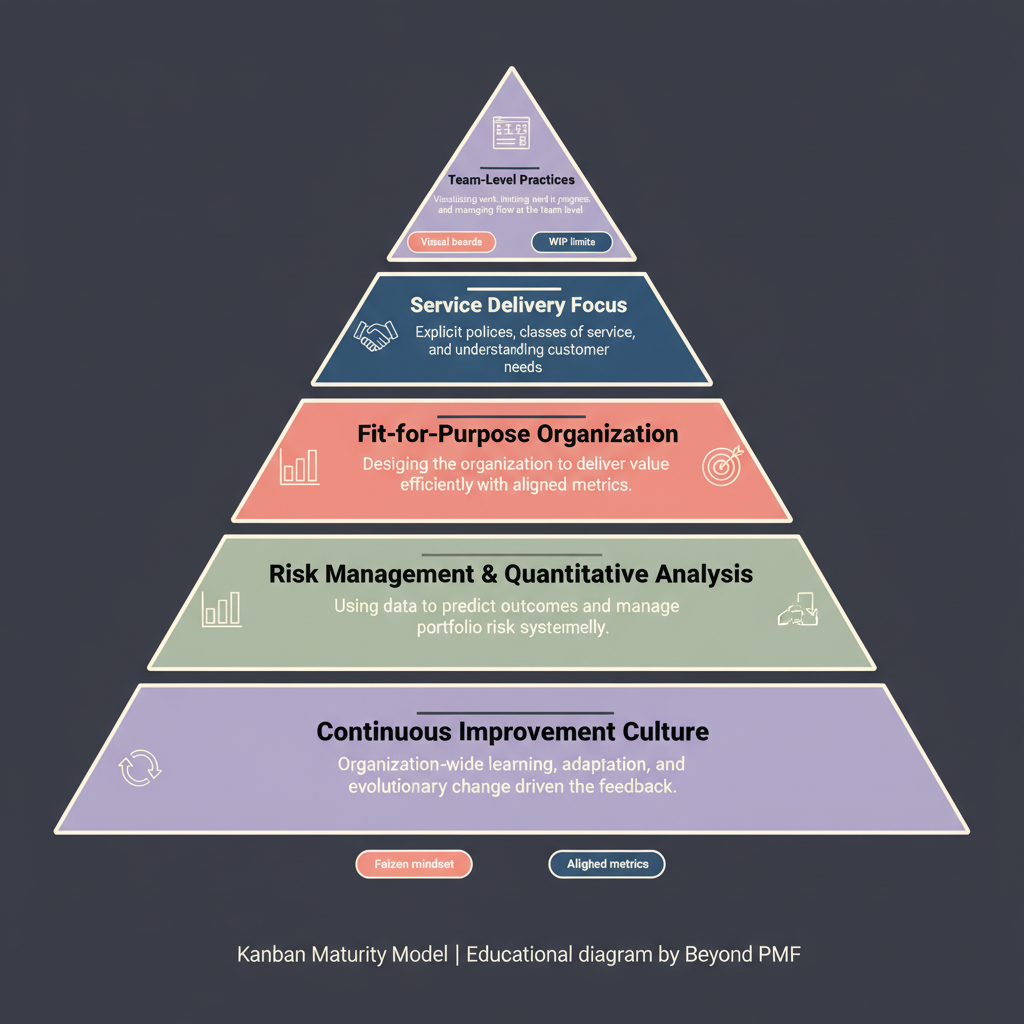
The Kanban Maturity Model is a framework that provides organizations with a roadmap to gradually improve their process capabilities through effective use of Kanban systems. It outlines a series of maturity levels, from initial visualization and workflow management to optimized and adaptive Kanban systems. The model helps organizations identify their current level of maturity and offers guidance on progressing to higher levels, thereby improving service delivery, predictability, and overall business agility.
Assess current maturity level: Determine the organization's existing maturity level based on their current Kanban practices. | Define goals: Set specific, measurable goals for process improvement at each maturity level. | Implement practices: Adopt or enhance Kanban practices appropriate for the current maturity level. | Measure and evaluate: Regularly measure the impact of the implemented practices and evaluate progress towards the goals. | Evolve practices: Gradually introduce more advanced Kanban practices as the organization progresses through the maturity levels.
Start with a thorough assessment of the current maturity level | Engage all team members in the Kanban training and implementation process | Regularly review and adjust Kanban practices based on feedback and results
Structured approach to improvement | Enhanced predictability and efficiency | Scalable across different organizational sizes
Requires consistent commitment and discipline | May be complex to implement without proper guidance | Potential resistance to change within teams
When seeking to improve workflow and process efficiency | When an organization needs a scalable method to manage growth and change
In very small teams where informal processes suffice | Where rapid, disruptive change is needed immediately