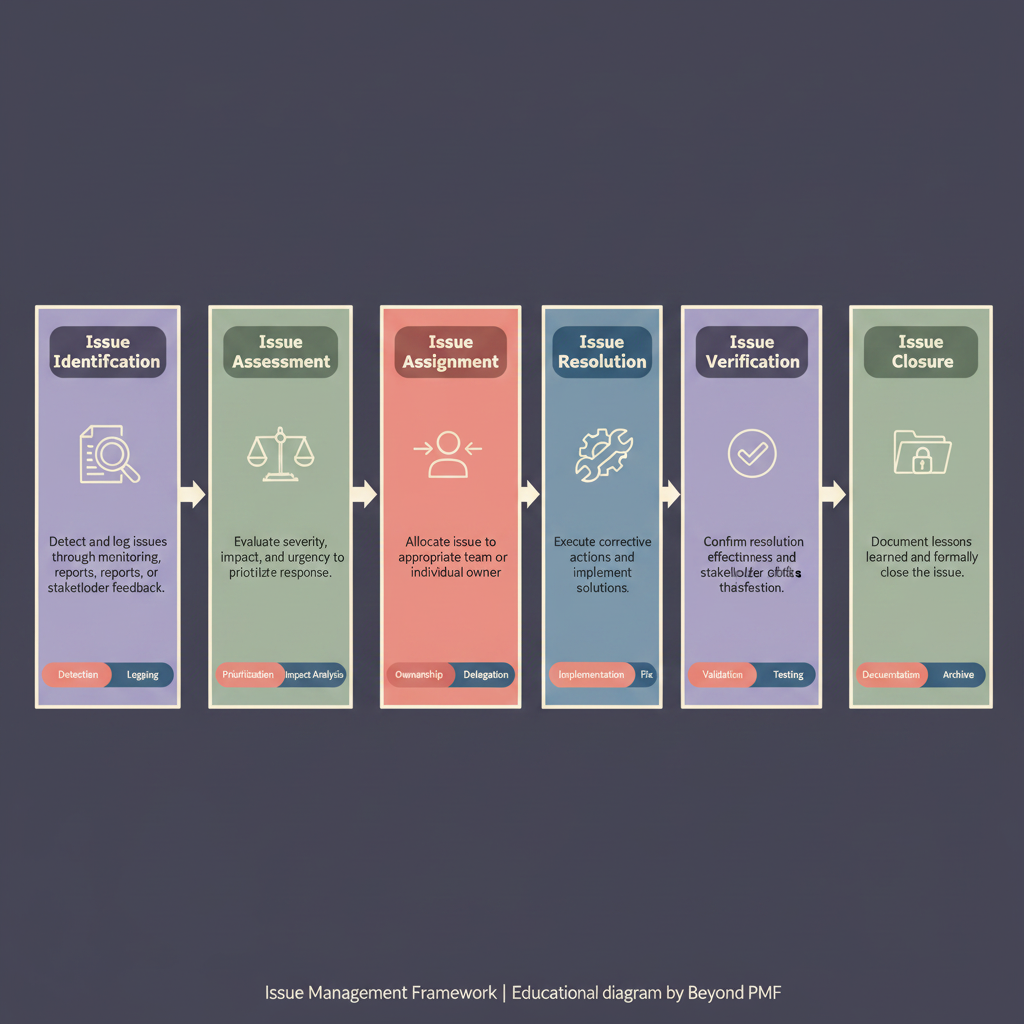
The Issue Management Framework is designed to help organizations effectively handle and resolve issues that arise during the course of business operations. It provides a structured process for identifying issues, assessing their impact, prioritizing them based on urgency and importance, and implementing solutions. This framework is crucial for maintaining project timelines, ensuring quality, and upholding stakeholder satisfaction.
Identification of issues: Recognize and document all emerging issues. | Assessment: Evaluate the impact and urgency of each issue. | Prioritization: Rank issues based on their assessed impact and urgency. | Resolution planning: Develop actionable steps to resolve prioritized issues. | Implementation: Execute the resolution plan. | Monitoring and adjustment: Track the effectiveness of solutions and make adjustments as necessary. | Closure: Formally close the issue once it is resolved.
Maintain a centralized issue log | Regularly review and update issue management processes | Ensure clear communication among all stakeholders
Enhances problem-solving efficiency | Reduces risks associated with unresolved issues | Improves stakeholder communication and trust
Can be time-consuming | May require significant resources | Potential for overemphasis on minor issues
In complex projects with multiple stakeholders | When consistent issues arise that affect business operations
For minor, everyday operational decisions | When issues are better handled through direct, immediate communication