
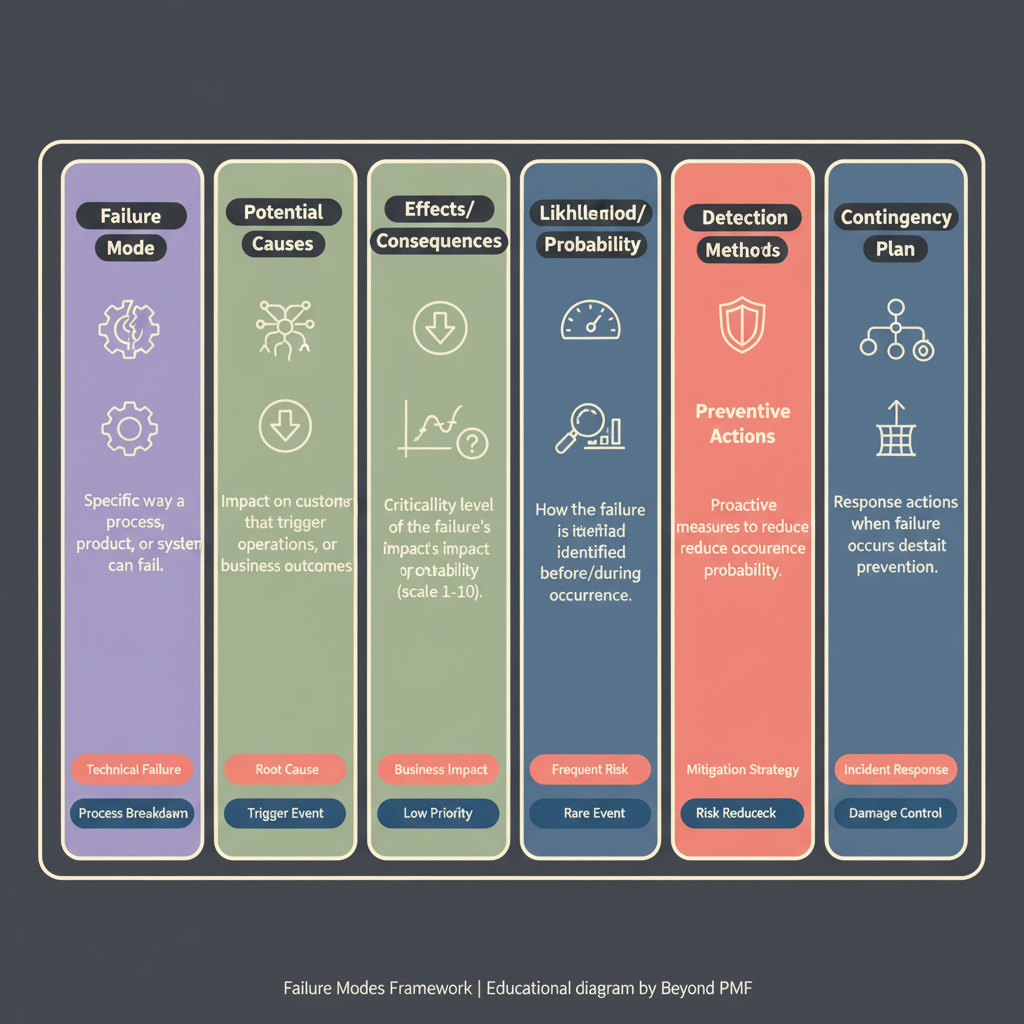
The Failure Modes Framework is a critical analysis tool that helps organizations identify and evaluate potential points of failure in their processes or products. By systematically examining each component or step in a process, the framework aims to uncover vulnerabilities before they lead to actual failures. This proactive approach not only enhances reliability and safety but also helps in optimizing operational efficiency and reducing costs associated with failures.
Identify all the possible components or steps in a process. | Analyze each component for potential failure modes. | Assess the impact of each failure mode on the process or product. | Determine the likelihood of each failure mode occurring. | Prioritize the failure modes based on their impact and likelihood. | Develop strategies to mitigate or eliminate high-priority failures.
Involve cross-functional teams to get diverse perspectives. | Regularly update and review the failure modes as processes or products evolve. | Integrate findings into continuous improvement programs.
Enhances reliability and safety of processes or products. | Helps in proactive identification and mitigation of risks. | Reduces costs by preventing failures before they occur.
Can be time-consuming and resource-intensive. | May not identify all potential failures if not thoroughly conducted. | Depends heavily on the accuracy of the initial process or product analysis.
When developing new products or processes. | When modifying existing products or processes.
In very simple or well-established processes where changes are minimal. | When there is insufficient data to accurately analyze potential failures.