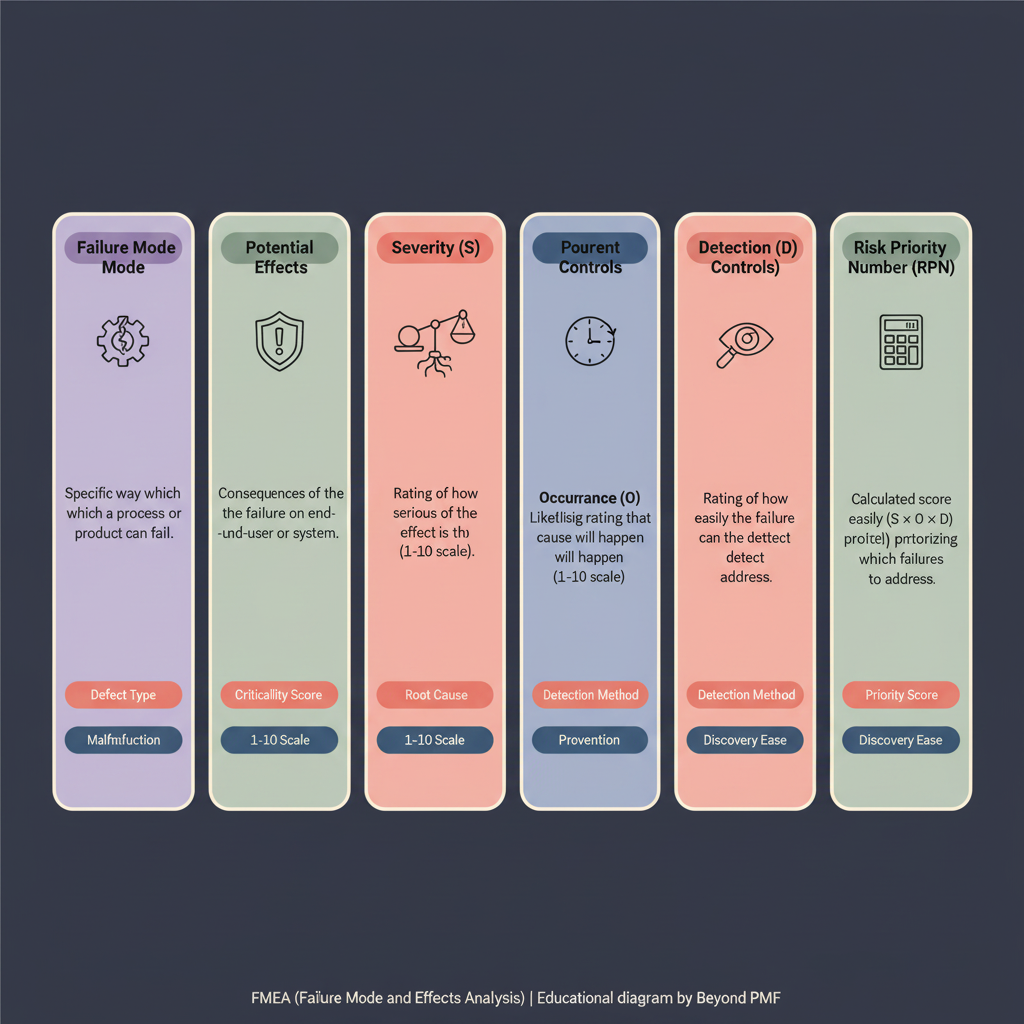
FMEA (Failure Mode and Effects Analysis)

https://ik.imagekit.io/beyondpmf/frameworks/fmea-failure-mode-and-effects-analysis.png
FMEA primarily addresses friction in operational processes by proactively identifying potential failure points within those processes. It aims to improve workflows and coordination by preventing breakdowns before they negatively impact the product or process.

FMEA, or Failure Mode and Effects Analysis, is a proactive tool used to anticipate potential failures in a system, product, or process and the effects of these failures. By analyzing components, assemblies, and subsystems to identify possible failure modes, and their causes and effects, organizations can implement corrective actions to mitigate risk. This methodology is widely used in various industries, including automotive, aerospace, and manufacturing, to enhance reliability, safety, and customer satisfaction.

Steps / Detailed Description

Define the scope and boundaries of the system to be analyzed. | Assemble a cross-functional team with diverse knowledge about the product or process. | Identify all potential failure modes for each component or process step. | Determine the effects of each failure on system operation, related systems, and customer satisfaction. | Assign a severity rating for each failure mode based on its impact. | Determine the cause of each failure mode and assess the likelihood of occurrence. | Assign a detection rating based on the ability to detect the failure before it occurs. | Calculate the Risk Priority Number (RPN) by multiplying severity, occurrence, and detection ratings. | Prioritize the failure modes based on the RPN and plan for actions to mitigate the high-risk failures. | Implement corrective actions and monitor the results to ensure effectiveness.

Best Practices

Involve a multidisciplinary team to cover all aspects of the product or process | Regularly update the FMEA to reflect changes in design, usage, or environment | Use quantitative data to support the analysis wherever possible

Pros

Improves product quality and reliability | Reduces development time and costs by preventing late-stage design changes | Enhances customer satisfaction by proactively identifying and addressing potential issues

Cons

Can be time-consuming and resource-intensive | Effectiveness depends on the accuracy and completeness of input data | May not identify all potential failure modes if not thoroughly conducted

When to Use

During the design phase of a new product | When modifying an existing product or process

When Not to Use

In projects with extremely tight timelines where detailed analysis is not feasible | When the product or process is too simple and the potential failures are well understood

Related Frameworks

Categories

Scope

Scope not defined

Maturity Level

Maturity level not specified

Time to Implement

2–4 Weeks
3–6 Months
1–2 Weeks
3–6 Months
1–2 Months
3–6 Months
1–2 Weeks
Less Than 1 Day
1–2 Weeks
Longer Than 6 Months
1–2 Weeks
Longer Than 6 Months
1–2 Weeks
3–6 Months
1–2 Weeks
1–2 Weeks
1–2 Weeks
1–2 Weeks
1–2 Days
1–2 Weeks
1–2 Weeks
1–2 Weeks
1–2 Weeks
1–2 Weeks
1–2 Weeks
3–6 Months
1–2 Weeks
1–2 Weeks
1–2 Weeks
3–6 Months
1–2 Weeks
1–2 Weeks
2–4 Weeks
1–2 Weeks
1–2 Days
1–2 Weeks
Longer Than 6 Months
3–6 Months
Longer Than 6 Months
1–2 Weeks
Longer Than 6 Months
3–6 Months
Less Than 1 Day
3–6 Months
1–2 Months
3–6 Months
Longer Than 6 Months
3–6 Months
Less Than 1 Day
1–2 Weeks
3–6 Months
3–6 Months
1–2 Weeks
3–6 Months
1–2 Weeks
1–2 Weeks
1–2 Days
1–2 Weeks
1–2 Months
Longer Than 6 Months
1–2 Weeks
Longer Than 6 Months
1–2 Weeks
3–6 Months
1–2 Weeks
Less Than 1 Day
1–2 Weeks
3–6 Months
1–2 Weeks
3–6 Months
1–2 Weeks
1–2 Weeks
Longer Than 6 Months
Less Than 1 Day
3–6 Months
Longer Than 6 Months
1–2 Months
1–2 Weeks
Longer Than 6 Months
1–2 Weeks
3–6 Months
1–2 Weeks
1–2 Weeks
3–6 Months
Less Than 1 Day
1–2 Weeks
1–2 Weeks
3–6 Months
3–6 Months
Less Than 1 Day
1–2 Weeks
Longer Than 6 Months
1–2 Months
1–2 Weeks
1–2 Weeks
1–2 Weeks

Copyright Information

Autor:
Public Domain
N/A
Publication:
Generic Business Tool