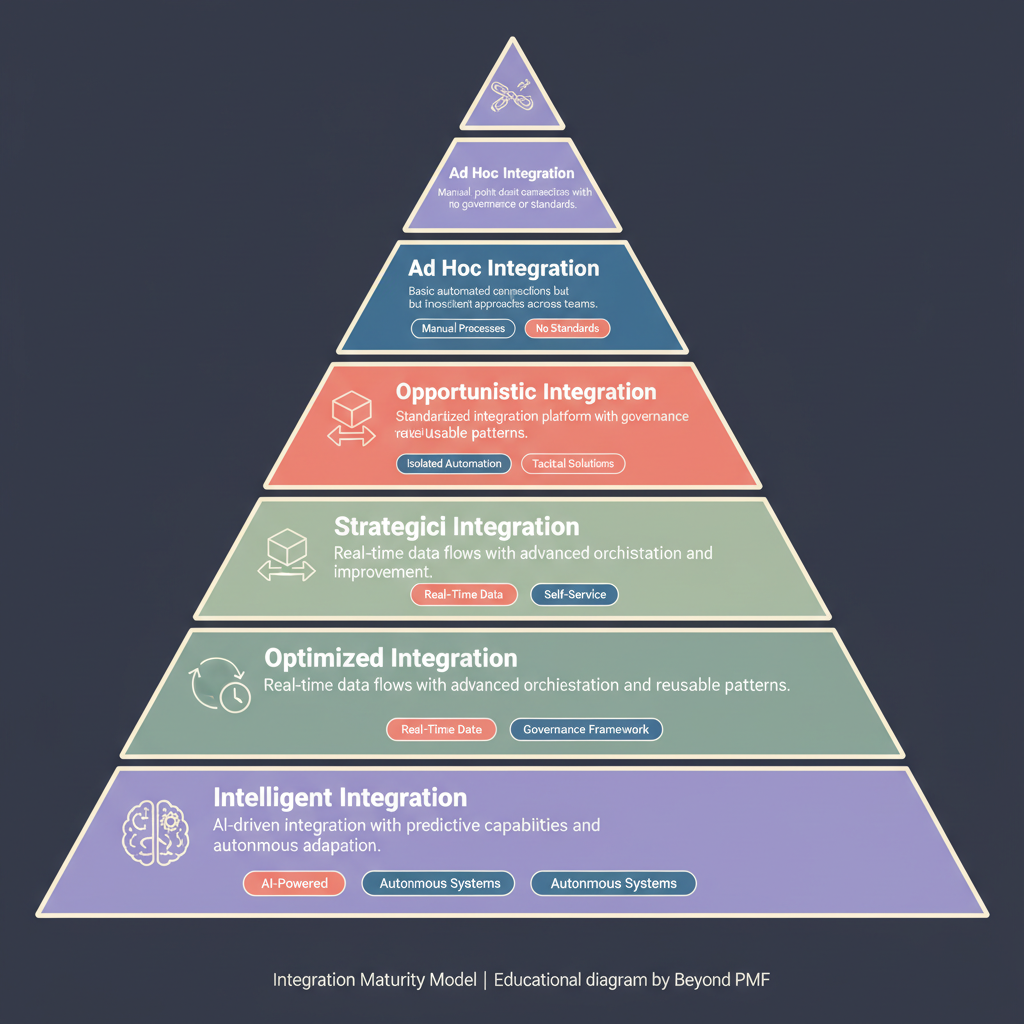
The Integration Maturity Model is a framework designed to evaluate and enhance the integration capabilities within an organization. It provides a structured approach to assess current integration processes, identify areas for improvement, and implement best practices. The model helps organizations streamline their operations, improve data consistency, and enhance communication across different systems and departments, ultimately leading to increased operational efficiency and better decision-making.
Initial Assessment: Evaluate current integration capabilities and identify gaps. | Definition of Objectives: Set specific, measurable goals for integration improvement. | Implementation of Improvements: Apply best practices and technologies to enhance integration. | Continuous Monitoring: Regularly review the integration processes and make necessary adjustments. | Optimization: Refine and enhance integration strategies based on feedback and new technologies.
Start with a thorough assessment of current integration capabilities | Set clear, achievable goals for each stage of integration maturity | Encourage cross-departmental collaboration to ensure alignment and understanding
Improves data consistency across systems | Enhances operational efficiency | Facilitates better decision-making
Can be resource-intensive | Requires continuous monitoring and updates | Potential resistance to change within the organization
When aiming to streamline operations across multiple systems | When needing to improve data consistency and access in a growing organization
In very small organizations where integration complexity is minimal | When the cost and effort of implementation outweigh the potential benefits