IDEAL Framework

https://ik.imagekit.io/beyondpmf/frameworks/ideal-framework.png
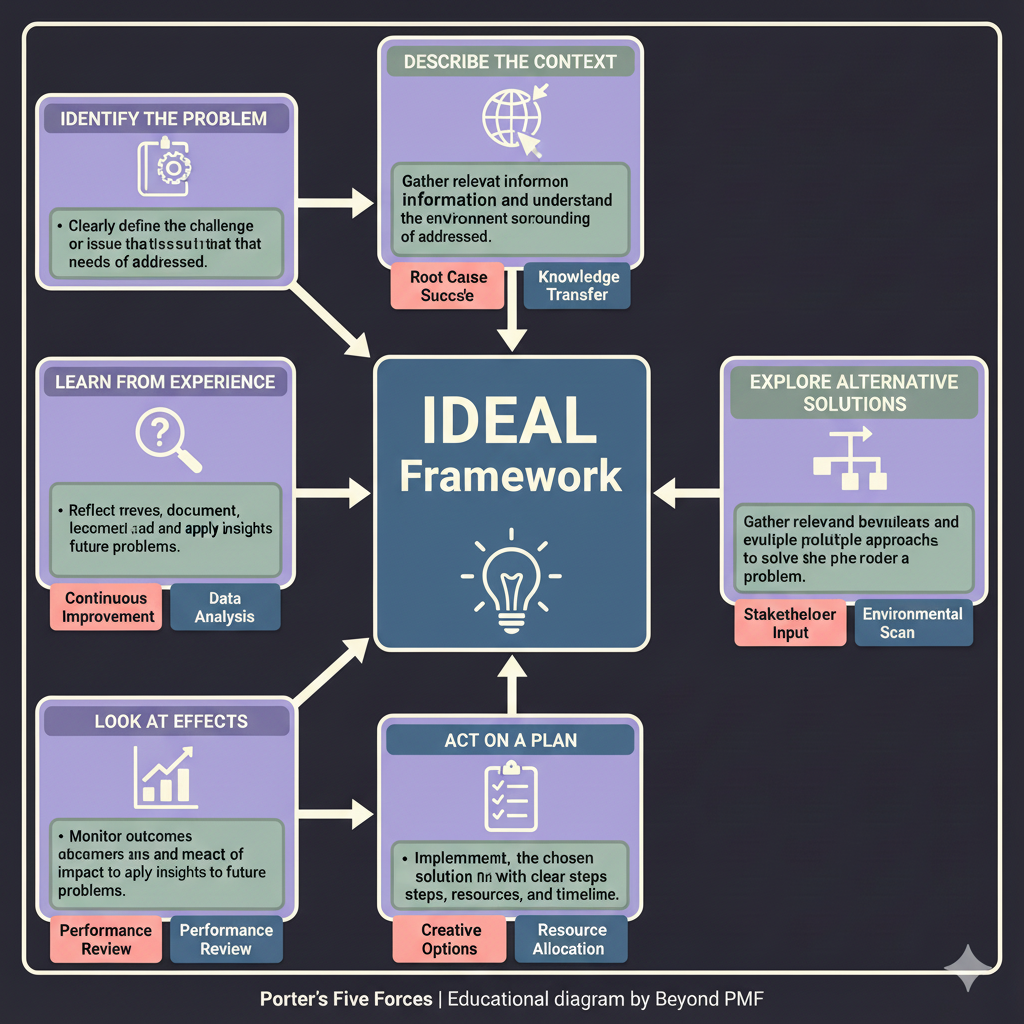
The IDEAL Framework focuses on improving processes and solving problems. This suggests a focus on operational inefficiencies like poor workflows or ineffective coordination within an organization.

The IDEAL Framework is a comprehensive model used primarily for enhancing processes and problem-solving within various organizational contexts. It is structured around five key phases: Initiating, Diagnosing, Establishing, Acting, and Learning. This framework helps organizations systematically tackle challenges, ensuring continuous improvement and effective change management. Its benefits include structured problem-solving, enhanced organizational learning, and improved process efficiency.

Steps / Detailed Description

Initiating: Identify the problem and prepare for change. | Diagnosing: Analyze the current situation to understand the issues thoroughly. | Establishing: Develop strategies and plan actions to address the diagnosed issues. | Acting: Implement the planned actions. | Learning: Reflect on the actions taken and the outcomes to derive learnings that inform future cycles.

Best Practices

Ensure clear communication throughout all phases | Involve stakeholders early and often | Regularly review and adjust the approach based on feedback and results

Pros

Provides a structured approach to problem-solving | Facilitates continuous improvement | Enhances learning and adaptation within organizations

Cons

Can be time-consuming | Requires commitment from all levels of the organization | May be overstructured for smaller or less complex issues

When to Use

When addressing complex organizational issues | During periods of significant change requiring structured management

When Not to Use

For simple or urgent problems that require immediate action | When the organization lacks the resources to fully engage in such a comprehensive process

Related Frameworks

Scope

Scope not defined

Maturity Level

Maturity level not specified

Time to Implement

2–4 Weeks
3–6 Months
1–2 Weeks
3–6 Months
1–2 Months
3–6 Months
1–2 Weeks
Less Than 1 Day
1–2 Weeks
Longer Than 6 Months
1–2 Weeks
Longer Than 6 Months
1–2 Weeks
3–6 Months
1–2 Weeks
1–2 Weeks
1–2 Weeks
1–2 Weeks
1–2 Days
1–2 Weeks
1–2 Weeks
1–2 Weeks
1–2 Weeks
1–2 Weeks
1–2 Weeks
3–6 Months
1–2 Weeks
1–2 Weeks
1–2 Weeks
3–6 Months
1–2 Weeks
1–2 Weeks
2–4 Weeks
1–2 Weeks
1–2 Days
1–2 Weeks
Longer Than 6 Months
3–6 Months
Longer Than 6 Months
1–2 Weeks
Longer Than 6 Months
3–6 Months
Less Than 1 Day
3–6 Months
1–2 Months
3–6 Months
Longer Than 6 Months
3–6 Months
Less Than 1 Day
1–2 Weeks
3–6 Months
3–6 Months
1–2 Weeks
3–6 Months
1–2 Weeks
1–2 Weeks
1–2 Days
1–2 Weeks
1–2 Months
Longer Than 6 Months
1–2 Weeks
Longer Than 6 Months
1–2 Weeks
3–6 Months
1–2 Weeks
Less Than 1 Day
1–2 Weeks
3–6 Months
1–2 Weeks
3–6 Months
1–2 Weeks
1–2 Weeks
Longer Than 6 Months
Less Than 1 Day
3–6 Months
Longer Than 6 Months
1–2 Months
1–2 Weeks
Longer Than 6 Months
1–2 Weeks
3–6 Months
1–2 Weeks
1–2 Weeks
3–6 Months
Less Than 1 Day
1–2 Weeks
1–2 Weeks
3–6 Months
3–6 Months
Less Than 1 Day
1–2 Weeks
Longer Than 6 Months
1–2 Months
1–2 Weeks
1–2 Weeks
1–2 Weeks
Longer Than 6 Months

Copyright Information

Autor:
Unknown
N/A
Publication:
Unknown