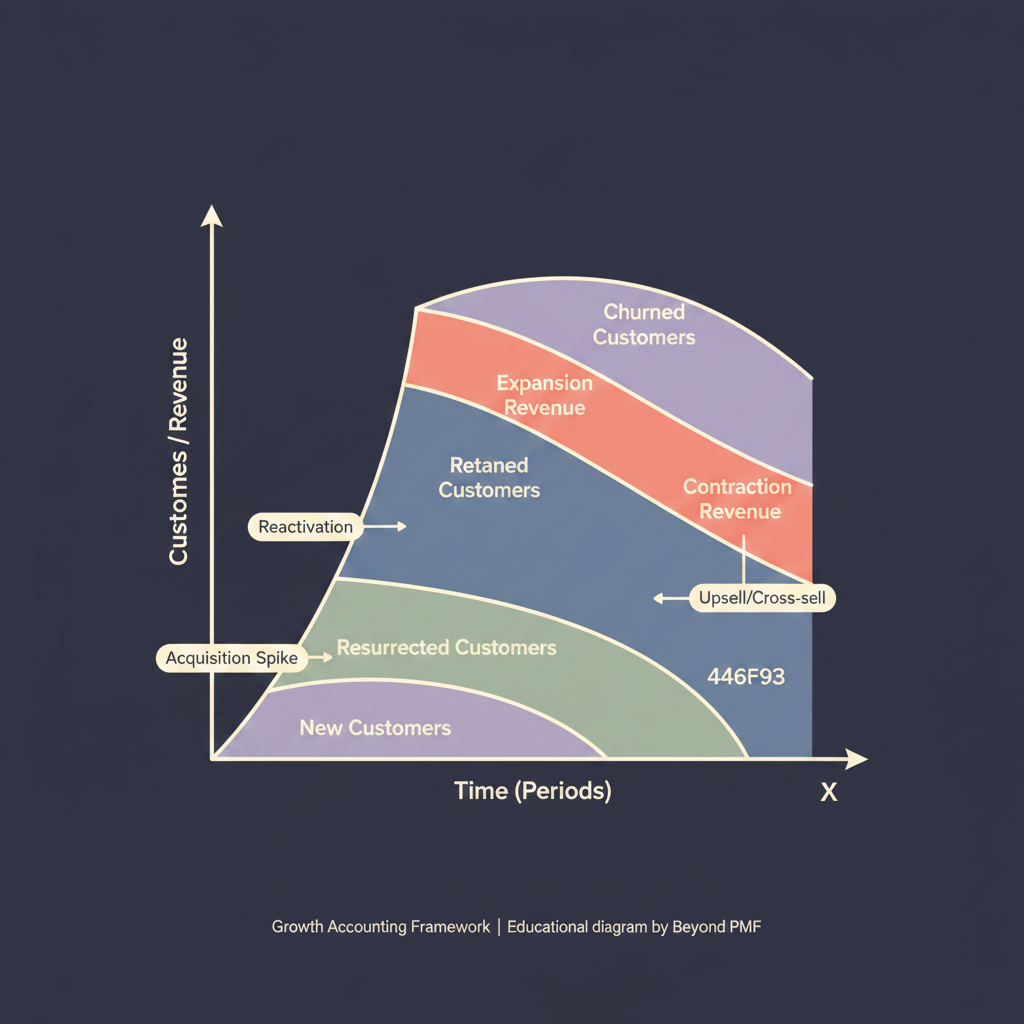
The Growth Accounting Framework is an analytical tool used primarily in economics to break down the various factors contributing to economic growth. It quantifies the extent to which growth can be attributed to labor (increase in workforce or hours worked), capital (increase in capital goods), and technological progress (improvements in productivity). This framework helps policymakers and economists understand the drivers of economic growth and devise informed strategies to foster further development.
Identify the period for analysis and gather relevant economic data. | Calculate the growth rate of total output (GDP) for the specified period. | Estimate the contributions of labor and capital to economic growth using data on employment, hours worked, and capital stock. | Apply a production function, typically Cobb-Douglas, to attribute the residual growth to technological progress. | Analyze the results to understand the impact of each component and identify potential areas for policy intervention.
Ensure accurate and comprehensive data collection | Use consistent methods for estimating labor and capital contributions | Regularly update the model to incorporate new economic insights and data
Provides a clear breakdown of growth contributors | Helps in formulating targeted economic policies | Facilitates comparison between different time periods or economies
Relies heavily on the availability and accuracy of data | Assumes constant returns to scale and factor productivity | Does not account for external factors like trade and environmental impacts
Analyzing historical economic growth | Formulating economic policies
In economies with poor data availability | When external factors are known to heavily influence growth