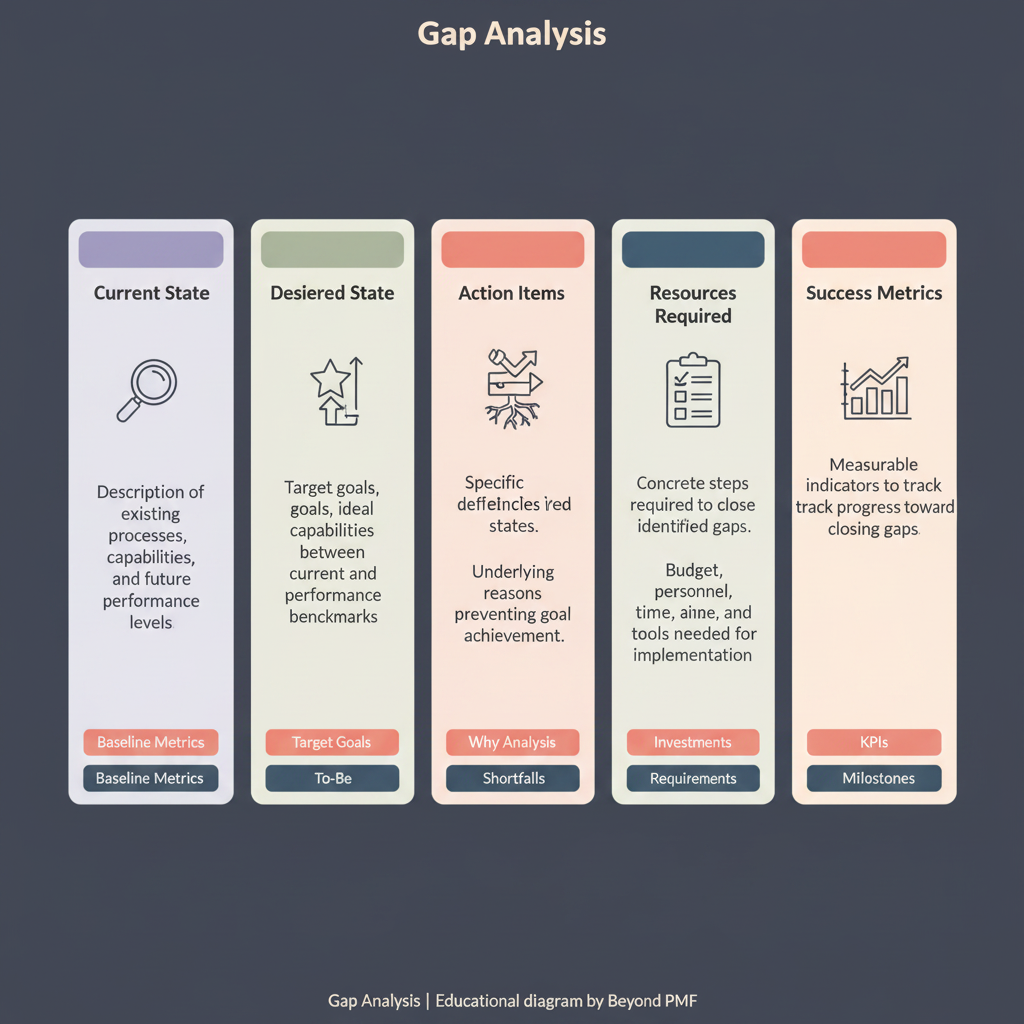
Gap Analysis is a strategic tool used by businesses to compare their current performance with their desired outcomes. It helps in identifying the gaps in performance, resources, or capabilities that prevent a company from reaching its objectives. This analysis is crucial for strategic planning, resource allocation, and enhancing operational efficiency. By pinpointing specific areas of improvement, organizations can develop targeted strategies to bridge these gaps, thereby facilitating growth and improvement.
Identify the current state: Assess the existing conditions or performance levels. | Define the desired state: Clearly outline the goals or objectives intended to be achieved. | Analyze the gap: Determine the differences between the current and desired states. | Develop action plans: Create strategies and actions to bridge the identified gaps. | Implement and monitor: Execute the action plans and regularly monitor progress.
Ensure accurate and comprehensive data collection | Involve stakeholders in defining the desired state and developing action plans | Regularly review and adjust the action plans as necessary
Provides clear insights into areas needing improvement | Helps in strategic planning and resource allocation | Facilitates targeted and effective action plans
Can be time-consuming and resource-intensive | Depends heavily on the accuracy of current and desired state assessments | May not account for external factors affecting performance
When setting new strategic goals | During annual reviews or when reassessing business strategies
In highly volatile markets where conditions change rapidly | When there is insufficient data to accurately assess current or desired states