
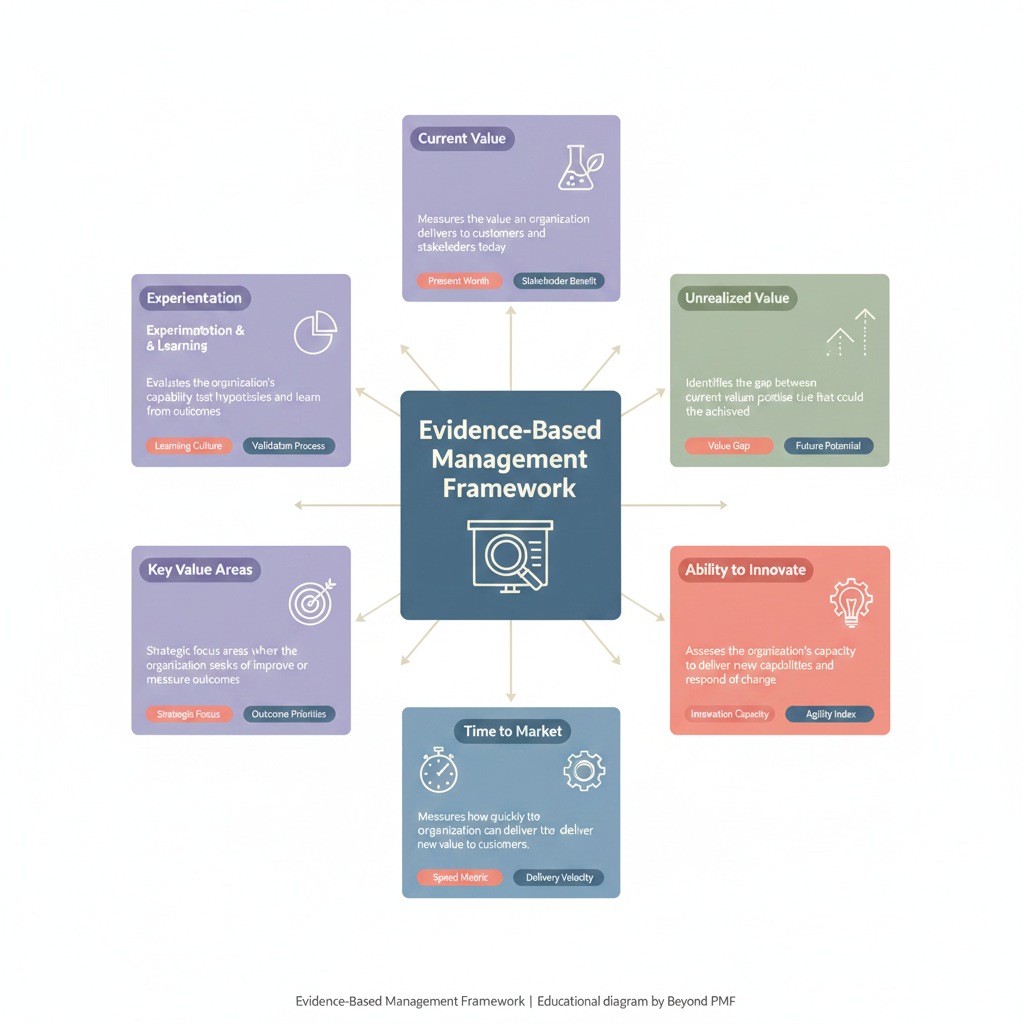
The Evidence-Based Management Framework is a methodological approach used by organizations to make informed decisions based on critical evaluation of data from various sources. It emphasizes the use of empirical evidence to guide strategies and improve operational effectiveness. By integrating scientific evidence, organizational facts, professional expertise, and stakeholder values, this framework helps in reducing biases, enhancing transparency, and promoting better outcomes.
Identify key decision areas and formulate relevant questions. | Gather evidence from reliable sources, including academic research, internal data, and industry benchmarks. | Critically appraise the evidence for quality and relevance. | Apply the evidence to the decision-making process, considering the organizational context and constraints. | Evaluate outcomes and refine strategies based on feedback and new evidence.
Regularly update the evidence database to reflect the most current information. | Train staff in critical thinking and evidence appraisal techniques. | Ensure diverse sources of evidence to avoid over-reliance on a single type of data.
Improves decision-making quality by relying on empirical data. | Reduces bias and subjectivity in organizational choices. | Enhances transparency and accountability in management practices.
Time-consuming due to the extensive research and data analysis required. | May be challenging to find relevant and high-quality evidence for specific contexts. | Potential resistance from stakeholders accustomed to intuition-based decisions.
When making strategic business decisions that require high accuracy. | In policy formulation and organizational change management.
In situations requiring immediate decisions with no time for thorough research. | When the available evidence is too scant or of poor quality to be reliable.