
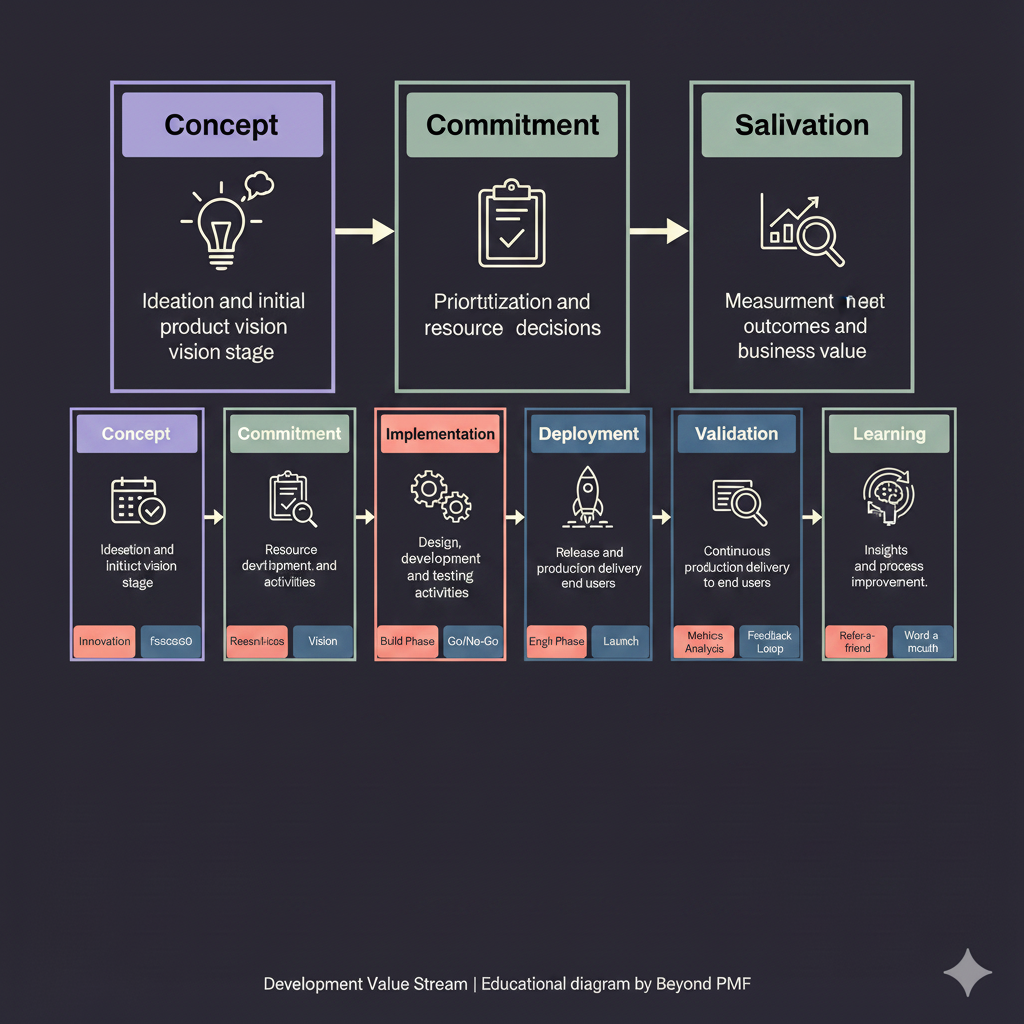
The Development Value Stream Framework is a strategic approach used to analyze, manage, and optimize the sequence of processes involved in software development. It aims to identify and eliminate bottlenecks, reduce cycle times, and ensure that every step adds value to the customer. This framework is crucial for organizations looking to improve their software delivery performance and align development activities with business goals.
Identify the value stream: Map out all the activities involved in the development process from concept to delivery. | Analyze the flow of work: Identify bottlenecks, delays, and any non-value-added activities that can be eliminated or optimized. | Implement process improvements: Based on the analysis, make targeted changes to improve efficiency and effectiveness. | Establish metrics: Define clear metrics to measure improvements and ensure that the changes are delivering the expected value. | Continuous improvement: Regularly review and refine the value stream to foster a culture of continuous improvement.
Engage all stakeholders in the mapping process to ensure comprehensive understanding | Focus on continuous feedback and iterative improvements | Utilize lean principles to guide decision-making and process enhancements
Improves efficiency by eliminating waste | Enhances product quality by focusing on value-added activities | Increases customer satisfaction through faster delivery times
Can be complex to implement across large organizations | Requires significant upfront investment in training and tools | Dependent on accurate and comprehensive initial value stream mapping
When optimizing existing software development processes | When aligning software development with business objectives
In very small projects where the setup might outweigh the benefits | When the organization is not ready to embrace change or invest in process improvements