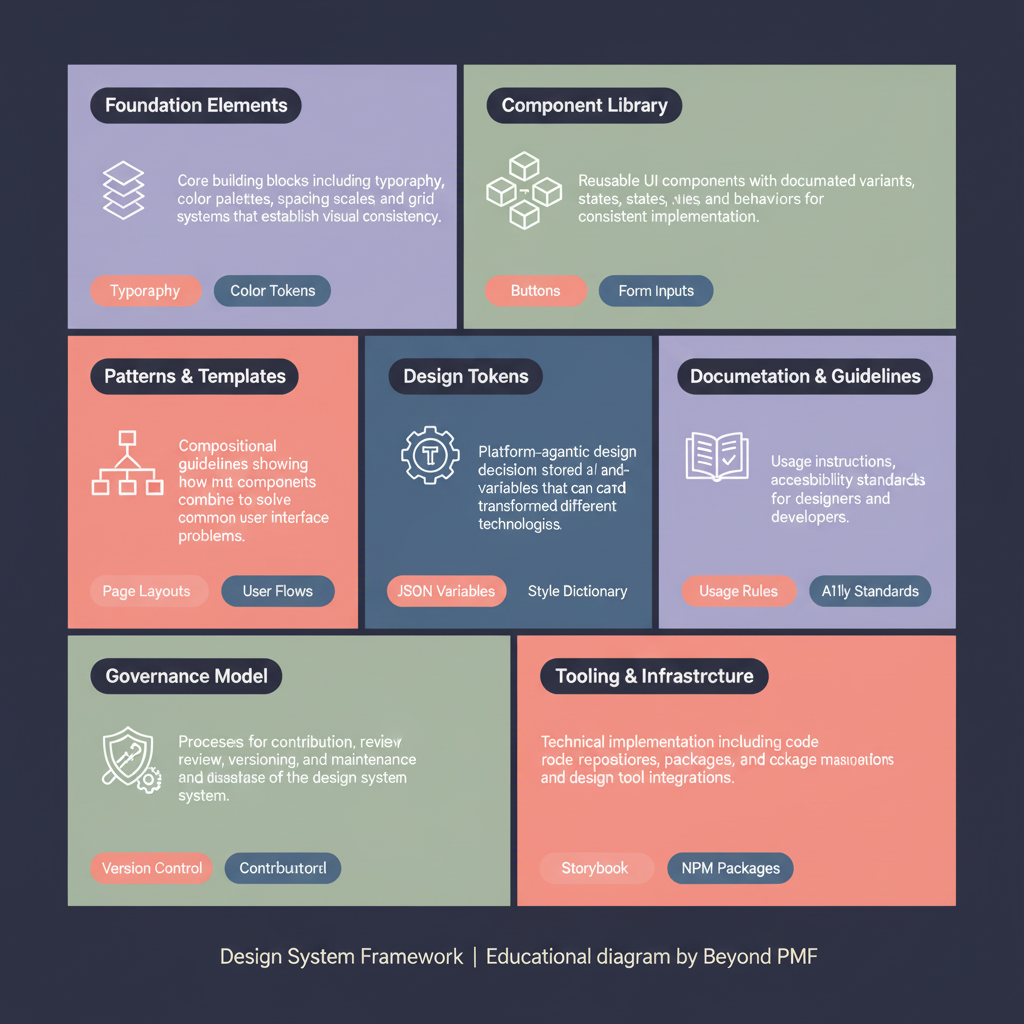
A Design System Framework is a cohesive set of guidelines, components, and tools that are used to design and build digital products consistently and efficiently. It serves as a blueprint for product teams, enabling them to create unified user experiences across multiple platforms. The framework helps in maintaining visual and functional consistency throughout a product's lifecycle, which enhances usability and user satisfaction while reducing development time and costs.
Define the brand's visual identity and design principles. | Develop a library of reusable UI components and patterns. | Establish guidelines for typography, color usage, and other design elements. | Integrate the design system into development workflows. | Regularly update the system based on user feedback and technological advancements.
Involve stakeholders from design, development, and product management early in the process. | Document all components and guidelines thoroughly. | Ensure the design system is flexible and adaptable to change.
Ensures consistency across all platforms and products. | Speeds up the design and development process. | Improves collaboration among designers and developers.
Requires significant upfront investment in time and resources. | Can be overly rigid, limiting creativity. | Needs regular updates to stay relevant and effective.
When developing multiple products or features that need a unified design language. | When updating or scaling an existing digital product.
For small projects or teams where a full system may be overkill. | When rapid prototyping and unique, creative designs are required.