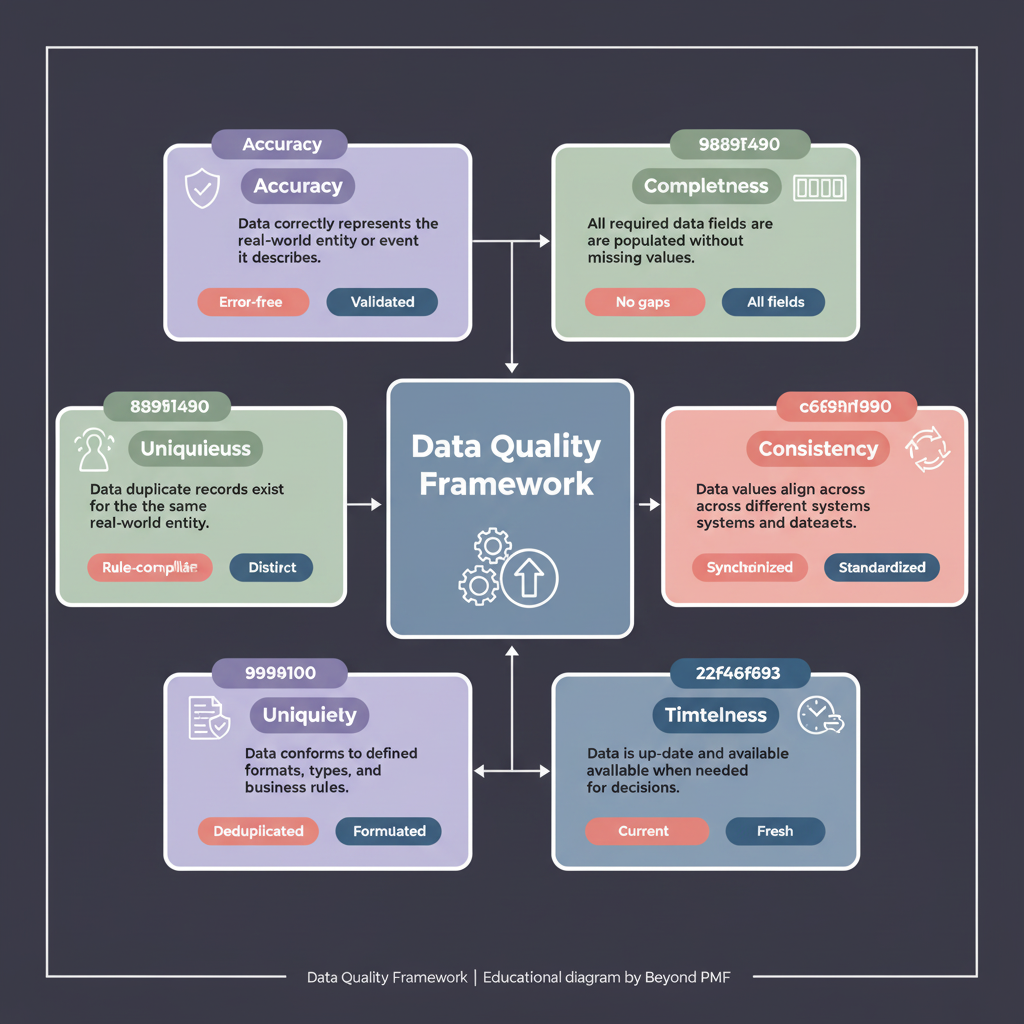
The Data Quality Framework provides a systematic methodology for ensuring that data meets the standards of accuracy, completeness, reliability, and relevance required for business operations. It involves processes and tools that help identify, understand, and rectify data quality issues. This framework is crucial for organizations that rely on data for decision-making, as it directly impacts the effectiveness of business strategies and customer satisfaction.
Define data quality goals and metrics. | Assess current data quality and identify gaps. | Implement data quality improvement measures. | Monitor and report on data quality improvements. | Iterate and refine data quality processes.
Regularly review and update data quality metrics. | Engage stakeholders from different departments. | Leverage automated tools for data quality assessments.
Improves decision-making accuracy | Enhances customer satisfaction | Reduces costs associated with poor data quality
Can be time-consuming to implement | Requires continuous monitoring and updating | May require significant upfront investment
When establishing new data systems | When regular data audits are needed
In very small or temporary projects | When data quality is not a critical factor